How Do I Register for an IRP Card in Ireland?
Oh, the IRP card! If you've just landed in Ireland, or you're planning your big move, this little plastic card is probably sitting at the top of your "must-do-or-I'm-in-trouble" list. And let me tell you, navigating the immigration system here can feel like trying to solve a Rubik's Cube while blindfolded. It's confusing, it's often frustrating, and there's a lot of conflicting information out there. But don't you worry, because this guide is here to walk you through everything you need to know about registering for your Irish Residence Permit (IRP) card, hopefully making the process a little less painful and a lot clearer.
What Exactly is the IRP Card and Why Do You Need It?
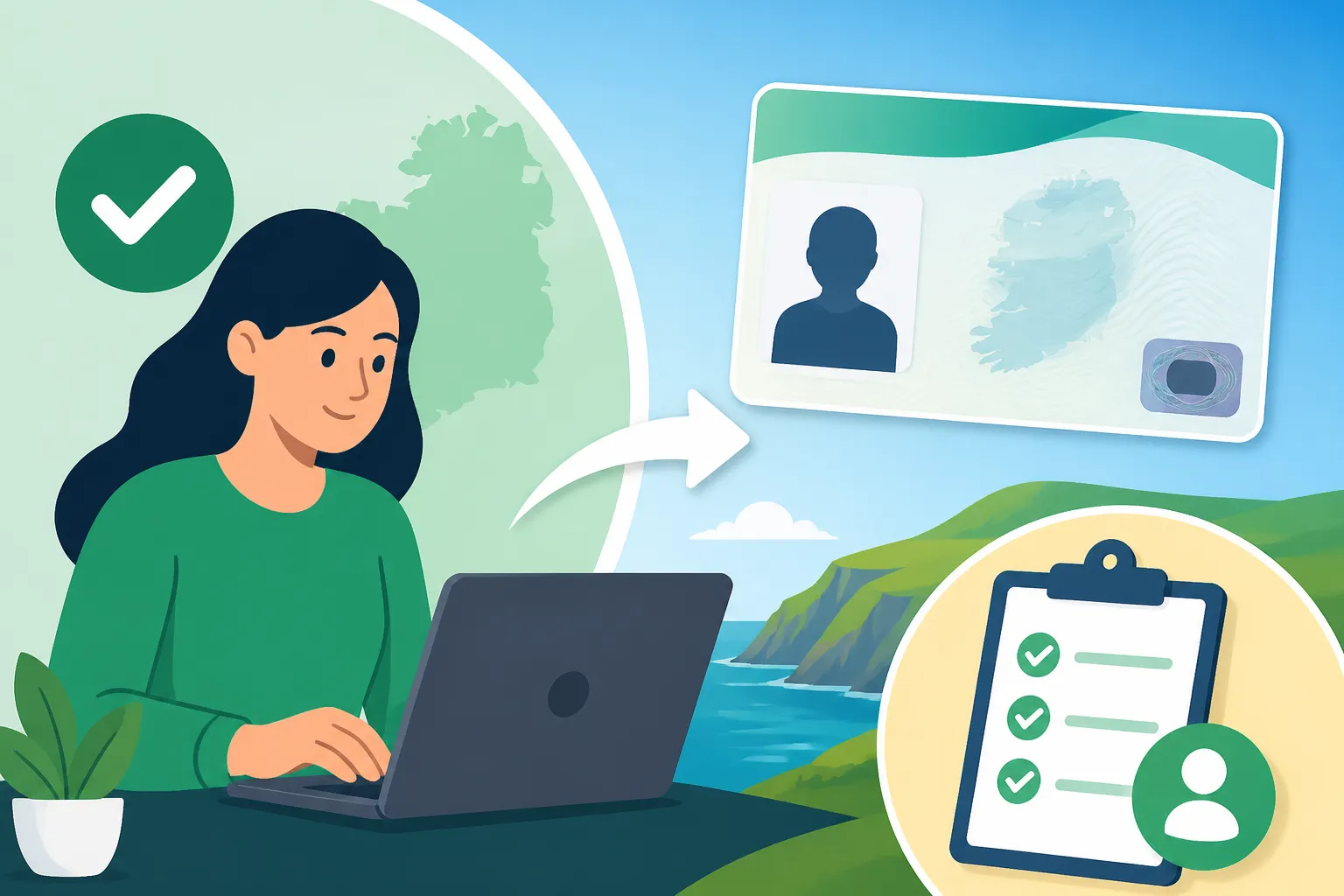
Let's cut through the jargon. The IRP card, or Irish Residence Permit, is essentially your official ID card in Ireland if you're a non-EEA (European Economic Area) or non-Swiss national. It's the physical proof that you have permission to live in Ireland for a specific period and for a specific purpose, whether that's working, studying, or joining family. Think of it as your golden ticket to legally reside here, carrying your photo, personal details, and, crucially, your immigration stamp. Without it, you're not fully "on the books" in the eyes of the Irish State, and that can lead to all sorts of complications down the line.
Importance of the IRP as Your Proof of Residence
Beyond just being a legal requirement, your IRP card serves as your primary form of identification in Ireland for almost anything administrative. When you need to set up a bank account, prove your address, deal with utility companies, or even sometimes just pick up a parcel, you'll find yourself reaching for this card. It's often required in conjunction with your passport for identity verification. It’s also what you'll show to immigration officials when you travel in and out of the country. Without it, your re-entry into Ireland could be questioned, even if you have valid permission.
Many expats find themselves in a bit of a limbo before their IRP card arrives. While your initial entry visa or pre-clearance letter allows you to enter, the IRP solidifies your status here. It validates your right to work, study, or live as per your immigration permission. For instance, if you're here on a Critical Skills Employment Permit, your IRP card will show you're permitted to work. This can be critical when dealing with employers, ensuring they're confident in your legal right to employment.
The Link Between Your IRP and Your Immigration Stamp
Every IRP card comes with an immigration "stamp" printed on it. This stamp is vital because it explicitly defines your immigration permission and the conditions attached to your stay. For example:
- Stamp 1: Typically for those with an Employment Permit to Work in Ireland, allowing you to work in Ireland.
- Stamp 1G: Often for graduates of Irish universities under the Third Level Graduate Scheme, allowing them to seek employment.
- Stamp 2/2A: For students, indicating permission to study and, in some cases, work part-time.
- Stamp 3: For dependants of employment permit holders, allowing them to reside but typically not work.
- Stamp 4: This is the big one for many, indicating long-term residency and generally allowing you to work without an employment permit, establish a business, or study. It’s a significant step for those looking for Long-Term Residency and the Stamp 4 in Ireland.
Understanding these different stamps is crucial because it dictates what you can and cannot do while in Ireland. The IRP card isn't just proof of identity; it's a summary of your legal standing in the country, neatly presented on a secure, card-sized document. You can find more comprehensive details about these in our guide on Understanding the Irish Immigration Stamp System (Stamp 1, 2, 4).
Eligibility: Who Needs an IRP Card in Ireland?
This is a common point of confusion, and frankly, the rules can feel a bit like a moving target. In simple terms, if you're a non-EEA (European Economic Area) or non-Swiss national and you're planning to stay in Ireland for more than 90 days, you almost certainly need an IRP card. This applies whether you're here to work, study, or join family.
Non-EEA/Swiss Nationals: The Primary Group
The vast majority of expats I've met who come from countries outside the EU, EEA, or Switzerland fall into this category. This includes citizens from countries like the USA, Canada, Australia, New Zealand, India, Brazil, South Africa, and many more.
If you have secured an employment permit, like a Critical Skills Employment Permit in Ireland or a General Employment Permit in Ireland, your next step after arriving is always to register for your IRP card. Similarly, if you're coming to Ireland to study for a degree, once you've enrolled and settled, the IRP card is your proof of student status.
Even if you entered Ireland initially under a visa-free arrangement (meaning you didn't need a specific entry visa to arrive, like US citizens), if you intend to stay longer than 90 days and your purpose requires an immigration permission (e.g., you've found a job), you'll need to register. This initial registration establishes your long-term immigration record in Ireland.
Specific Scenarios and Exemptions
While the general rule is clear, there are always a few nuances:
- EU/EEA and Swiss Citizens: This is perhaps the biggest exemption. If you hold a passport from an EU/EEA country or Switzerland, you do not need an IRP card to reside in Ireland. You have the right to live, work, and study here under EU freedom of movement rules. You might need to check out How to Move to Ireland as an EU Citizen? if you're in this boat.
- Short-Stay Visa Holders: If you're visiting Ireland on a short-stay 'C' visa, which typically allows you to stay for up to 90 days, you don't need an IRP card. Your visa is for a temporary visit, and you're expected to leave before it expires. The IRP is for those establishing residence.
- Diplomats and Certain Officials: Individuals with diplomatic status or those working for certain international organisations may have different registration requirements or exemptions, but this is a very specific niche.
- Those with Specific Pre-Clearance: While pre-clearance (like for de facto partners or certain family members) grants you permission to enter Ireland, it often still requires you to register for an IRP card after arrival to formalise your stay. The pre-clearance just means you've been approved in principle; the IRP is the physical manifestation of that approval.
Essentially, if you're a non-EU/EEA/Swiss national and you're making Ireland your home for more than three months, consider the IRP card an absolute necessity.
The Step-by-Step Process to Register for Your IRP Card
Alright, let's get down to brass tacks. This is where many expats hit their first wall of bureaucracy. The process can feel a bit like a treasure hunt, so take a deep breath and let's go through it together.
Booking Your Appointment: The Dreaded Online System
This is often the trickiest part, especially if you're in Dublin.
For Dublin Residents (Burgh Quay Registration Office):
The Garda National Immigration Bureau (GNIB) in Dublin handles all registrations for those living in County Dublin. You must book an appointment online via the Immigration Service Delivery (ISD) online appointment system. This system has a reputation for being notoriously difficult to get an appointment on. Here's how it usually goes:
- Check the Website: Go to the official ISD website. There's a dedicated section for booking IRP appointments.
- Be Prepared to Be Persistent: Appointments are released at specific times (often in the morning, usually Tuesdays and Thursdays, but this can change without notice, so always check the website for current advice). They are snatched up within minutes, sometimes seconds. You'll need to be logged in and ready to click the moment new slots appear. Have all your personal details (passport number, date of birth, proposed address in Ireland) ready to type in quickly.
- Use Multiple Devices (if possible): Some people have success by trying on a laptop and a phone simultaneously.
- Consider Alternatives (if desperate): While not ideal, some people temporarily move outside Dublin to register at a local Garda station (see below) if they simply cannot get an appointment. However, your address on your documents should match where you're registering, so this needs careful consideration and is not a recommended path.
- Proof of Address: You need a solid proof of address in Dublin to register here. This isn't just for booking; you'll need it at the appointment too. More on documents below!
For Residents Outside Dublin (Local Garda National Immigration Bureau – GNIB Office):
If you live outside County Dublin, your registration will be handled by a local Garda (police) station that has a dedicated immigration officer or a GNIB office in your county. The process for booking these appointments varies:
- Check with Your Local Garda Station: Do not just show up! Many local stations operate on an appointment-only basis, but some might have specific walk-in days. It's crucial to call or visit your designated local GNIB registration office first to understand their procedure. For example, in Cork, you'd contact the Anglesea Street Garda Station, while in Galway, it's the Mill Street Garda Station.
- Flexibility: While sometimes less competitive than Dublin, these offices can also have waiting times. Be prepared to travel to the nearest designated office if your immediate local station doesn't handle registrations.
No matter where you're registering, the key is to start the booking process as soon as you have a clear address and your initial permission to be in Ireland (e.g., your employment permit approval letter or university acceptance). The sooner you get on the system, the better.
Gathering Your Documents: The Checklist
This is where preparation is your best friend. The immigration officials are sticklers for detail, and missing even one document can mean a wasted appointment and having to start the booking process all over again – a nightmare!
Here's a general checklist of documents you'll need. Always check the official ISD website for the most current requirements, as they can occasionally change.
Disclaimer
This article is for general informational purposes only and does not constitute professional advice. Laws, prices and regulations vary by location and change over time. Consult a qualified professional for guidance on your specific situation.