How Do I Get a Tax Clearance Certificate Before Leaving Ireland?
Leaving Ireland can feel like an emotional rollercoaster, a mix of excitement for what's next and that undeniable, nagging stress of tying up all the loose ends here. One of those crucial, often overlooked, tasks for many expats is sorting out their tax affairs with Revenue, and specifically, understanding "How Do I Get a Tax Clearance Certificate Before Leaving Ireland?". This guide is here to walk you through that process, easing some of the bureaucratic headaches and ensuring you depart with a clean slate, financially speaking.
Why a Tax Clearance Certificate Matters When You're Leaving Ireland
You might be thinking, "Do I really need another piece of paper?" And believe me, as someone who’s navigated the Irish administrative labyrinth more times than I care to count, I get it. But a Tax Clearance Certificate from Revenue is more than just a bureaucratic formality; it’s a crucial document that confirms you’ve complied with all your tax obligations in Ireland. For expats especially, this can be incredibly important for several reasons.
Proving Your Tax Compliance Abroad
When you move to a new country, particularly if you’re applying for visas, residency, or even certain jobs, authorities often want proof of your tax history from your previous places of residence. An Irish Tax Clearance Certificate serves as an official testament that you’ve paid your dues and fulfilled your responsibilities while living here. Imagine trying to explain to immigration officials in a new country why you don’t have this – it can raise red flags and cause unnecessary delays and complications down the line. It's essentially your good conduct certificate, but for your finances. This can save you a world of trouble and endless phone calls or emails trying to sort out an old tax issue from half a world away.
Preventing Future Tax Headaches and Unforeseen Liabilities
Even if your next destination doesn't explicitly demand it, having a Tax Clearance Certificate can prevent unexpected issues from cropping up later. Ireland's tax system, like many, can be complex, especially if you've had various income sources, investments, or spent time as a Self-Employment in Ireland: Registering as a Sole Trader and Beyond (2027). Without this certificate, Revenue might assume you still have outstanding obligations or that you're still a tax resident, potentially leading to incorrect assessments or penalties in the future.
For example, if you leave a small outstanding balance or an unfiled return, Revenue might pursue it, and dealing with tax queries from overseas can be a nightmare. You could find yourself trying to submit documents via international post or battling time zone differences just to resolve a minor issue that could have been cleared up before you left. This certificate officially closes that chapter, giving you peace of mind that Revenue considers your Irish tax affairs in order. It’s an invaluable step in truly severing financial ties and starting fresh.
Closing Bank Accounts and Financial Ties
While not always a strict requirement by banks themselves, some financial institutions might prefer to see proof of tax clearance before you fully close your accounts, especially if there have been any complex transactions or if you’ve held accounts that generate interest or dividends, which are subject to DIRT and Tax on Savings and Deposits in Ireland. Even if they don't explicitly demand it, having your tax clearance sorted out makes the process smoother.
It’s generally wise to keep your Irish bank account open until you've received your tax clearance and ensure all final payments (like utility bills or last salary payments) have been processed. Once everything is settled, you can then transfer your remaining funds internationally using services like Wise, which can be far more efficient than traditional bank transfers, especially for smaller amounts. Don’t underestimate the administrative heft of closing accounts; it’s often tied to your tax status.
The Step-by-Step Process to Apply for Tax Clearance
Alright, let's get down to the nitty-gritty of actually applying for this elusive certificate. The good news is, for most people, the process is fairly straightforward, provided you’ve kept your tax affairs in good order while you’ve been here. The core of it involves interacting with Revenue, Ireland’s tax authority, primarily through their online systems.
Ensuring All Your Tax Returns are Up to Date
Before you even think about applying for a Tax Clearance Certificate, the absolute first and most critical step is to ensure that all your tax returns are completely up to date. This means:
- For PAYE (Pay As You Earn) employees: Make sure you've submitted your annual Income Tax Returns (Forms 12 or 11, depending on your circumstances) for every year you were in Ireland, especially the current tax year up to your date of departure. You can do this easily through your Revenue's myAccount and ROS Online Systems in Ireland. If you’ve only ever been a PAYE employee with one employer, your tax affairs might be quite simple, but it's always worth checking. You'll want to ensure your P45 (which your employer issues when you leave their employment) is correct and has been submitted to Revenue.
- For Self-Employed Individuals or Sole Traders: This is where it can get a bit more complex. You need to ensure all your How to Pay Tax as a Sole Trader in Ireland returns (Form 11) are filed, and any preliminary tax payments are made. If you had additional income not subject to PAYE, like rental income or foreign income, you also need to make sure those are properly declared. Outstanding tax bills, even small ones, will hold up your application. If you’re self-employed, I highly recommend consulting with a tax advisor, like one from Taxes for Expats, to ensure everything is perfect before you apply. They understand the nuances that can trip us up.
It's vital to remember that Revenue will not issue a clearance certificate if there are any outstanding tax returns or unpaid liabilities. So, do a thorough check, perhaps even for previous years, to confirm you’ve covered all bases.
Accessing the eTax Clearance System
Once you’re absolutely certain your tax affairs are squared away, you can proceed to apply for the certificate through Revenue's online eTax Clearance system.
- Log in to myAccount or ROS:
- myAccount: This is the primary portal for most PAYE employees. You'll need your PPSN and either your password or a MyGovID account to log in.
- ROS (Revenue Online Service): This is typically used by self-employed individuals, companies, and tax agents. If you're self-employed, you'll have a ROS digital certificate.
- Navigate to the eTax Clearance Section: Within either platform, look for the 'eTax Clearance' section. It's usually quite prominently displayed.
- Initiate an Application: You'll be asked if you're applying for yourself or on behalf of someone else (e.g., if a tax agent is doing it for you). Select "Myself."
- Provide Required Information: The system will guide you through a series of questions. This will include your personal details, PPSN, and the reason for needing the clearance (e.g., emigrating, closing accounts). You might also be asked for your expected departure date from Ireland.
- Review and Submit: Double-check all the information you’ve entered. Any inaccuracies could lead to delays. Once satisfied, submit your application.
If everything is in order and you have no outstanding tax issues, the Tax Clearance Certificate is often issued automatically and immediately. You'll typically receive it as a PDF document that you can print or save.
What Documents You Might Need (and Keeping Them Handy)
While the eTax Clearance system itself doesn't usually require you to upload documents during the application process, having certain documents ready is paramount for ensuring your tax affairs are indeed up-to-date before you apply. If Revenue needs to review your record, they might ask for these.
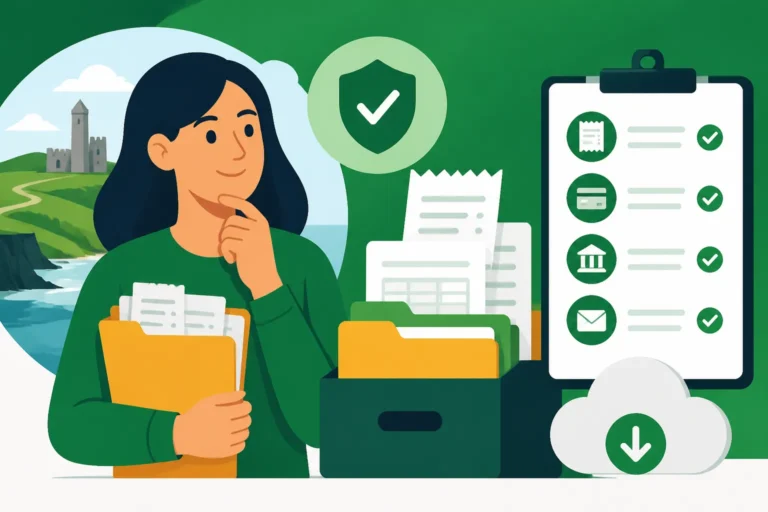
Here’s a general checklist:
| Document Type | PAYE Employee | Self-Employed/Sole Trader | Purpose |
|---|---|---|---|
| PPSN | Always needed | Always needed | Your unique tax identifier. |
| P45 | From your employer when you leave employment. | Not applicable | Shows your earnings and tax paid up to your last day of employment. |
| P60 | Annual statement from employer. | Not applicable | Summarises your annual earnings and deductions. |
| Payslips | Final payslips, especially for the departure year. | Not applicable | Backup for P45/P60 details. |
| Bank Statements | If you had untaxed income or foreign bank accounts. | All business and personal bank statements. | Verification of income and expenses. |
| Expense Records | If claiming specific reliefs. | All business expense receipts/invoices. | Justification for tax deductions. |
| Annual Tax Returns | Copies of Form 12 (or Form 11 if applicable) for all years. | Copies of Form 11 for all years. | Proof of submission and declared income. |
| Proof of Address | For identity verification (e.g., utility bill). | For identity verification. | General administrative requirement. |
| Foreign Income Details | If applicable, proof of any How to File Taxes If You Have Both Foreign and Irish Income. | If applicable, proof of any foreign income. | Ensures all global income is accounted for, especially concerning Understanding Double Taxation Treaties and Foreign Tax Credits in Ireland. |
Keep these documents organised and readily accessible. It will significantly speed up any communication with Revenue should they have queries.
What to Do If You Encounter Issues or Need Further Assistance
Sometimes, despite your best efforts, things don't go as smoothly as planned. The eTax Clearance system might not issue your certificate immediately, or you might find you have an unexpected outstanding balance. Don't panic; this is quite common, and there are ways to address it.
Dealing with Delays or Rejections
If your application isn't approved instantly, Revenue will usually send you a notification explaining why. This could be due to:
- Outstanding Tax Returns: As mentioned, this is the most common reason. You’ll need to file any missing returns (e.g., your final year’s Form 12/11 up to your departure date).
- Unpaid Tax Liabilities: There might be an outstanding balance that you weren't aware of, or perhaps a payment didn't go through correctly. You'll need to pay this amount promptly.
- Unresolved Queries: Revenue might have an open query regarding your tax affairs that needs clarification or additional information from you.
The key here is to address the issue immediately. The notification from Revenue should provide details on how to rectify the problem. If it's an outstanding return, get it filed. If it's a payment, get it made. If it's a query, respond thoroughly and with all necessary documentation. Delays here will only prolong your departure stress.
Contacting Revenue Directly for Clarification
If the reason for the delay or rejection isn't clear, or if you're struggling to understand how to resolve it, your next step is to contact Revenue directly.
- MyEnquiries Service: This is usually the best and most secure way to communicate with Revenue. Through your myAccount or ROS, you can submit an enquiry specific to your tax clearance application. This creates a written record of your communication and allows you to attach documents if needed.
- Revenue LoCall Number: You can also call their general enquiry line. The number for individuals is typically 01 738 36 36. Be prepared for potentially long wait times, especially during peak periods. Have your PPSN and any relevant reference numbers ready. Be polite but firm in explaining your situation and asking for clear guidance on what steps you need to take.
- Visiting a Local Revenue Office: While less common now with online services, if you're still in Ireland and the issue is complex, you might be able to book an appointment at a local Revenue office. Check the Revenue website for available services and how to book.
When communicating, be clear and concise. Explain that you are an expat leaving Ireland and require tax clearance, outlining the issue you're facing. Keep a record of all correspondence, including dates, times, names of agents you speak to, and what was discussed.
Seeking Professional Tax Advice
For those with complex tax situations, such as having been How to File Taxes If You Have Both Foreign and Irish Income, having owned property, or being a director of a company, the process of ensuring all tax affairs are in order before applying for clearance can be daunting. This is where professional help becomes invaluable.
- Tax Consultants: Engaging a tax consultant, especially one familiar with expat tax matters, can be a game-changer. Firms like Taxes for Expats specialise in cross-border tax issues and can help ensure all your Irish tax obligations are met, file any outstanding returns, and even handle the eTax Clearance application on your behalf. They can navigate the intricacies of your specific situation, such as dealing with capital gains or the tax implications of selling assets before leaving.
- Accountants: A local Irish accountant can also provide excellent support, particularly if your business or self-employment tax records are complex. They can review your financial history, prepare final accounts if necessary, and ensure your Revenue filings are accurate.
While there's a cost involved, the peace of mind and assurance that everything is done correctly can be worth every penny, especially if it means avoiding future complications or even penalties.
Leaving Ireland should be a time of excitement, not endless bureaucratic battles. By proactively ensuring your tax affairs are in order and obtaining your Tax Clearance Certificate, you’re setting yourself up for a smooth transition and protecting yourself from potential headaches down the road. Remember, Revenue aims to make this process as efficient as possible for compliant taxpayers, so do your part, and the certificate should be yours in no time!
Disclaimer
Please note that this guide provides general information based on current Irish tax regulations as of the publication date. Tax laws and procedures can change. While every effort has been made to ensure accuracy, this content is not intended as professional tax advice. Expats and individuals should always consult with a qualified tax advisor or Revenue directly for personalised advice regarding their specific circumstances, especially when dealing with complex tax situations or international moves.