How Do I Get a PPS Number in Ireland?
One of the first, and often most frustrating, hurdles you’ll face as a newcomer stepping off the plane in Ireland is the urgent, universal need for a PPS Number. It feels like you can’t do anything without it – get paid, see a doctor, even rent a place sometimes. This guide will walk you through the often-baffling process of securing your Personal Public Service Number, demystifying the requirements and helping you avoid the common pitfalls many expats encounter.
What Exactly is a PPS Number and Why You Need One in Ireland
When you first hear "PPS Number," it might sound like just another bureaucratic identifier, but in Ireland, it's truly your key to unlocking just about every essential service. Think of it as your unique national identification code, crucial for almost any official transaction.
The All-Important Personal Public Service Number
The Personal Public Service (PPS) Number is a unique reference number issued by the Department of Social Protection. It’s a seven-digit number followed by one or two letters, for example, 1234567AB. This isn't just a random string; it's intricately linked to your identity within the Irish system. Without it, you're essentially invisible to many of the services that make life here function. From the moment you land and start thinking about employment, to accessing healthcare, enrolling in education, or even dealing with local authorities, the PPSN is going to be the first thing they ask for. It's the lynchpin of administrative life in Ireland.
Why Expats Can't Live Without a PPSN
You’ll quickly learn that nearly every interaction with a government department, public service, or even an employer, will require your PPS Number. This can be a real headache, especially when you’re fresh off the plane and still finding your feet. Imagine landing your dream job, only to be told you can't officially start or get paid until you have this number. It's a chicken-and-egg situation that many expats lament.
Here’s a snapshot of just some of the vital services and transactions for which you'll need a PPSN:
- Employment: Your employer needs it to register you for tax (PAYE) and social insurance (PRSI). Without it, you'll be on emergency tax, which means a lot more of your hard-earned cash goes to Revenue initially.
- Tax: It’s fundamental for all your tax affairs, from filing returns to claiming tax credits. For those navigating the complexities of their finances, services like Taxes for Expats can really help once you have this number in hand, ensuring you're compliant with Irish tax regulations.
- Social Welfare Benefits: If you ever need to access social welfare payments, unemployment benefits, or even maternity benefits, your PPSN is essential.
- Healthcare: While you can access emergency care, registering with a GP, applying for a Medical Card or GP Visit Card in Ireland, or receiving public hospital services often hinges on having a PPSN. Seriously, trying to Registering with a GP in Ireland: The Complete Expat Guide (2027) without one can feel like pulling teeth.
- Driving Licence: If you’re planning on exchanging your foreign driving licence or applying for an Irish one, you’ll need your PPSN.
- Education: For enrolling in public education or accessing student grants, your PPSN is required.
- Housing: While not strictly required for signing a tenancy agreement, it's often requested by landlords or letting agents for administrative purposes or for registration with the Residential Tenancies Board (RTB).
Without a PPSN, you’re essentially operating in the shadows, unable to fully integrate into Ireland’s social and financial systems. It’s not just a number; it’s your civic identity here.
Eligibility and Documentation: Proving You're 'You' (and Why You Need It)
Getting your PPS Number isn't just about showing up with a passport; you need to prove who you are, and demonstrate a genuine reason why you need the number in Ireland. This "genuine need" is where many expats hit their first snag.
Who is Eligible for a PPS Number?
The key to eligibility is demonstrating a "verifiable reason" for needing a PPS Number. The Irish government doesn’t just hand them out willy-nilly; you must show that you require it to access a service or undertake a transaction in Ireland. For most expats, this reason falls into one of these categories:
- Employment: The most common reason. You’ve secured a job offer in Ireland, and your employer needs your PPSN to put you on the payroll and register you with Revenue. A formal letter of offer from an Irish employer is usually sufficient proof.
- Social Welfare: You're applying for an Irish social welfare payment. This usually applies to those with specific circumstances allowing them to claim benefits.
- Education: You've been accepted into a recognised educational institution in Ireland and need the PPSN for grants or official registration.
- Healthcare: You need to access long-term public healthcare services or apply for a Medical Card, requiring a formal letter from a health service provider or the HSE.
If you don't have one of these clear reasons, you'll likely face a refusal. It’s not enough to simply say, "I live here now and want a number." You must have a concrete, demonstrable need.
The Paperwork Mountain: What You Absolutely Need to Bring
This is where preparation is key. Irish bureaucracy loves its paperwork, and they are very particular about what they accept. Do not, under any circumstances, bring copies unless explicitly stated. They want originals!
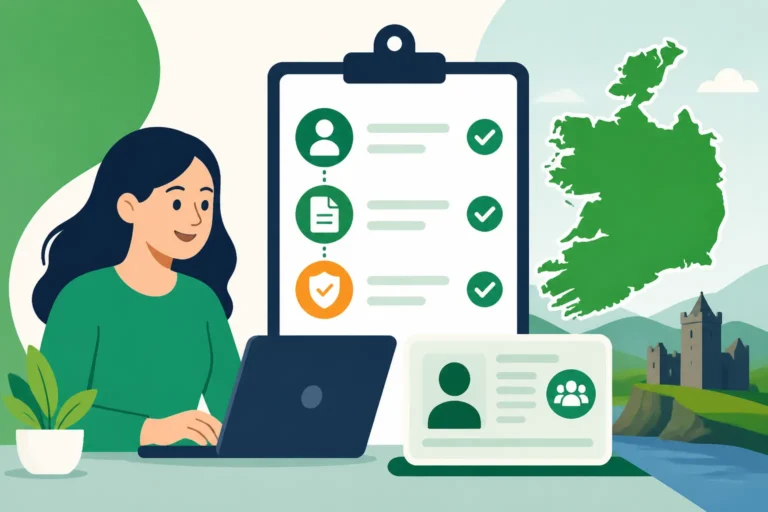
Here’s a breakdown of the documents you’ll typically need:
-
Proof of Identity:
- Your current valid passport (the gold standard).
- Or, a national identity card from an EU/EEA country (if applicable).
- Sometimes, an Irish driving licence, but if you don't have a PPSN, you likely don't have one of these yet.
Crucial Tip: Make sure your passport isn't expiring soon. They want current, solid ID.
-
Proof of Address in Ireland:
- This is often the trickiest one for new arrivals. The document must be less than 3 months old and show your name and current Irish address.
- Accepted documents:
- A utility bill (electricity, gas, landline phone, internet). Mobile phone bills are often NOT accepted.
- Bank statement from an Irish bank.
- Letter from a financial institution (like a credit union or building society).
- Official letter or document from a government department (e.g., Revenue, local authority).
- Letter from your employer (on official letterhead) confirming your address. This is a lifesaver for many new expats.
- Tenancy agreement or mortgage statement.
- For those in short-term accommodation or staying with friends/family, a letter from the homeowner/landlord confirming your residence, accompanied by their utility bill or property tax statement, can sometimes be accepted. This letter needs to be dated and signed, stating you reside at their address.
Real-life scenario: I remember a friend who moved over, staying initially in an Airbnb. He eventually got a letter from his new employer stating his residential address in Ireland, which, combined with his passport, was sufficient. It bought him time to get an Irish bank account and utility bills in his own name.
-
Proof of Your Reason for Needing a PPS Number:
- For Employment: A letter of offer from your employer on company letterhead, confirming your employment starting date and details, is essential. This letter should explicitly state that a PPSN is required for employment. If you're coming on a Critical Skills Employment Permit, or other work visas, the job offer is your proof. Understanding How to Apply for a Critical Skills Employment Permit in Ireland might also involve similar documentation.
- For Social Welfare: A letter from the relevant social welfare section confirming that you're applying for a specific payment.
- For Education: A letter from the school, college, or university confirming your enrollment.
Always double-check the Department of Social Protection's official website for the most up-to-date list of accepted documents before your appointment. Better safe than sorry when dealing with Irish bureaucracy!
Here’s a summary table of the most commonly required documents:
| Document Type | Specifics | Importance for Expats |
|---|---|---|
| Proof of Identity | Valid Passport (most preferred) or EU/EEA National Identity Card. | Absolutely essential. Must be original and current. |
| Proof of Address in Ireland | Utility bill, bank statement, employer letter, tenancy agreement (all < 3 months old). | Often the biggest hurdle for new arrivals. Employer letter or letter from homeowner with their bill are good temporary solutions. |
| Proof of Reason for PPSN | Job offer letter, social welfare application letter, school enrolment letter. | You must demonstrate a genuine need for the PPSN in Ireland. No reason, no number. |
The Application Process: Step-by-Step to Your Golden Ticket
Once you've gathered all your documents, the actual application process is relatively straightforward, although it does involve both an online and often an in-person component.
Applying Online: The First Port of Call
The first step for most people is to start their application online via the MyWelfare.ie website. This platform is run by the Department of Social Protection and is designed to streamline the initial information gathering.
-
Create a MyWelfare Account: If you don't already have one, you'll need to register. This involves providing your email address and setting up a password.
-
Start Your PPSN Application: Navigate to the PPS Number section and begin the application. You'll be asked to input your personal details – name, date of birth, nationality, etc.
-
Upload Documents: This is where your carefully gathered documents come into play. You’ll be prompted to upload clear images or scans of your:
- Proof of Identity (e.g., passport picture page).
- Proof of Address (e.g., a photo of your utility bill).
- Proof of Reason for PPSN (e.g., your job offer letter).
Common Pitfalls: Be very careful to ensure the photos or scans are high resolution, clearly legible, and show the entire document. Blurry images, cropped corners, or documents with glare are common reasons for delays or rejections. The system can be a bit finicky about file sizes and formats, so make sure everything is prepped.
After you've submitted your online application, you'll receive a confirmation. The Department of Social Protection will review your submission and, if everything looks in order, they will arrange for the next step.
The In-Person Appointment: What to Expect at the Registration Centre
While the online system is a great start, a crucial step for almost all non-Irish nationals is the in-person verification. After your online submission, you'll typically be invited to attend an appointment at a designated PPS Number registration centre, often located within an Intreo Centre.
- Booking Your Appointment: You might be prompted to book this online, or you might receive a letter or email with details. Don't delay in booking, as slots can fill up, especially in larger cities like Dublin, Cork, or Galway.
- What to Bring (ORIGINALS!): This cannot be stressed enough – bring all your original documents that you uploaded online. This includes your passport, your proof of address (e.g., utility bill), and your proof of reason (e.g., job offer letter). They will need to verify these against your online submission.
- The Interview: When you arrive, you'll likely wait a bit, then be called for a short interview. The purpose is mainly to verify your identity and confirm your stated reason for needing the PPSN. The staff are generally helpful, but they stick to the rules. They'll examine your original documents, ask a few questions about your move to Ireland, your job, and your address. It's usually a quick and painless process if you have all your ducks in a row.
The experience at the Intreo Centre is usually efficient. Just ensure you're polite, have all your paperwork, and clearly articulate your "reason" for needing the PPSN.
Receiving Your PPS Number and Next Steps
After your successful in-person verification, the waiting game begins. You won't typically receive your PPS Number on the spot.
- Delivery by Post: Your PPS Number will usually be sent to your registered Irish address by post. This can take anywhere from a few days to a couple of weeks, depending on the current workload. Be patient, but if it goes beyond three weeks, it’s worth contacting the Department of Social Protection to follow up.
- Your Initial Certificate: Along with your PPS Number, you'll often receive a letter confirming the number, which acts as your initial proof. Keep this safe!
- Activating Your Number: Once you have your PPS Number, the real work begins.
- Inform Your Employer: Give your PPSN to your employer immediately. This will allow them to correctly register you for PAYE (Pay As You Earn) and PRSI (Pay Related Social Insurance), ensuring you don't pay emergency tax. If you want to know more about the Irish tax system, check out How the Irish Tax System (Revenue) Works: PAYE, PRSI and USC Explained (2027).
- Register with Revenue: You’ll need to register your employment with Revenue online via their myAccount service. This links your PPSN to your employment and allows you to claim tax credits. This is a critical step; without it, you'll remain on emergency tax. Understanding PAYE, PRSI and USC Deductions for Employees in Ireland is crucial for managing your take-home pay.
- Healthcare: Use it to register with a GP, as discussed in How to Register with a GP (Family Doctor) in Ireland.
- Banking: While you might have started with a digital banking solution like Wise for managing international transfers and initial spending, having your PPSN is vital for fully setting up traditional Irish bank accounts (like with AIB or Bank of Ireland) and accessing all banking services. For more on this, see The Expat Guide to Opening a Bank Account in Ireland.
Navigating Common Hurdles and Getting Your Affairs in Order
The PPSN application process isn't always smooth sailing, and many expats face similar challenges. Knowing what these are and how to tackle them can save you a lot of stress.
The Proof of Address Predicament
As mentioned, this is the bane of many a new expat’s existence. You can’t get a utility bill without an address, and you can’t always get a bank account without proof of address, and you can’t get a PPSN easily without proof of address. It’s a circular problem!
Here are some strategies to navigate this:
- Employer Letter is Gold: If you have a job offer, ask your employer to provide a formal letter on company letterhead confirming your employment and your residential address in Ireland. Many employers are familiar with this request for new international hires.
- Bank Account First (if possible): Some Irish banks might allow you to open a basic account with just your passport and proof of employment (job offer letter) initially. Once you get a statement from that Irish bank (which they can send to your confirmed address), that becomes your proof of address. This isn't always guaranteed, as banks have their own strict KYC (Know Your Customer) rules, but it's worth asking.
- Leverage Short-Term Accommodation: If you’re staying with friends, family, or even in some longer-term Airbnb type rentals, ask the property owner or main tenant to write a letter confirming you reside there. This letter must be accompanied by one of their recent utility bills (less than 3 months old) for that address, clearly showing their name and the address. This demonstrates a legitimate connection to a physical address.
- Digital Banking Solutions like Wise: While Wise itself won't provide the Irish utility bill or traditional bank statement often required for PPSN proof of address, it can be incredibly useful for managing your money during this initial, turbulent period. You can receive your salary (if your employer allows international transfers before an Irish bank account is fully set up) and manage spending while you navigate opening a local account and getting traditional address proofs. It helps keep your finances flowing even when official papers are still pending.
Be persistent and proactive. Call the Department of Social Protection if you're unsure about what they'll accept in your specific circumstances.
What If Your Application is Delayed or Rejected?
It happens. Applications get delayed, documents go missing, or there might be a simple oversight. Don't panic, but do act swiftly.
- Check Application Status: If you applied online, log into MyWelfare.ie to check the status of your application. The system often provides updates.
- Contact the Department of Social Protection: If there's no update or if it's taking an unusually long time (more than 3-4 weeks after your appointment), call the PPS Number allocation section of the Department of Social Protection. Be ready with your reference number (from your online application) and personal details.
- Common Reasons for Rejection:
- Insufficient Proof of Need: You didn't clearly demonstrate why you need a PPSN.
- Incomplete/Illegible Documents: Blurry scans, missing pages, or documents that don't meet the "less than 3 months old" rule.
- Mismatching Details: Information on your application doesn't match your identity documents.
- No Proof of Address: This is, again, a frequent culprit.
If rejected, you will usually receive a letter explaining why. Read it carefully and address the specific points raised. Gather any missing documents or clearer versions and reapply.
Essential Follow-Up: Using Your PPSN Wisely
Once you finally have that golden ticket, your PPS Number, make sure you use it correctly and promptly.
- Register with Revenue Online: As soon as you get your PPSN, go to Revenue.ie and register for their myAccount service. This allows you to manage your taxes, claim credits, and ensures you're on the correct tax rate. If you have any foreign income or assets, you might need expert guidance on your tax obligations, and this is where services like Taxes for Expats become invaluable, especially once you've secured your PPSN.
- Healthcare Access: Provide your PPSN to your GP. It's crucial for their administrative records and for any potential applications for schemes like the Drugs Payment Scheme (DPS), which limits your monthly spend on prescription medications. The Complete Guide to Healthcare in Ireland for Expats (2026) offers a full picture of the system.
- Driving Licence: If you’re swapping out your old licence for an Irish one, your PPSN will be required as part of the application.
- Educational Credentials: If you need your foreign qualifications recognised in Ireland, such as by NARIC Ireland, a PPSN might be requested as part of the process. You can learn more about this in How to Get Your Foreign Qualification Recognised in Ireland.
- Keep it Safe: Treat your PPSN like a sensitive piece of personal data. Don’t share it unnecessarily, and be wary of requests for it from unverified sources.
The PPS Number is more than just an administrative formality; it's an integral part of living and working in Ireland. While getting it might feel like navigating a complex maze at first, with careful preparation and persistence, you'll soon have yours and be well on your way to settling into your new life in the Emerald Isle.
Disclaimer
The information provided in this guide is for general informational purposes only and does not constitute professional advice. While every effort has been made to ensure accuracy, regulations and procedures can change. It is always recommended to consult official government websites (such as the Department of Social Protection and Revenue) or seek professional advice for the most up-to-date and specific guidance regarding your individual situation.