What Is the Difference Between a Medical Card and a GP Visit Card?
Oh, the joys of Irish bureaucracy and its unique way of naming things! If you've just arrived in Ireland, or even if you've been here a while, trying to figure out the difference between a Medical Card and a GP Visit Card can feel like trying to decipher an ancient Celtic manuscript. It's confusing, it's frustrating, and honestly, it’s a hurdle many expats stumble over. This guide is here to untangle that knot for you, explaining exactly what each card is, who it's for, and why understanding the distinction is crucial for your financial and medical well-being in Ireland.
Understanding the Landscape of Public Healthcare Support in Ireland
When you first land in Ireland, it quickly becomes apparent that while there’s a public healthcare system, it’s not always "free" in the way some might assume from other countries. There are co-payments, charges, and various schemes designed to help different segments of the population. Two of the most common forms of assistance that newcomers often hear about, and frequently mix up, are the Medical Card and the GP Visit Card. They both sound great, promising free access, but their scope and eligibility couldn't be more different.
The HSE and its Role in Healthcare Access
At the heart of Ireland's public health system is the Health Service Executive, or HSE. Think of the HSE as the big umbrella organisation responsible for delivering public health and social services across the country. From hospitals and clinics to mental health services and community care, the HSE has a hand in it all. For expats, understanding the HSE is step one because it's through this body that you'll access most public services, including applying for these vital cards.
The HSE is also the gatekeeper for eligibility. They set the rules, conduct the assessments, and ultimately decide if you qualify for support. Navigating their website or dealing with their administrative processes can be a challenge, even for native Irish people, let alone someone who's new to the system and perhaps still getting their head around PPS numbers and proof of address. It’s a marathon, not a sprint, getting set up in the Irish healthcare system, and the HSE is the main administrator of that race.
Initial Hurdles: Why These Cards Matter So Much
Let's be brutally honest: medical costs in Ireland can add up, especially if you're paying out of pocket for every doctor's visit and prescription. A single GP consultation can set you back anywhere from €50 to €70, sometimes even more, depending on the practice and your location – and that's just for a chat with the doctor, not including any tests or prescriptions! If you have a chronic condition, a young family, or just bad luck with illnesses, those costs can quickly spiral into hundreds, if not thousands, of euros a year.
This is why these cards aren't just a nice-to-have; they can be a financial lifeline. For many, they represent the difference between seeking timely medical attention and putting it off due to cost concerns. As an expat, you might not have the social support networks or family here to lean on, making financial stress related to healthcare even more acute. Trying to keep up with your health, navigate a new job, and manage family life, all while worrying about unexpected medical bills, is a burden no one should have to carry unnecessarily. These cards exist to ease that burden for those who qualify, and understanding them is your first step towards getting the support you deserve.
Diving Deep into the Medical Card: Comprehensive Support
Alright, let's talk about the big kahuna: the Medical Card. If you qualify for one of these, consider yourself incredibly fortunate, as it's the most comprehensive form of public healthcare assistance available in Ireland. It’s a genuine safety net that significantly reduces your out-of-pocket medical expenses.
Eligibility Criteria for the Medical Card
The Medical Card is primarily a means-tested benefit, meaning your eligibility largely depends on your income, assets, and family circumstances. This is where it gets a bit complex, and many expats find themselves scratching their heads. The HSE assesses your weekly income against specific thresholds, taking into account things like your age, marital status, and the number of dependents you have.
For example, as of recent guidelines (which, heads up, can change, so always check the official HSE website for the latest figures), a single person under 66 might have a gross weekly income limit somewhere around €184.50. For a couple with two children, that limit could be closer to €320-€330 per week. These are just ballpark figures, and the HSE also considers allowances for rent, mortgage payments, childcare, and certain medical expenses you might already have. It's not a simple cut-off point; it's a holistic assessment.
Let's imagine a hypothetical scenario: Maria, a single mother of two, recently moved to Cork on a critical skills permit. Her salary, while allowing her to live comfortably, puts her slightly above the basic income threshold. However, once the HSE factors in her rent, childcare costs for two children, and the travel expenses for her job, her assessable income drops significantly, potentially putting her within the Medical Card limits. On the other hand, David, a single software engineer in Dublin earning a good salary, even with high rent, will almost certainly be well over the threshold and won't qualify.
The application process requires a good stack of documents to prove your income, residency, and personal circumstances. You’ll need payslips, bank statements, proof of address, P60s or tax returns, and details of any dependents. It can feel invasive, but it's how the HSE ensures the card goes to those who genuinely need it most. For a full breakdown, you can learn more about Understanding the Medical Card Means Test in Ireland.
What the Medical Card Covers: A Lifeline for Many
This is where the Medical Card truly shines. If you have one, you're entitled to a huge range of benefits, largely free at the point of use. This includes:
- Free GP Visits: You can see your family doctor without paying a consultation fee. This alone is a massive relief for most people.
- Free Prescription Medicines: While there might be a small prescription charge per item (capped monthly), the vast majority of the cost is covered. This is particularly beneficial for those with chronic conditions requiring expensive medications. For instance, if you're on a medication that costs hundreds of euros a month, with a Medical Card, you'll only pay a very small fee per item, up to a monthly maximum.
- Public Hospital Services: This includes inpatient and outpatient services, maternity care, and accident and emergency visits. If you're admitted to a public hospital, you won't incur the standard daily inpatient charge or the A&E fee.
- Certain Dental, Optical, and Aural Services: This usually covers basic treatments. For dental, it might mean an annual check-up, necessary fillings, or extractions, but usually not cosmetic work or complex orthodontics. For optical, it could be an eye test and a contribution towards glasses. For aural, it might cover hearing tests and certain aids. These are often subject to specific schemes and waiting lists, so it's always best to check with your practitioner what exactly is covered under the Medical Card before proceeding.
- Maternity and Infant Care: Comprehensive care throughout pregnancy and after birth in public hospitals.
Essentially, with a Medical Card, your primary healthcare needs are largely covered, providing immense peace of mind. It also works in conjunction with schemes like the Drugs Payment Scheme (DPS), meaning even if you hit the monthly cap on prescription charges, your Medical Card ensures you're still well within affordable limits.
Application Process and Maintaining Your Medical Card
Applying for a Medical Card requires some patience and diligence. You can apply online through the HSE website, which is generally the quickest and most convenient method, or you can print out a paper form and mail it in. The online application allows you to upload all your supporting documents electronically. I've often heard expats lament about the sheer volume of paperwork, but trust me, it’s worth gathering it all. Remember, you'll need to submit proof of identity, your PPS number, details of your income, savings, investments, and any outgoings like rent or mortgage payments. If you're wondering how to get started, this guide on How to Apply for a Medical Card Online in Ireland? will walk you through it.
Once submitted, the waiting game begins. Processing times can vary, from a few weeks to several months, depending on the complexity of your application and the HSE's workload. During this waiting period, if you need to see a GP or get a prescription, you'll likely have to pay upfront. Some GPs might allow you to claim back fees if your card is approved retrospectively, but this isn't guaranteed, so always ask in advance. This is precisely why some expats opt for short-term travel or health insurance solutions, like SafetyWing, during their initial period in Ireland, before their long-term health coverage is fully established. It bridges that uncertain gap.
Medical Cards are usually issued for a specific period, often between one to three years, after which they need to be reviewed. You'll receive a reminder from the HSE when your review is due. It's crucial to respond promptly and update any changes in your circumstances (income, address, family size) to ensure your card remains valid. If your income increases significantly, you might find you no longer qualify, or you might switch to a GP Visit Card.
The GP Visit Card: Focusing on Doctor Consultations
Now, let's turn our attention to the GP Visit Card. This card is a more targeted form of support, designed specifically to cover the cost of visits to your family doctor. It's a fantastic benefit for those who don't meet the stricter means test for the Medical Card but still need help with those recurring GP fees.
Who Qualifies for a GP Visit Card?
Like the Medical Card, the GP Visit Card is also means-tested, but the income thresholds are typically higher, making it accessible to a broader range of people. This means you can earn more and still qualify for a GP Visit Card compared to a Medical Card.
The HSE assesses your income and circumstances, but the allowances and overall limits are more generous. This often means that middle-income earners, who are above the Medical Card threshold but still find regular GP fees a burden, can qualify. For instance, a single person might have a weekly income limit closer to €290-€300, and a couple with two children around €500-€520, again, these are just illustrative figures and can change.
There are also specific categories of people who qualify for a GP Visit Card regardless of income, under what’s known as "universal" schemes. For example:
- Children under 8: All children under the age of eight in Ireland are entitled to a GP Visit Card, offering free GP care, regardless of their family’s income. This is a huge relief for parents of young children, who often need frequent doctor visits.
- People aged 70 and over: Similarly, everyone aged 70 and over in Ireland is entitled to a GP Visit Card, ensuring free access to their family doctor in their later years.
For expats, the concept of "ordinary residence" in Ireland is key for both cards. Generally, you need to be intending to reside in Ireland for at least one year to be considered ordinarily resident and thus eligible for these public healthcare schemes.
Benefits of the GP Visit Card: Free GP Appointments
The clue is in the name: the primary benefit of the GP Visit Card is free consultations with your General Practitioner. This means you won't pay the €50-€70 fee each time you need to see your doctor. For many, especially those with young children or recurring health issues that don't require expensive medications but do need regular check-ups, this can lead to significant savings over a year.
However, and this is a crucial distinction, the GP Visit Card does NOT cover:
- Prescription medicines: You will still have to pay the full cost of any prescribed medications. However, you can apply for the Drugs Payment Scheme (DPS), which caps your monthly out-of-pocket spend on prescriptions to ensure you don't pay more than a certain amount (e.g., €80 per month as of recent figures, though this can vary).
- Public hospital charges: This includes the A&E fee or inpatient charges if you need to be admitted to a hospital.
- Specialist consultant fees: If your GP refers you to a specialist (e.g., a dermatologist or cardiologist), you will have to pay for that consultation.
- Dental, optical, or aural services: These are not covered by the GP Visit Card.
So, while it's fantastic for doctor visits, it leaves you exposed to other medical costs. This is why many expats, even with a GP Visit Card, choose to also have private health insurance with providers like VHI, Laya, or Irish Life to cover the gaps, especially for hospital care and specialist visits.
Applying for and Using Your GP Visit Card
The application process for a GP Visit Card is quite similar to the Medical Card but often perceived as slightly less arduous due to the higher income thresholds. You can apply online via the HSE website or by post. You'll still need to provide proof of identity, PPS number, income, and address. For those who meet the universal criteria (under 8s or over 70s), the application is even simpler, often requiring just basic personal details.
Once approved, you'll receive your GP Visit Card in the post. You simply present this card at your GP's office each time you have an appointment, and the consultation fee will be waived. It’s a straightforward system that removes the financial barrier to seeing your family doctor when needed. If you're ready to apply, check out How to Apply for a GP Visit Card in Ireland for a step-by-step guide.
Key Differences and Practical Implications for Expats
Understanding the nuances between these two cards is vital for any expat trying to make sense of healthcare costs and access in Ireland. It's not just about what they cover, but who they're really designed for.
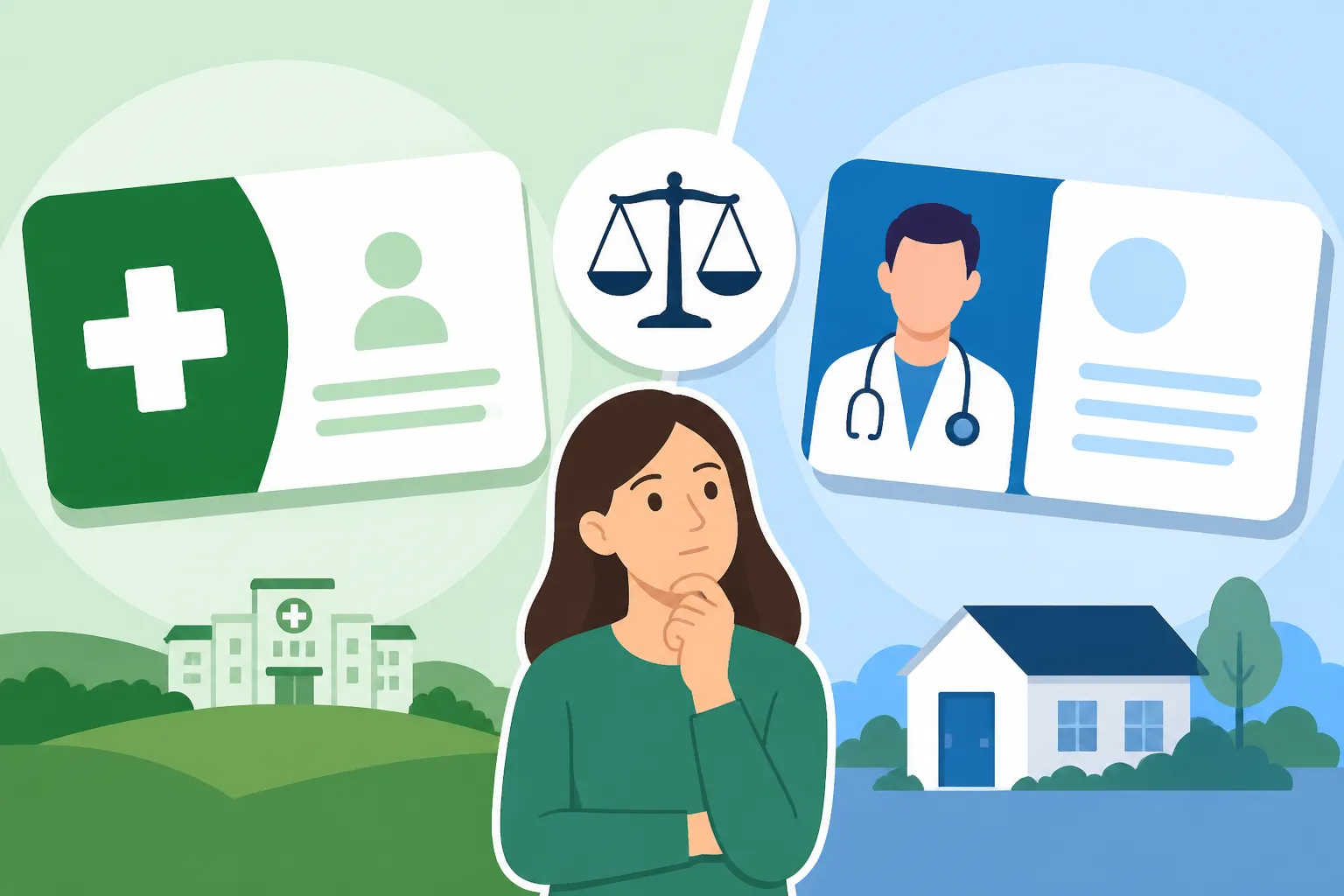
Side-by-Side Comparison: Medical Card vs. GP Visit Card
Let's lay it out clearly so you can see the distinctions at a glance.
| Feature | Medical Card | GP Visit Card |
|---|---|---|
| Eligibility | Strict means-tested (low income/assets), some universal categories (e.g., long-term illness scheme in specific cases). | Less strict means-tested (higher income thresholds), universal for under 8s and over 70s. |
| GP Visits | FREE | FREE |
| Prescriptions | FREE (small charge per item, capped monthly) | NOT COVERED (pay full cost, use DPS to cap) |
| Public Hospital | FREE (A&E, inpatient, outpatient charges waived) | NOT COVERED (pay A&E fee, inpatient charges, etc.) |
| Specialist Referrals | Mostly covered (if referred through public system) | NOT COVERED (pay full cost) |
| Dental/Optical/Aural | Some basic services covered (subject to schemes/limits) | NOT COVERED |
| Application | More detailed income/asset review | Simpler income review (if not universal) |
| Target User | Low-income individuals/families, chronic illness requiring extensive care. | Middle-income individuals/families, young children, seniors, needing only GP access. |
As you can see, the Medical Card is truly comprehensive, covering almost all aspects of public healthcare, while the GP Visit Card is much more focused on GP consultations. For many working expats who earn above the Medical Card threshold, the GP Visit Card becomes the most realistic public support option, unless they have very specific, low-income circumstances or are in the universal categories.
Navigating the Gap: What to Do Without Either Card
So, what if you don't qualify for either of these cards? This is the reality for many expats, especially those arriving for professional roles with decent salaries. Without a Medical Card or GP Visit Card, you’re looking at paying out of pocket for most of your healthcare needs, from GP visits to prescriptions and hospital charges. This is precisely why private health insurance becomes not just an option, but often a necessity for expats in Ireland.
Companies like VHI, Laya Healthcare, and Irish Life Health dominate the private health insurance market here. They offer a wide range of plans, from basic hospital cover to comprehensive packages that include outpatient benefits (like GP visits, physiotherapy, and specialist consultations). Choosing the right plan can feel overwhelming, but it's an investment in your peace of mind and financial security. You can delve deeper into options in Health Insurance in Ireland: VHI, Laya, Irish Life and Options Explained.
For new arrivals, there's often a waiting period before your private health insurance kicks in for certain benefits, especially for pre-existing conditions. During this initial phase, or if you're on a short-term stay, a good travel insurance policy or international health insurance like SafetyWing can offer crucial protection against unexpected medical emergencies. Nobody wants to face a significant hospital bill in a new country just because their full-fledged insurance hasn't started yet. Knowing What Happens If I Get Sick Before My Insurance Starts in Ireland? is a valid and important concern for many.
Real-World Scenarios and Expert Advice
Let's look at a few common expat scenarios:
- Scenario 1: The New Arrival: You've just landed in Dublin for a new job. Your PPS number is sorted, but you haven't even thought about a GP or health cards yet. Suddenly, you come down with a nasty flu. Without a Medical Card or GP Visit Card, you'll pay the full fee for your GP visit, and the full cost of any antibiotics or other prescriptions. If it turns out to be more serious and you need to go to A&E, you'll face the A&E charge (currently €100 for non-referral). This is where having private insurance or an initial travel insurance like SafetyWing is absolutely critical.
- Scenario 2: The Family on a Moderate Income: You're a couple with two young children, and one of you works while the other manages the household. Your combined income might be above the Medical Card threshold, but having two kids means frequent GP visits for vaccinations, ear infections, or just general sniffles. If your means assessment puts you eligible for a GP Visit Card, those doctor visits for the whole family become free, saving you hundreds of euros annually. You’d still need to budget for prescriptions (using the DPS) and consider private insurance for hospital cover.
- Scenario 3: The High-Earning Professional: You've secured a fantastic job in the tech sector, your salary is well above both card thresholds. You won't qualify for either the Medical Card or the GP Visit Card. For you, private health insurance is your primary route to manage healthcare costs effectively. Without it, you'd be paying out of pocket for everything, which could be extremely costly in case of a serious illness or accident. Many employers offer health insurance as part of their benefits package, so always check with your HR department.
My advice? Don't wait until you're sick to figure this out. As soon as you arrive and have your PPS number, start the process of Registering with a GP in Ireland: The Complete Expat Guide (2027). Your GP will be your gateway to the Irish healthcare system, and they can offer advice on local services and sometimes even assist with applications. Then, assess your eligibility for these cards and, if you don't qualify, look into private health insurance.
Frequently Asked Questions and Further Resources
Let's address a few common thoughts and clear up some persistent myths about healthcare in Ireland.
Common Misconceptions and Clarifications
- "Is healthcare free in Ireland?": This is a big one. The simple answer is: not entirely, and certainly not for everyone. While public hospitals provide care, there are charges for A&E visits (if not referred by a GP) and for inpatient stays, unless you have a Medical Card. GP visits and prescriptions also typically incur charges without the relevant cards. So, while Ireland does have a public health system, it’s far from being "free at the point of access" for the majority. For a more detailed breakdown, you can read Is Healthcare Free in Ireland for Residents?.
- "Can I have both a Medical Card and a GP Visit Card?": No, you cannot. If you qualify for a Medical Card, it automatically includes free GP visits, so there's no need for a separate GP Visit Card. The Medical Card is the more comprehensive benefit.
- "What if my income changes after I get a card?": If your circumstances change significantly (e.g., a pay raise, change in job, new family member), you are generally required to inform the HSE. This might lead to a review of your eligibility, and you could potentially move from a Medical Card to a GP Visit Card, or lose eligibility for both. It's important to be transparent to avoid any issues down the line.
- "Do I need to be an Irish citizen to get these cards?": No, you do not. Eligibility is primarily based on "ordinary residence" in Ireland and a means test (for most categories), not citizenship. As long as you are legally residing in Ireland and intend to stay for at least one year, you can generally apply.
Where to Get More Information
The best sources for up-to-date and official information are:
- The HSE Website: This is the official source for all things related to Medical Cards, GP Visit Cards, and other health schemes. While it can be a bit dense, it contains the most accurate and current eligibility criteria and application forms.
- Citizens Information: This is an excellent resource in Ireland for explaining various social and public services in plain language. They have comprehensive guides on both cards and can often help clarify specific situations.
- Your Local GP Surgery: The administrative staff at your GP's office often have a good understanding of these schemes and can sometimes offer guidance or direct you to the right resources.
Navigating healthcare in a new country is undoubtedly one of the most stressful aspects of moving abroad. But with a bit of research and understanding, you can certainly equip yourself with the knowledge to make informed decisions about your health and finances. Keep exploring resources like Navigating the Irish Healthcare System: An Expat's Roadmap (2027) to stay informed.
Disclaimer
The information provided in this guide is for general informational purposes only and does not constitute medical, financial, or legal advice. Healthcare policies, eligibility criteria, and costs in Ireland are subject to change by the Health Service Executive (HSE) and the Irish government. Expats should always consult the official HSE website, Citizens Information, or a qualified advisor for the most current and personalised information relevant to their specific circumstances.