How to Handle a Medical Emergency Abroad with the EHIC from Ireland
One of the most stressful experiences you can have as an expat living in Ireland is facing a medical emergency while traveling abroad. Whether it is a sudden illness in Spain or an accident in France, the confusion over who pays the bill can be overwhelming. This guide explains how to use the EHIC from Ireland to manage emergencies effectively.
Understanding the European Health Insurance Card (EHIC) for Irish Residents
The European Health Insurance Card, or EHIC, is an essential piece of plastic that every person living in Ireland should have in their wallet before heading to the airport. Essentially, it allows you to access state-provided healthcare during a temporary stay in another European Economic Area (EEA) country or Switzerland. It is important to understand that the EHIC is not a replacement for travel insurance, but rather a bridge that gives you the same rights to healthcare as a local citizen in the country you are visiting. If the local system is free, your care is free; if locals pay a subsidized fee, you pay that same fee.
Living in Ireland, you are part of a system that emphasizes "ordinary residence." This means that even if you aren't an Irish citizen, as long as you are legally living here and intend to stay for at least a year, you are generally entitled to apply for an EHIC through the Irish system. However, the card only covers "necessary" medical care—things that cannot wait until you get back to Dublin or Cork. It doesn't cover elective surgeries or "health tourism" where you fly to another country specifically to get a procedure done. Understanding this distinction is the first step in Navigating the Irish Healthcare System: An Expat's Roadmap (2027) while managing your life abroad.
One of the biggest misconceptions I see among newcomers is the belief that the EHIC covers everything. It absolutely does not. It only applies to public hospitals and state-funded doctors. If you accidentally walk into a high-end private clinic in Rome, your Irish EHIC will likely be useless, and you will be handed a very large bill. This is why understanding the boundaries of Public vs. Private Healthcare in Ireland: Which Should Expats Choose? is actually great practice for understanding how systems work across the rest of Europe.
Who is Eligible to Apply through Ireland
To get an EHIC from the Irish authorities, you must be "ordinarily resident" in Ireland. This means you are living here and have a PPS (Personal Public Service) number. For many expats, this is one of the first hurdles they clear when moving, right alongside How to Register for Tax and Get a PPS Number in Ireland. If you are a non-EU/EEA national living in Ireland, you are still eligible for the card, but there are sometimes extra checks to ensure your IRP (Irish Residence Permit) is valid and that you are contributing to the system or legally entitled to be here.
It is a common point of frustration for expats from outside Europe to find that their residency in Ireland doesn't automatically grant them the same seamless travel rights as a passport holder, but for healthcare, the EHIC is surprisingly inclusive. As long as you can prove you live in Ireland, the HSE (Health Service Executive) will generally issue the card. If you are a student here on a Stamp 2, or a worker on a Critical Skills permit, you should have your card sorted long before you book a weekend getaway to the continent.
There are specific rules for people who live in Ireland but work in another country (like those commuting across the border to Northern Ireland) or pensioners receiving a pension from another EEA country. In these cases, the country that pays your social security or pension is usually the one responsible for issuing your EHIC. If you are unsure, it is worth checking Understanding the Role of the HSE in Irish Healthcare to see how your specific residency status impacts your entitlements.
The Limitations of the EHIC
While the EHIC is a lifesaver, its limitations are significant. The most jarring one for many is that it does not cover "repatriation." If you are seriously injured and need a specially equipped medical flight back to Ireland, the EHIC will not pay a single cent toward that five-figure cost. This is a terrifying reality that many travelers don't consider until they are stuck in a hospital bed in Greece wishing they were back in a familiar HSE facility.
Furthermore, the EHIC does not cover private medical care or the costs of mountain rescue in ski resorts. If you are airlifted off a slope in the Alps, that bill is yours to settle. This is where products like SafetyWing become incredibly relevant for expats who travel frequently. While the EHIC handles the basic public hospital stay, a dedicated plan from SafetyWing can cover the logistical nightmares that a government card simply isn't designed to handle.
Finally, remember that the EHIC is only for the EEA and Switzerland. If your travels take you to the USA, Turkey, or Asia, your Irish EHIC is just a useless piece of plastic. Even in the UK, while there are reciprocal agreements post-Brexit, the rules have changed, and having comprehensive backup is always a smarter move than relying solely on government treaties. This is especially true when considering The Cost of Healthcare in Ireland: A Complete Breakdown for Foreigners (2026), which reminds us that healthcare is rarely truly "free" without the right paperwork.
Step-by-Step Guide to Applying for Your EHIC in Ireland
The process for getting your EHIC in Ireland is relatively straightforward, but like all things administrative in the Emerald Isle, it requires a bit of patience and the right documentation. You can apply online, by post, or in person at certain HSE local health offices. Most people choose the online route because it is the most convenient, provided you have your PPS number ready to go. If you already have a Medical Card or a GP Visit Card, the process is even faster because you are already "in the system."
If you don't have a Medical Card, don't worry. You are still entitled to an EHIC as an ordinary resident. You will just need to provide a bit more information during the application. The HSE website is the portal for this, and it is generally quite user-friendly compared to some other government sites. Once you apply, the card usually arrives in the mail within ten working days, though during peak holiday seasons (like June or December), it can take significantly longer. I always tell friends to apply at least a month before they plan to travel to avoid the "last-minute panic" at the letterbox.
If you are applying as a family, each person needs their own individual card. This includes newborns and children. Many parents mistakenly think that one card for the "head of the household" covers everyone, but this is a mistake that can lead to massive headaches at a foreign hospital. Ensure you know How to Register My Newborn for Healthcare in Ireland so that your little one has all their documentation ready for their first trip abroad.
The Online Application Process
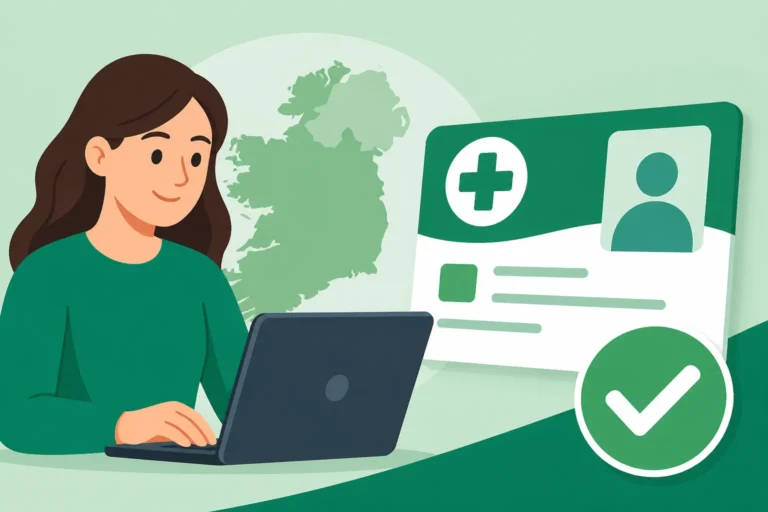
To start your application, head to the official HSE EHIC portal. You will need your PPS number, your date of birth, and your current address in Ireland. The system will check these details against the Department of Social Protection's records. If everything matches, you’ll be moved through the screens quickly. It is vital that your address is up to date with the government; if you have recently moved and haven't updated your records, your card might end up at your old flat, which is a security risk and a massive inconvenience.
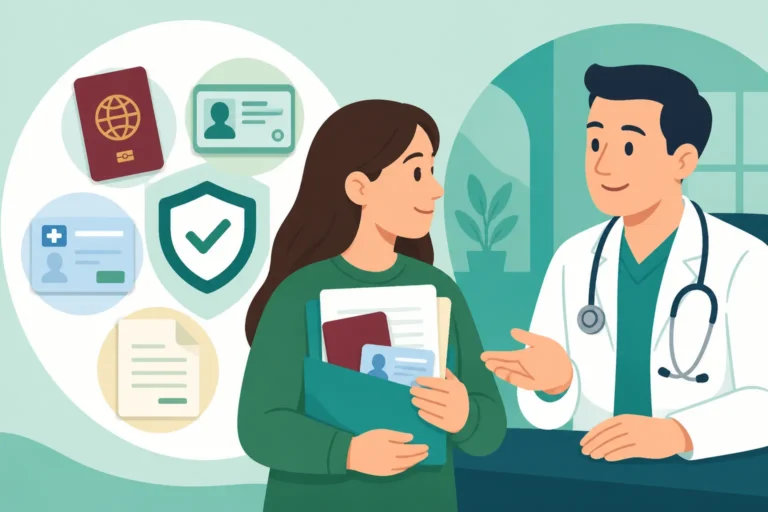
For those who are not Irish citizens, you might be asked to provide proof of your right to reside in Ireland. This usually involves uploading or sending a copy of your IRP card or your passport. If you are an EU citizen, your passport is usually enough. For non-EU expats, the HSE needs to see that you are legally living here. This is a good time to review What Documents Do I Need to See a Doctor in Ireland? to ensure your general medical paperwork is in order.
If the online system rejects your application—which happens occasionally due to data mismatches—don't panic. You can still apply using a paper form (Form E111). You can pick this up at your local health office or download it. Sometimes a quick visit to a HSE Health Centre in Dublin or your local county office can resolve these data issues much faster than waiting for an email response.
Required Documentation and PPS Numbers
The PPS number is the "golden key" to your application. Without it, you cannot get an EHIC from Ireland. If you are a new arrival and still waiting for your PPS number to be issued, you cannot get an EHIC yet. In this interim period, it is absolutely essential to have private travel insurance like SafetyWing to ensure you aren't left vulnerable while the Irish bureaucracy grinds along.
In addition to the PPS number, you should have your "Medical Card" number handy if you have one. If you are eligible for a Medical Card due to low income, the EHIC process is linked. For those who aren't, you'll need to demonstrate your "Ordinary Residence." This is usually proven by utility bills in your name, a rental agreement, or an employment contract. If you are wondering about your eligibility for these cards, you should check Understanding the Medical Card Means Test in Ireland for a deeper look at the criteria.
Keep in mind that the card is free. There are many "copycat" websites that look like official government portals and try to charge you a fee to "process" your application. Never pay for an EHIC. If a site asks for a credit card for a "service fee," close the tab immediately. The only place to get a legitimate Irish EHIC is through the HSE.
Renewing Your Card and Handling Expirations
The Irish EHIC is typically valid for up to five years, but this can vary depending on your residency status. For many non-EU expats, the card's expiry date is often tied to the expiry of their IRP card. This is a crucial detail to monitor. If your IRP expires in six months, your EHIC might also have a shorter validity.
Renewing is much easier than the initial application. You can usually do it online using your existing EHIC number and your PPS number. The HSE will send a reminder if they have your correct contact details, but you shouldn't rely on that. I recommend setting a calendar alert for six months before the card expires. If you find yourself at the airport with an expired card, you can't "express" a new one, but there is a workaround called a Provisional Replacement Certificate, which we will discuss later.
If you have changed your name (for example, through marriage) or moved house, you must update these details before renewing. Traveling with a card that doesn't match your passport name can cause major issues at a hospital reception desk in Germany or Spain. Ensure you understand How to Handle a Medical Emergency in Dublin so you know the standards of care to expect when you return home to Ireland after an incident abroad.
Navigating a Medical Emergency While Traveling in the EU
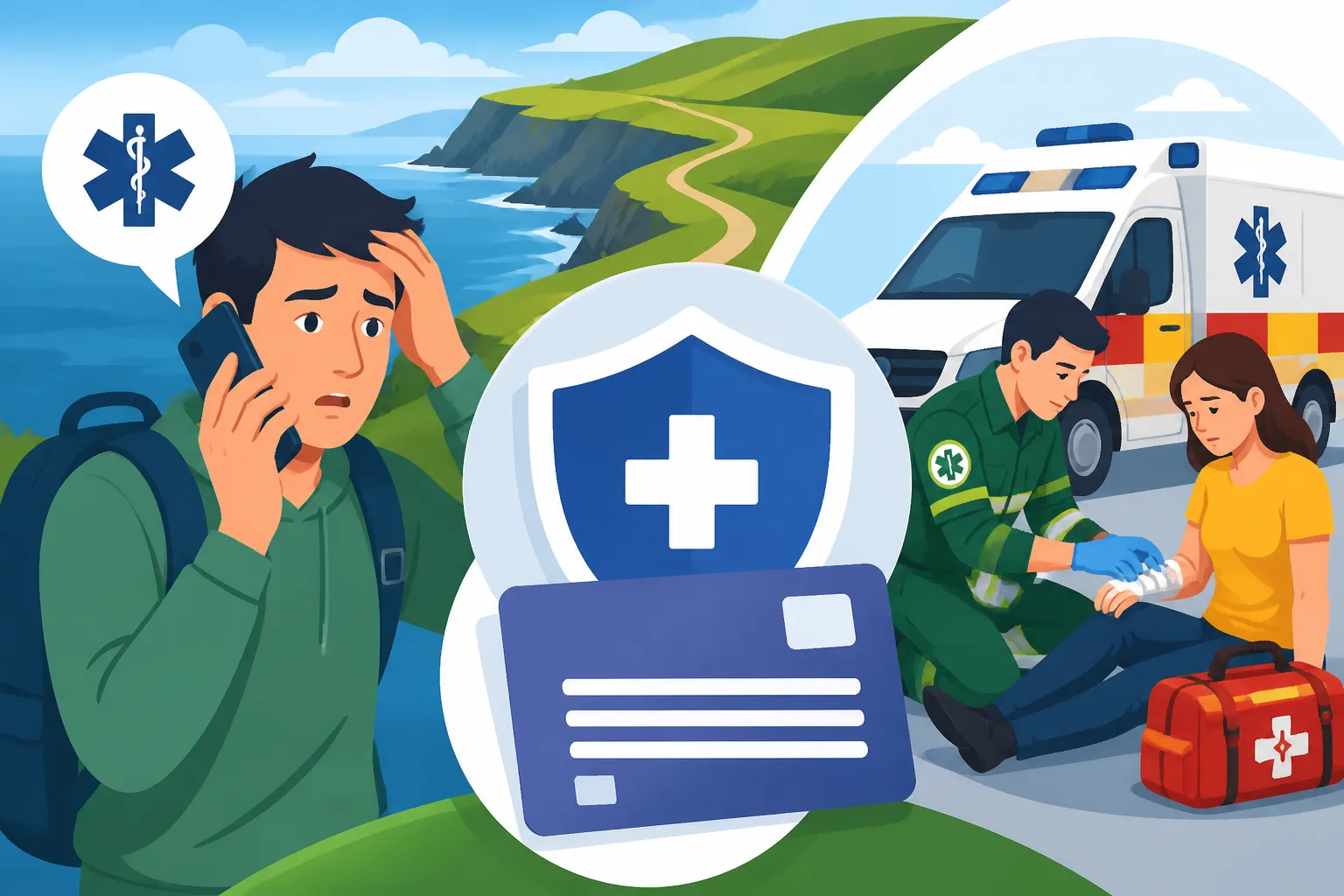
When an emergency happens, the first thing to do is stay calm. In any EU country, the universal emergency number is 112. This number is free to call from any phone and will connect you to the local emergency services (ambulance, fire, or police). Operators are often multilingual, which is a huge relief when you are in shock and don't speak the local language.
Once you arrive at a hospital or a doctor's surgery, you must present your EHIC immediately. Do not wait until you are being discharged to show the card. In many European countries, the administrative process for the EHIC is done at the point of entry. You should also have your passport or IRP card ready to prove that you are the person named on the EHIC. If you don't show the card upfront, the hospital may treat you as a private patient, and trying to "reverse" that billing later is an administrative nightmare that involves months of paperwork with the HSE back in Ireland.
It is also worth noting that in some countries, you may still have to pay a "co-payment." This is a small, fixed fee that locals also pay for doctor visits or prescriptions. For example, in some regions, a GP visit might cost 10 or 20 Euros even with an EHIC. These fees are generally not refundable through the EHIC system because they are the standard cost for residents. For a comparison of how these costs stack up, see the table below.
| Feature | EHIC Coverage | Private Insurance (e.g., SafetyWing) |
|---|---|---|
| Public Hospital Stay | Included (Standard of a local) | Included (Subject to policy limits) |
| Private Clinic Visit | Not Included | Included |
| Prescription Costs | Subsidized / Local rates | Reimbursable |
| Medical Repatriation | No | Yes |
| Mountain/Sea Rescue | No | Yes |
| Emergency Dental | Limited (Basic only) | Included (Varies by plan) |
Finding a Public Healthcare Provider
The EHIC only works with healthcare providers that are part of the state's public health system. In some countries, like France or Germany, many doctors have "mixed" practices where they see both state and private patients. You must explicitly ask: "Do you treat patients under the state system?" or "Do you accept the EHIC?". If they say no, and you proceed, you will be paying out of pocket.
In cities with large expat populations, there are often "tourist clinics" that look official but are entirely private and very expensive. They may offer to "help with the paperwork," but they will likely charge you hundreds of Euros for a simple consultation. To find a legitimate public provider, look for the local equivalent of the HSE. In Spain, look for a "Centro de Salud"; in Italy, look for "Servizio Sanitario Nazionale" (SSN) signs.
If you are in a remote area and have no choice but to use a private doctor, the EHIC will not help you. This is another reason why I always suggest having a backup plan. A digital nomad or frequent traveler using SafetyWing can simply use the private facility and claim the cost back later, which is much better than suffering because you can't find a "state" doctor in the middle of the night. This is similar to how you might Find and Register with a Local GP Practice in Ireland—it's all about knowing which doors are open to you.
Presenting Your Card at the Point of Service
When you hand over your EHIC, the medical staff will take a scan or a photocopy. In some countries, they will give you a "treatment form" that you need to sign. This form is essentially the billing document that they send to their government, which in turn bills the Irish government. It’s a seamless process behind the scenes, but you must ensure they have recorded your EHIC number correctly.
If you are asked to pay upfront for something that you believe should be covered by the EHIC, ask for an itemized receipt and a "treatment certificate." You might be able to claim this back from the HSE when you return to Ireland, but it is a slow process. Generally, if the country's system requires residents to pay first and get reimbursed later (like in France), you will have to follow that same process. You would submit your receipts to the local French health office (CPAM) while still in the country.
One thing people often forget is prescriptions. Your EHIC doesn't just cover the hospital stay; it often covers the medication prescribed for the emergency. However, you will need to take your EHIC to the pharmacy along with the prescription. Don't be surprised if there is a small "dispensing fee"—this is common in many parts of Europe and is usually quite affordable, much like the Prescription Medications and Pharmacies in Ireland: The Complete Guide explains for the Irish context.
Language Barriers and Local Administrative Hurdles
Dealing with a medical emergency is hard enough without a language barrier. While many doctors in Europe speak some English, administrative staff at public hospitals might not. I have seen expats get frustrated and give up on using their EHIC because the receptionist at a small Greek hospital didn't understand what the card was. In these cases, it helps to have the EHIC "app" on your phone, which provides translations of "I have a European Health Insurance Card" in every EU language.
If the staff is insistent that you pay as a private patient, try to find a "Patient Liaison" or someone in the billing department who handles international claims. Do not sign anything that says you are a "Private Patient" unless you are prepared to pay the full cost. If you are struggling, you can contact the Irish Embassy in that country for advice, though they cannot pay your medical bills for you.
For those who are particularly worried about language, having a private insurance provider like SafetyWing often gives you access to a 24/7 helpine where they can speak to the hospital staff on your behalf and confirm coverage. This can be a massive relief when you are in a state of panic. It’s a level of support that you simply don't get with a government-issued card. It's the difference between being a "guest" of the state and having a dedicated advocate, similar to How Specialist and Consultant Referrals Work in Ireland requires a certain level of administrative navigation.
EHIC vs. Private Travel Insurance: Why You Need Both
I cannot stress this enough: the EHIC is not a replacement for travel insurance. I have seen too many expats get "caught out" by thinking they were fully covered because they had that little blue card. Think of the EHIC as your "base layer" of protection—it handles the medical side of a public hospital stay. But what happens if your luggage is stolen, your flight is canceled, or you need to be flown home because you've broken your back?
Private travel insurance covers the "travel" part of your trip, not just the "health" part. If you have a family emergency and need to fly back to Ireland early, the EHIC does nothing for you. If you are an expat living in Dublin and traveling frequently, a subscription-based model like SafetyWing is often the most cost-effective way to ensure you are always covered. It provides a safety net that spans across borders, filling in the gaps that the HSE and the EHIC leave wide open.
Moreover, private insurance often gives you access to private hospitals, which can have much shorter waiting times and better facilities than some overburdened public systems in popular tourist destinations. If you have ever looked into How Long Are Waiting Lists in the Public Health System in Ireland?, you know that public systems everywhere have their limits. Having the option to go private in an emergency is a luxury that becomes a necessity when you are in pain in a foreign country.
Why Expats Often Choose SafetyWing for Extra Protection
SafetyWing has become a favorite in the expat community because it was designed specifically for people who don't live in their home country. Most traditional travel insurance policies require you to be a resident of the country you are departing from and have a "return date." For many expats in Ireland, their "home" is a bit more fluid. SafetyWing’s Nomad Insurance works like a subscription—you pay every four weeks, and you can start it even if you are already traveling.
For an expat in Ireland, this is perfect for those long summer trips back to South America or Asia, or even just for frequent weekend hops to the EU. It covers medical emergencies, but also things like travel delays, lost checked luggage, and natural disasters. While your EHIC handles your broken leg in a French public hospital, SafetyWing handles the fact that you missed your flight back to Dublin because of it.
Another major benefit is the ease of use. Everything is managed through a simple dashboard. When you're trying to figure out Is Public or Private Healthcare Better for Expats in Ireland?, you're looking for peace of mind. SafetyWing provides that same peace of mind for the times you step off the island. It’s an affordable way to ensure that a medical mishap doesn't turn into a financial catastrophe.
Handling Medical Emergencies Outside of the European Economic Area
If you are an expat in Ireland and you are traveling to the UK, the rules have remained somewhat stable due to a bilateral agreement, but you should still carry your EHIC (or its UK equivalent, the GHIC, if you were a UK resident). However, if you are heading to the United States, Australia, or anywhere else outside the EEA, you are entering a zone where medical costs can be astronomical. A single night in a US hospital can cost more than a year’s rent in Dublin.
In these non-EEA countries, you have zero "reciprocal" rights as an Irish resident. If you show up at a hospital in Thailand without insurance or a massive credit card limit, you might be denied non-life-threatening care. This is a cold reality that is hard to stomach, but it happens every day to travelers. Your Health Insurance in Ireland: VHI, Laya, Irish Life and Options Explained usually only covers you within the borders of Ireland unless you have a specific "international" add-on, which is often very expensive.
For these trips, a global health solution is non-negotiable. Whether you are visiting family back home or exploring new horizons, you need a policy that explicitly covers the region you are in. Again, this is where SafetyWing shines, as they offer global coverage (including or excluding the US, depending on your needs). It allows you to move between Ireland and the rest of the world without worrying about "coverage gaps" every time you cross a border.
Common Pitfalls and How to Avoid Them
The most common pitfall is the "Private Clinic Trap." In many holiday hotspots, the nearest medical facility to the beach or the hotel is a private "Urgency" clinic. They see the EHIC and simply tell the patient "it doesn't work here" without explaining why. The patient pays hundreds of Euros out of pocket, not realizing that a public hospital was just five minutes further away. Always verify the status of the facility before you agree to treatment.
Another mistake is forgetting to check the expiry date. I’ve seen people at the gate in Dublin Airport realize their card expired three months ago. While you can't get a new one instantly, you can apply for a "Provisional Replacement Certificate" (PRC) if you have a medical emergency and your card is missing or expired. You (or someone on your behalf) would need to contact the HSE EHIC office in Ireland to have this certificate faxed or emailed to the hospital abroad. It is a stressful process, so checking the date beforehand is much easier.
Finally, don't assume the EHIC covers your existing chronic conditions for "routine" care. If you have a condition that requires regular dialysis or oxygen therapy, you must arrange this with the foreign hospital before you travel. The EHIC will cover it, but the hospital isn't obligated to have a spot for you if you just show up. This is a level of planning that is similar to How to Get a Referral to a Consultant in Ireland—it requires forethought and communication.
Disclaimer
The information provided in this guide is for general informational purposes only and does not constitute legal or professional medical advice. While every effort has been made to ensure the accuracy of the details regarding the EHIC and Irish healthcare regulations as of 2026, rules and reciprocal agreements can change. Always verify current requirements with the Health Service Executive (HSE) or the official European Commission website before traveling. Private insurance recommendations are based on common expat preferences and should be reviewed against your individual needs and policy terms.