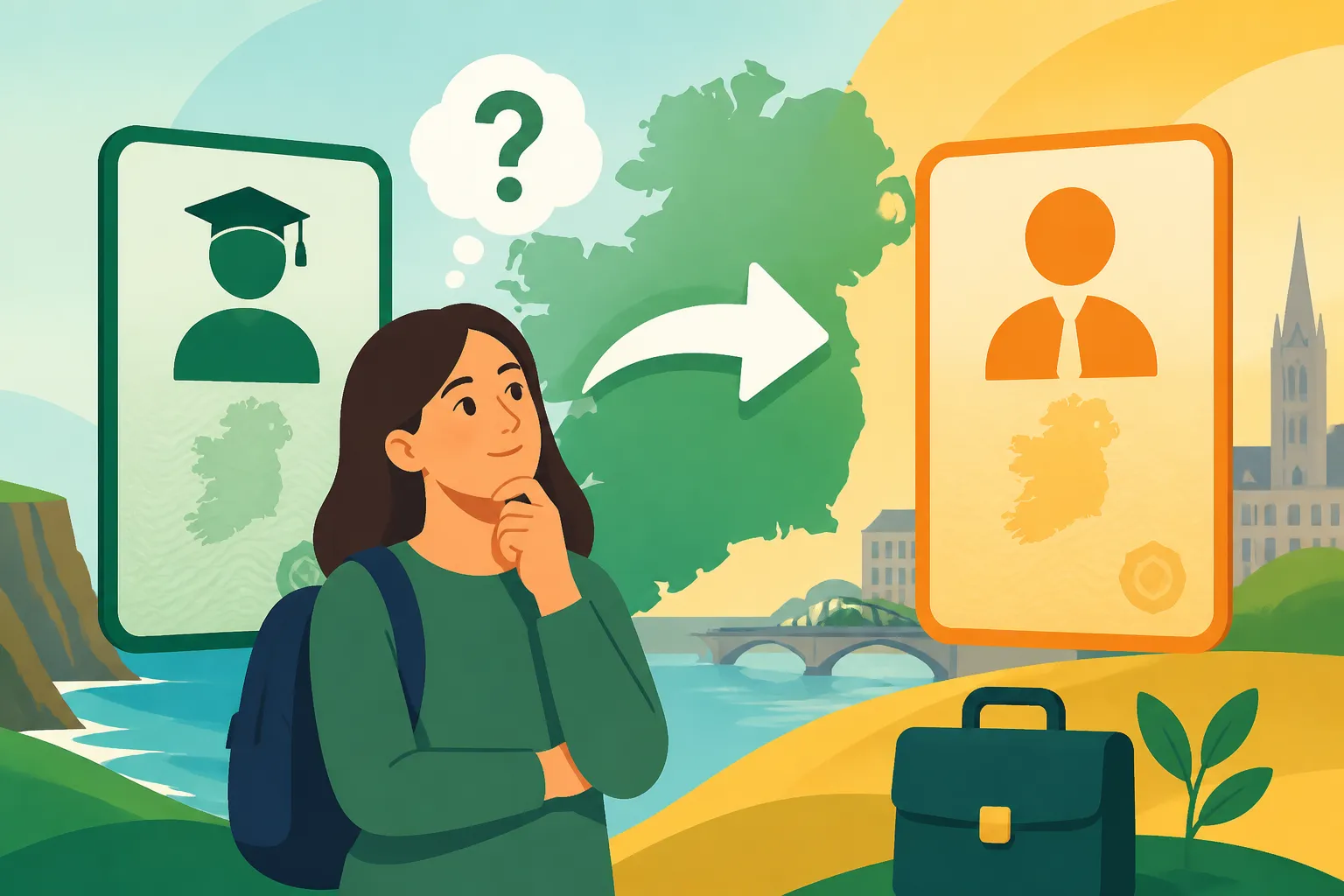
Can I Change from a Student Stamp 2 to an Employment Permit in Ireland?
Moving to Ireland as a student on a Stamp 2 visa brings a world of opportunity, but many quickly realise that the dream of staying on to work full-time after graduation isn't always a straightforward leap. The question of whether you can switch from that student status to a full-fledged employment permit can feel like navigating a legal labyrinth. This comprehensive guide will walk you through the realistic pathways, the critical steps, and the often-frustrating realities of transitioning from a student visa (Stamp 2) to an employment permit in Ireland, offering the hard-earned wisdom of someone who’s seen it all.
Understanding Your Current Status: Stamp 2 and its Limitations
Let's get one thing clear from the start: your Stamp 2 visa, while allowing you to be in Ireland, is primarily for studying. It's not a direct gateway to long-term residency or unrestricted work, and understanding its limitations is the first crucial step in planning your future here. I've seen far too many bright-eyed students assume their education alone guarantees a work permit, only to be met with the cold splash of reality.
What is a Stamp 2?
A Stamp 2 endorsement in your passport or on your Irish Residence Permit (IRP) card unequivocally states your immigration permission is to study in Ireland. This means your primary purpose for being here is to attend a recognised course at an accredited educational institution. It's a temporary permission, tied directly to the duration of your studies, and it comes with specific, non-negotiable conditions. While it does allow you to work part-time, typically 20 hours per week during academic terms and up to 40 hours per week during scheduled holiday periods (June, July, August, and September, plus Christmas and New Year's), this is supplementary. It’s meant to help you cover living expenses, not to be your main source of income or a professional career path.
The authorities are very clear on this. Your student visa isn't a "work-study" visa in the sense that it paves an easy path to a full-time job offer. It's a study visa with a work allowance. Misinterpreting this can lead to serious immigration issues, so it's vital to respect the parameters of your Stamp 2. You’re building your academic foundation, and while you might gain some valuable work experience, it’s within a strictly defined framework. For a broader look at permissions, check out Understanding the Irish Immigration Stamp System (Stamp 1, 2, 4) (2027).
The Realities of Working on a Stamp 2
While the part-time work allowance on a Stamp 2 is a lifesaver for many, let's be realistic: it's not enough to truly kickstart a career, nor is it designed to. Most jobs available under these restrictions are in retail, hospitality, or other service industries. They're valuable for cultural integration and earning a bit of cash, but they rarely offer the kind of experience or employer sponsorship that leads to an employment permit. Trying to secure a full-time, professional role while strictly adhering to the 20-hour limit is nearly impossible, as employers seeking to sponsor a permit need someone dedicated full-time from the get-go.
Furthermore, a Stamp 2 status means you cannot be legally employed in a role that requires an employment permit. The employer would need to apply for a permit for you, but you're already on a Stamp 2, which makes the direct transition complicated and often impossible without an intermediate step. This is a common source of frustration for international students who, after investing so much in their Irish education, feel stuck when it comes to formal employment. You’ve put in the hard graft, you’ve learned the ropes, and now you want to contribute full-time, but the system often forces a temporary pause.
The Pathways to an Employment Permit from a Student Visa
Okay, so a direct leap from Stamp 2 to an Employment Permit is generally not on the cards. But don't despair! There are pathways, and the most common and effective one involves a crucial interim step known as the Third Level Graduate Scheme. This is where your Irish qualification truly comes into play.
The Third Level Graduate Scheme (Stamp 1G) – Your Crucial Stepping Stone
For most international students (Non-EEA citizens, specifically) who have completed an eligible qualification in Ireland, the Third Level Graduate Scheme, resulting in a Stamp 1G, is your golden ticket. This scheme was specifically designed to allow eligible graduates to remain in Ireland for a period after their studies to seek employment and apply for a general or critical skills employment permit. It’s the bridge you need.
To be eligible, you must have successfully completed a recognised qualification at the National Framework of Qualifications (NFQ) Level 8 (e.g., an Honours Bachelor Degree) or above from an Irish higher education institution. Once your degree is conferred, you can apply for this permission. The duration of your Stamp 1G depends on your qualification level:
- NFQ Level 8 (Honours Bachelor Degree): 12 months.
- NFQ Level 9 (Masters Degree/Postgraduate Diploma) or NFQ Level 10 (PhD): Up to 24 months (initial 12 months, renewable for a further 12 months).
The brilliant thing about Stamp 1G is that it grants you full-time work permission. No more 20-hour limits! This allows you to actively seek and accept a full-time professional role, which is a prerequisite for any employment permit application. It’s a vital window to prove your value to an employer and secure the necessary sponsorship. Without this step, trying to secure an employment permit while still on Stamp 2 is like trying to jump a chasm without a bridge. You can learn more about this scheme in detail by reading Understanding the Stamp 1G for Graduates Under the Third Level Graduate Scheme.
Directly Applying for an Employment Permit (Critical Skills or General)
While the Stamp 1G is the recommended and most common route, theoretically, it's possible to apply for an employment permit directly from a Stamp 2 if you somehow secure an eligible job offer. However, this is incredibly rare and comes with significant practical challenges. An employer would need to apply for a Critical Skills Employment Permit or a General Employment Permit for you while you are still on Stamp 2. The Department of Enterprise, Trade and Employment, who process these permits, would expect you to be immediately available for full-time work, which contradicts your Stamp 2 limitations.
The major hurdle here is timing. Employment permit applications can take several weeks or even months to process. If your Stamp 2 is expiring soon, the processing time could easily run out, leaving you without legal permission to stay. This is why the Stamp 1G is so critical – it provides that essential cushion of full-time work permission and time to get your permit sorted. It allows you to actually work in the role your future permit will cover.
When it comes to the permits themselves, Ireland primarily offers two types relevant to most expats:
- Critical Skills Employment Permit (CSEP): This permit targets highly skilled non-EEA nationals in occupations experiencing a shortage of skills in Ireland. Think IT, engineering, healthcare, and certain scientific roles. It has a lower salary threshold (currently €38,000-€64,000 depending on the occupation) and offers a faster path to Stamp 4 (long-term residency).
- General Employment Permit (GEP): This permit covers a wider range of occupations not on the Critical Skills list. It generally has a higher salary threshold (currently €30,000) and requires a Labour Market Needs Test (meaning the employer must advertise the job to EEA citizens first for a certain period).
Understanding the differences is crucial. The CSEP is definitely the more desirable path if your skills align. For a deep dive into the Critical Skills Permit, check out The Expat Guide to the Critical Skills Employment Permit in Ireland (2027), and for General Employment Permits, you can find more information in How to Apply for a General Employment Permit in Ireland.
Navigating the Employment Permit Application Process
Securing a job offer and understanding the permit types are just the beginning. The application process itself is rigorous, requiring meticulous attention to detail and, most importantly, the full cooperation of your potential employer. I've heard countless stories of frustration where a promising job offer fell through because the employer wasn't prepared for the administrative burden of permit sponsorship.
Securing a Job Offer that Qualifies
This is arguably the most challenging step. It's not just about getting any job offer; it must be a job offer that is eligible for an employment permit. This means the role must:
- Be on an eligible occupations list (or not on the ineligible list): The Department of Enterprise, Trade and Employment maintains lists of eligible and ineligible occupations. Many common student jobs (e.g., general admin, retail, hospitality) are on the ineligible list for General Employment Permits. Critical Skills jobs are, by definition, on the "Critical Skills" list.
- Meet minimum salary thresholds: As mentioned, these vary by permit type. For a Critical Skills permit, it's generally €38,000 for certain roles or €64,000 for others; for a General Employment Permit, it's €30,000. These thresholds are updated periodically, so always check the latest guidance. For current figures, you should consult Understanding the Salary Thresholds for Employment Permits in Ireland.
- Require your specific qualifications: The job should align with your academic background and professional experience.
- Come from a legitimate, established employer: The employer must be registered with Revenue (Ireland's tax authority) and provide a genuine job offer.
Remember, the onus is on the employer to apply for the employment permit. You, as the prospective employee, are the subject of the application. This means you need an employer who is willing to go through the process, which can involve paperwork, advertising requirements (for GEPs), and waiting periods. Many multinational companies are well-versed in this, but smaller Irish businesses might be less familiar. Networking and using platforms like LinkedIn and IrishJobs are vital for finding these opportunities.
The Application Itself: Documents and Timelines
Once you have that golden job offer and the employer is on board, the actual application begins. Your employer will submit the application online through the Employment Permits Online System (EPOS) on the Department of Enterprise, Trade and Employment website.
Key documents typically required include:
- A completed application form.
- Copies of your passport (valid for at least 6 months beyond the permit's intended expiry).
- Your degree certificate(s) and academic transcripts.
- Your curriculum vitae (CV).
- The signed job offer letter, detailing salary, role, and terms of employment.
- Evidence of the employer's registration with Revenue.
- For General Employment Permits, evidence of the Labour Market Needs Test (e.g., job advertisements).
Processing times can vary significantly depending on the volume of applications and the type of permit. Critical Skills permits usually have a faster turnaround than General Employment Permits, but it's crucial to check the current average processing times on the Department's website. These can range from a few weeks to several months. This is why having that Stamp 1G, which grants you the immediate right to work full-time, is so important. You can generally start working for the employer once the permit is granted, not just when it’s applied for. For up-to-date processing times, refer to How Long Does It Take to Get an Employment Permit in Ireland?.
| Permit Type | Primary Purpose | Work Allowed on Permit | Path to Stamp 4 | Average Salary Threshold (Indicative) | Labour Market Needs Test |
|---|---|---|---|---|---|
| Stamp 2 (Student) | Study | Part-time (20/40 hrs) | No direct path | N/A | N/A |
| Stamp 1G (Graduate) | Seek Employment | Full-time | Indirect (via EP) | N/A | N/A |
| Critical Skills EP | Work (Specific Skills) | Full-time | After 2 years | €38,000 – €64,000 | No |
| General Employment EP | Work (Other Skills) | Full-time | After 5 years | €30,000 | Yes |
Note: Salary thresholds are subject to change by the Department of Enterprise, Trade and Employment.
Post-Approval: Registering Your New Status
Once your employment permit is approved, you're not quite done. The permit itself is just permission to work. You still need to update your immigration status. This involves attending an appointment with the Garda National Immigration Bureau (GNIB) or your local Immigration Service Delivery (ISD) office to register your new permission and receive your new Irish Residence Permit (IRP) card. Your Stamp 2 will be replaced with a Stamp 1 (or Stamp 4 if you're eligible for Stamp 4 directly from a CSEP, which is usually after two years).
This new IRP card will reflect your new status as a permitted worker in Ireland. It’s a vital document, proving your right to reside and work. Make sure to book your appointment well in advance, especially in larger cities like Dublin, as waiting times can be long. For detailed guidance on this, see How to Register for an IRP Card with Immigration in Ireland. Congratulations, at this point, you've successfully navigated the transition!
Important Considerations and Potential Hurdles
The journey from a student visa to an employment permit in Ireland is achievable, but it's rarely without its bumps and challenges. Being prepared for these can save you a lot of stress and heartache.
Timing is Everything: Don't Let Your Stamp 2 Expire!
I cannot stress this enough: do not let your Stamp 2 expire without having applied for either a Stamp 1G or an employment permit. Any gap in your immigration permission can jeopardise your future in Ireland. If your Stamp 2 is nearing its expiry and you haven't secured an eligible job offer for an employment permit, apply for the Third Level Graduate Scheme (Stamp 1G) immediately if you're eligible. This gives you precious time.
If you find yourself in a situation where your Stamp 2 is expiring, and you have no clear path forward, contact the Immigration Service Delivery (ISD) immediately. Overstaying your visa is a serious offence with severe consequences, including deportation and future entry bans. Plan well in advance, understand your deadlines, and be proactive. The Irish immigration system is not known for its flexibility in these matters, so assume nothing and act decisively.
Employer Engagement and Support
Securing an employment permit is a partnership between you and your employer. Without their commitment and willingness to undertake the application process, it simply won't happen. As an expat who’s navigated these waters, I can tell you that some employers, particularly smaller local businesses, might be unfamiliar or even hesitant due to the perceived administrative burden. This is where your ability to communicate clearly and reassure them of the process is crucial.
During job interviews, be upfront about your visa status (Stamp 1G, allowing full-time work) and your need for employment permit sponsorship to continue working long-term. Explain the process clearly. Focus on the benefits you bring as a qualified graduate who has already adapted to life in Ireland. Some companies, especially those in sectors with skill shortages (like tech or pharma), are very accustomed to sponsoring permits. These are often the best places to target your job search. You'll find good general advice on the topic in Understanding Who Needs an Employment Permit to Work in Ireland.
Financial Planning and Practicalities
The transition period can be financially demanding. There are application fees for employment permits (though usually paid by the employer, ensure this is clear in your offer), potential visa extension fees, and the general cost of living in Ireland, which, let's be honest, isn't cheap! Rent, utilities, and daily expenses can quickly add up, especially in cities like Dublin or Cork. You'll need sufficient funds to support yourself during the job search phase and until your first full paycheck comes in. Take a look at The Complete Guide to Cost of Living in Ireland for Expats (2026) for a realistic breakdown.
Don't forget about health insurance. While on Stamp 2 or Stamp 1G, you might be relying on your student health insurance or the public health system. Once you transition to an employment permit, your employer might provide health insurance. However, during the interim, or if your employer doesn't provide it, you'll need to ensure continuous coverage. Companies like Cigna Global offer comprehensive international health insurance plans that can provide peace of mind during these transitions, ensuring you're covered for any medical emergencies or routine care. Having a robust plan in place means one less thing to worry about. If your new employer doesn't offer a package immediately, explore options for How to Buy Private Health Insurance as a Newcomer in Ireland.
Furthermore, consider the practicalities of setting up your life once you land that dream job. You might need to move to a new area for work. Planning your move, whether across cities in Ireland or needing to bring more belongings, can be stressful. Services like Sirelo can be incredibly helpful for comparing quotes from international movers, ensuring your possessions arrive safely and efficiently, allowing you to focus on your new career. These are the details that often get overlooked but contribute significantly to a smooth transition.
The path from a student Stamp 2 to an employment permit requires strategic planning, persistence, and a solid understanding of the Irish immigration system. It's a journey many expats undertake, and with the right approach, you can certainly make Ireland your long-term home.
Disclaimer
The information provided in this guide is for general informational purposes only and does not constitute legal advice. Immigration policies and regulations in Ireland are subject to change. It is highly recommended to consult with the official Immigration Service Delivery (ISD), the Department of Enterprise, Trade and Employment, or a qualified immigration solicitor for the most accurate and up-to-date information regarding your specific situation.