Do I Need a Visa to Visit Ireland in 2026?
Moving to a new country, even just for a visit, can often feel like navigating a maze of paperwork and rules, and Ireland is no exception. It’s easy to get tangled up in questions about who needs what, especially with varying rules across different nationalities and the ever-present confusion around the Schengen Area (Ireland isn't part of it!). This comprehensive guide will cut through the noise, clarify exactly who needs a visa to visit Ireland, and walk you through the process step-by-step.
The Basics: Who Needs an Entry Visa for Ireland?
Let's start by demystifying the fundamental question: who actually needs an Irish visa to cross the border? Ireland has distinct rules that are largely dependent on your citizenship, and importantly, it operates independently of the Schengen Area, meaning a Schengen visa won't get you into Ireland directly.
EU/EEA/Swiss Citizens: Seamless Entry
If you hold a passport from an EU (European Union) member state, an EEA (European Economic Area – Iceland, Liechtenstein, Norway) country, or Switzerland, you are incredibly lucky! You do not need a visa to enter Ireland. This is a massive relief for many, as it simplifies travel and allows for a great deal of flexibility. You can arrive with just your valid passport or national identity card and will generally be granted entry without much fuss, provided your documents are in order and you meet standard immigration requirements. You’re free to live, work, and study here, though if you're planning a longer stay for more than three months, you might want to look into how EU/EEA and Non-EEA Citizens Move to Ireland: The Full Guide (2026) to ensure you register your residence correctly.
UK Citizens: The Common Travel Area
For our neighbours in the United Kingdom, things are also wonderfully straightforward thanks to the Common Travel Area (CTA). This long-standing arrangement between Ireland and the UK means that British citizens do not need a passport or a visa to enter Ireland. You can travel freely between the two islands. While a passport isn't strictly required, it's always advisable to carry some form of photographic identification, like a driver's license, especially when flying, as airlines will often require it. But from an immigration standpoint, the CTA ensures a relatively seamless journey for UK nationals, which is a great benefit for those frequently crossing the Irish Sea for business or leisure.
Visa-Required Nationalities
Now, for everyone else, which is a significant portion of the world's population, you will likely need an entry visa before you travel to Ireland. The list of visa-required countries is quite extensive and is regularly updated by the Irish Immigration Service Delivery (ISD). This means before you even book your flights, you absolutely must check if your nationality falls into this category. Common examples of nationalities that require a visa include citizens of India, China, the Philippines, Russia, Turkey, and many countries in Africa and South America.
The key takeaway here is do not assume. A quick check on the official Irish Immigration website is always the first step. If you're from a visa-required country, you cannot simply arrive at an Irish port or airport hoping to gain entry for a visit. You'll be denied boarding or entry, which is a stressful and costly ordeal no one wants to experience. This guide will later detail the application process for these nationalities, so stay tuned.
Visa-Exempt Nationalities (Short-Stay)
Even if you're not from the EU/EEA/Switzerland or the UK, there's still a good chance you might be visa-exempt for short-term visits to Ireland. This category typically includes citizens from countries like the United States, Canada, Australia, New Zealand, Japan, South Korea, and many others. If your nationality is on the visa-exempt list, you can visit Ireland for tourism, short business trips, or to visit friends and family for up to 90 days without applying for a visa in advance.
However, "visa-exempt" doesn't mean "unrestricted entry." When you arrive at an Irish airport or port, an immigration officer will still check your passport and may ask you questions about the purpose of your visit, how long you intend to stay, and how you plan to support yourself financially during your trip. You'll need to demonstrate that you are a genuine visitor and intend to leave Ireland within the permitted timeframe. It’s always wise to have your return ticket, accommodation bookings, and proof of funds readily available. Think of it as a mini-interview; the officer is just making sure you're truly here for a legitimate short visit.
| Nationality Group | Visa Required for Entry to Ireland | Key Information |
|---|---|---|
| EU/EEA/Switzerland | No | Free movement, only valid passport/ID card needed. |
| United Kingdom | No | Common Travel Area, photo ID advised. |
| USA, Canada, Australia, Japan | No (for short-stay visits) | Visa-exempt for up to 90 days. Immigration check on arrival. |
| India, China, Russia, Turkey | Yes | Must apply for a visa before travelling. |
| Other Non-EU/EEA/UK Nationals | Varies | Always check official Irish Immigration website for your specific nationality. |
Understanding Different Types of Irish Visas for Visitors
Even within the category of "visas," there are different types, each catering to a specific purpose and duration of stay. For someone planning a visit to Ireland, understanding the distinction between short-stay and long-stay visas is critical.
Short-Stay 'C' Visas: For Most Visitors
When most people talk about a "tourist visa" for Ireland, they're generally referring to a Short-Stay 'C' Visa. This visa category covers a wide array of reasons for visiting, all with the common thread of a limited duration – typically up to 90 days.
- Tourism: This is the most common type. If you're coming to explore the Cliffs of Moher, sip a pint in a traditional pub, or wander through Dublin's historic streets, this is your visa. It's strictly for leisure and sightseeing.
- Business: Perhaps you need to attend a conference, meet clients, or explore potential investments. A short-stay business visa allows you to conduct legitimate business activities without engaging in employment. Remember, this isn't for working in Ireland, but for business meetings and events.
- Visiting Friends or Relatives: If your family or friends are already living in Ireland, you'll apply for a short-stay visit visa. You might need a letter of invitation from them, along with proof of their residency status in Ireland.
- Conference/Event: Attending a specific academic, professional, or cultural conference? This visa type is tailored for participants.
- Short-term Study: If your course of study is less than 90 days, you might apply for a short-stay study visa. For anything longer, you'd need a different type of permission.
- Medical Treatment: If you're coming to Ireland for specific medical procedures, a short-stay medical visa will be required, often needing letters from Irish medical practitioners.
The important thing about a Short-Stay 'C' Visa is that it does not permit you to work, set up a business, or undertake any long-term study. It is purely for the purpose stated in your application and for a finite period. Overstaying this visa can have serious consequences for any future attempts to enter Ireland or other countries.
Long-Stay 'D' Visas: For Moving, Not Just Visiting
While this article focuses on visiting Ireland, it’s important to briefly touch on Long-Stay 'D' Visas to avoid confusion. If your intention is to live, work, or study in Ireland for more than 90 days, you will need a Long-Stay 'D' Visa. These are entirely different beasts from the 'C' visas and involve a much more rigorous application process, often requiring specific employment permits, proof of enrolment in an accredited educational institution, or evidence of family reunification eligibility.
Examples of Long-Stay 'D' Visas include:
- Employment Visas: If you have secured a job offer and an Employment Permit (like a Critical Skills Employment Permit or General Employment Permit), you would apply for a long-stay work visa. If you're looking into this, you might find our guide on The Complete Guide to Irish Visas and Immigration Permission for Expats (2026) very helpful.
- Study Visas: For students enrolling in degree programs or long-term courses at Irish universities or colleges.
- Family Reunification Visas: For spouses, partners, or dependants joining someone already legally resident in Ireland. Our resource on Family Reunification in Ireland: Bringing Your Spouse and Children (2027) delves deeper into this complex area.
It is absolutely crucial not to apply for a short-stay visa if your true intention is to move to Ireland long-term. Doing so can lead to refusal and complications in the future. The Irish immigration authorities are very adept at identifying discrepancies between stated intentions and actual plans. If your plans involve more than just a visit, you should thoroughly research How to Apply for an Irish Entry Visa (Short Stay and Long Stay) that aligns with your long-term goals.
Applying for an Irish Short-Stay Visa: A Step-by-Step Guide
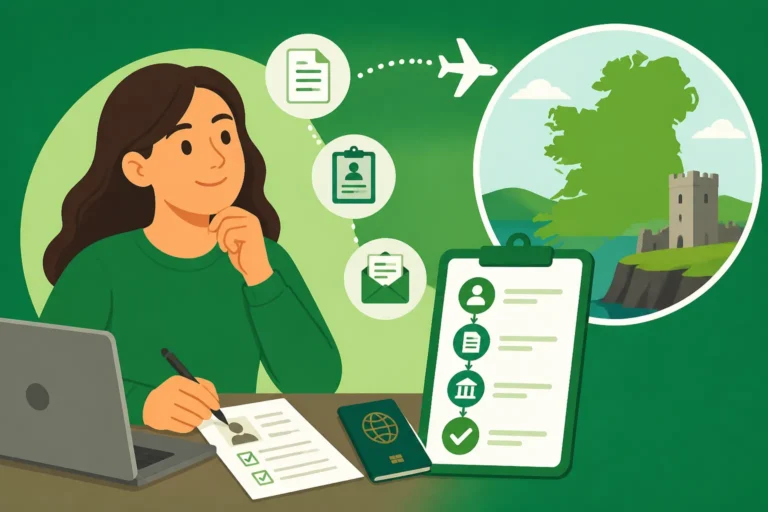
So, you've figured out you need a short-stay visa to visit Ireland. Don't fret! While it requires attention to detail, the process is manageable if you follow the steps carefully. Remember, the key is preparation and honesty.
Gathering Your Documents
This is arguably the most crucial step. Your application lives or dies by the strength of your supporting documentation. Think of each document as a piece of evidence supporting your claim that you are a genuine visitor with no intention of overstaying.
Here's a breakdown of what you'll typically need:
- Your Passport: Must be valid for at least six months beyond your intended date of departure from Ireland. It also needs at least two blank pages for the visa stamp.
- Completed Online Application Form: You’ll fill this out on the Irish Immigration Service Delivery (ISD) website. It's thorough, so take your time and be accurate.
- Two Passport-Sized Colour Photos: Recent (within 6 months), meeting specific requirements (e.g., plain background, no head covering unless for religious reasons).
- Visa Application Letter: This is your cover letter, explaining the purpose of your visit, your proposed dates of entry and exit, where you'll be staying, and your commitment to adhere to visa conditions. Be clear, concise, and persuasive.
- Proof of Funds: Bank statements (original or certified copies) for the last six months, showing sufficient funds to cover your stay and any emergencies. The general rule of thumb is to show enough to comfortably support yourself without working. Don't just show a sudden large deposit; consistency is key.
- Travel Itinerary: A detailed plan of your trip, including flight bookings (return ticket is essential!), accommodation reservations (hotel bookings or invitation letter if staying with friends/family).
- Proof of Ties to Your Home Country: This is critical for showing you intend to return. Examples include:
- Letter from your employer stating your position, salary, and approved leave of absence.
- Proof of property ownership (deeds, rental agreements).
- Marriage certificate and birth certificates of dependants if they are staying behind.
- Letter from your university if you are a student, confirming enrolment and expected return date.
- Travel Medical Insurance: While not always strictly mandatory for a short-stay visa, it is highly recommended. Healthcare in Ireland can be expensive if you need it unexpectedly. Having a robust travel insurance policy, perhaps from a reputable provider like Cigna Global, can save you a fortune and a lot of stress if something goes wrong. This shows you're prepared for unforeseen circumstances. It's also a good idea to consider our advice on Can Tourists Access Emergency Care in Ireland? or delve into Emergency Medical Care in Ireland: What Every Expat Needs to Know.
- Visa Fee: You'll pay this online during the application process. Check the current fee on the ISD website, as it can change.
- Apostilled Documents: Depending on your country of origin and the type of document, some may need to be apostilled or authenticated. If you’re unsure, it’s worth checking our guide on How to Get Your Documents Apostilled for Irish Immigration?
Pro Tip: Always provide originals where requested and keep copies of everything you submit. Translate any non-English documents by a certified translator.
Online Application Process
The journey begins online. You'll head to the Irish Immigration Service Delivery (ISD) website and locate the "Apply for a Visa" section.
- Create an Account: If you don't have one, you'll need to register.
- Fill Out the Form: The online application form is extensive. Be prepared to provide personal details, passport information, travel plans, financial details, and information about your family and employment. Take your time, double-check all entries for accuracy. Any discrepancies can cause delays or even refusal.
- Choose Visa Type: Select "Short Stay (C) Tourist/Visit" or the relevant short-stay category.
- Upload Documents (if prompted): Some applications require initial document uploads, others instruct you to submit physical copies.
- Pay the Fee: You'll typically pay the visa application fee online using a credit or debit card.
- Print Summary and Declaration: Once completed, print the summary page and the declaration form. You'll need to sign and date the declaration.
Remember, the online application creates a unique transaction number. Keep this safe, as it’s your reference for all future correspondence.
Submitting Your Application and Biometrics
After the online portion, you'll move to the physical submission.
- Check Submission Instructions: The online system will tell you where to submit your passport and supporting documents. This will usually be the Irish Embassy or Consulate in your country of residence, or a designated visa application centre (e.g., VFS Global) if Ireland uses a third-party service in your region.
- Assemble Your Package: Gather your printed, signed application summary, your passport, passport photos, and all your meticulously prepared supporting documents. Put them in the order requested by the embassy/centre, if specified.
- Attend Biometrics Appointment: Many countries require you to provide biometrics (fingerprints and a facial photograph) as part of the application process. If this is the case, you will typically schedule an appointment at the visa application centre. This is usually where you submit your physical documents as well.
- Submission: Submit your complete application. You'll usually get a receipt with your tracking number.
- Tracking: You can often track the status of your application online using the reference number provided. Processing times vary wildly depending on the embassy, the time of year, and the complexity of your application. It’s always best to apply well in advance of your intended travel date, giving yourself plenty of leeway. Our article on Understanding the Cost and Timeline of the Immigration Process in Ireland might give you some insight into potential waiting periods.
Once your visa is approved, it will be stamped into your passport. Double-check all the details on the visa stamp – your name, passport number, visa type, and validity dates – to ensure everything is correct before you travel.
Common Questions and Misconceptions for Visitors
Even with a clear understanding of the process, a few common questions and misconceptions often pop up for visitors to Ireland. Let's tackle them.
Travel Insurance and Healthcare Considerations
I've mentioned it before, but it bears repeating: travel insurance is not just a good idea, it's an essential safety net. While Ireland boasts a decent healthcare system (The Complete Guide to Healthcare in Ireland for Expats (2027) explains more), it’s not free for non-residents. A visit to the emergency room, an unexpected illness, or an accident can quickly rack up thousands of Euros in medical bills.
Many expats I know, even those permanently settled here, rely on private health insurance for peace of mind, and for visitors, it's even more critical. Brands like Cigna Global offer comprehensive travel health insurance plans that cover medical emergencies, repatriation, and even trip cancellations. Don't risk starting your Irish adventure with a medical bill that could financially cripple you. Always check that your policy specifically covers you for travel to Ireland and provides sufficient coverage for potential medical costs.
Beyond medical, good travel insurance can also cover lost luggage, travel delays, and other disruptions that, while minor, can be incredibly frustrating and expensive. Think of it as investing in peace of mind for your trip.
What if I Have a Schengen Visa?
This is perhaps the biggest point of confusion for international travellers: Ireland is NOT part of the Schengen Area. This means that a Schengen visa will not grant you entry into Ireland. You need a separate, specific Irish visa.
The Schengen Area is a group of 27 European countries that have abolished passport and other types of border control at their mutual borders. While Ireland is in the EU, it opted out of the Schengen Agreement. The UK also opted out. So, if you're planning a multi-country trip that includes both Schengen countries and Ireland, you will need to apply for a Schengen visa for the Schengen portion of your trip and a separate Irish visa for your visit to Ireland, if your nationality requires one.
Trying to enter Ireland with only a Schengen visa will result in being denied entry at the border, or potentially even being denied boarding by your airline. Always confirm the specific visa requirements for each country you plan to visit.
Overstaying and Visa Refusals
Unfortunately, sometimes things don't go to plan. Whether it's a visa refusal or the temptation to overstay, both can have severe consequences.
- Visa Refusals: If your visa application is refused, the Irish authorities will usually provide a reason. You often have the right to appeal this decision, but you must do so within a strict timeframe and often with new or additional information. If your application is refused, try not to panic, but immediately seek to understand the reason. Our article on What Happens If My Irish Visa Application Is Refused? provides more in-depth advice on this challenging situation. Sometimes, it might be due to incomplete documentation, or the immigration officer wasn't convinced of your intent to return home. It's not the end of the world, but it does require careful consideration of your next steps.
- Overstaying: This is a big no-no. Overstaying your visa, even by a day, is a serious breach of immigration law. It can lead to penalties, fines, deportation, and a significant ban from re-entering Ireland and potentially other countries in the future. It leaves a black mark on your immigration record that can affect future visa applications for any country. If you find yourself in Ireland and genuinely need to extend your stay due to unforeseen circumstances (e.g., a medical emergency), you must contact the Irish Immigration Service Delivery (ISD) before your current permission expires. Do not wait. This usually involves very specific and compelling reasons, not just a change of heart about leaving.
Considering a Move to Ireland After Visiting?
Many people visit Ireland and fall in love with the place. The vibrant culture, stunning landscapes, and friendly people often inspire tourists to consider making a more permanent move. If you find yourself in this position, it's wonderful! However, remember that visiting and moving are two entirely different legal processes.
You cannot simply convert a short-stay tourist visa into a work or study permit while in Ireland. If you decide to pursue a longer-term stay, you will almost certainly need to return to your home country to apply for the appropriate Long-Stay 'D' visa.
If the idea of moving has taken root during your visit, start doing your research early. Explore topics like The Complete Guide to Moving to Ireland: Your First 90 Days (2026), or for those with specific skills, The Expat Guide to the Critical Skills Employment Permit in Ireland (2026). When the time comes to actually move, you might find services like Sirelo invaluable. They specialize in international moving and can help you navigate the logistics of shipping your belongings to Ireland, making the actual relocation much smoother. Don't rush into anything; plan your next steps carefully and legally.
Disclaimer
The information provided in this guide is intended for general informational purposes only and does not constitute legal advice. Visa and immigration laws are complex and subject to change. While every effort has been made to ensure accuracy, the specific requirements for entry to Ireland can vary based on individual circumstances and nationality. Always refer to the official Irish Immigration Service Delivery (ISD) website or consult with a qualified immigration solicitor for the most current and personalised advice before making any travel or relocation decisions.