The Complete Guide to the IRP Card and Registering with Immigration (2027)
Moving to Ireland, whether for work, study, or family, is an incredibly exciting adventure. But let's be honest, navigating the immigration system here can feel like trying to solve a Rubik's Cube blindfolded. One of the most critical pieces of that puzzle, the Irish Residence Permit (IRP) card, often brings a mix of confusion and mild panic. This comprehensive guide is here to demystify the IRP card and the entire process of registering with Irish immigration, helping you secure your status and settle into your new life with a lot less stress.
Understanding the Irish Residence Permit IRP Card
When you first arrive in Ireland, especially if you're coming from outside the European Economic Area (EEA), you'll quickly realise that while your visa gets you into the country, the IRP card is what truly validates your right to stay here. It's your official proof of registration with the Irish immigration authorities.
What Exactly is the IRP Card?
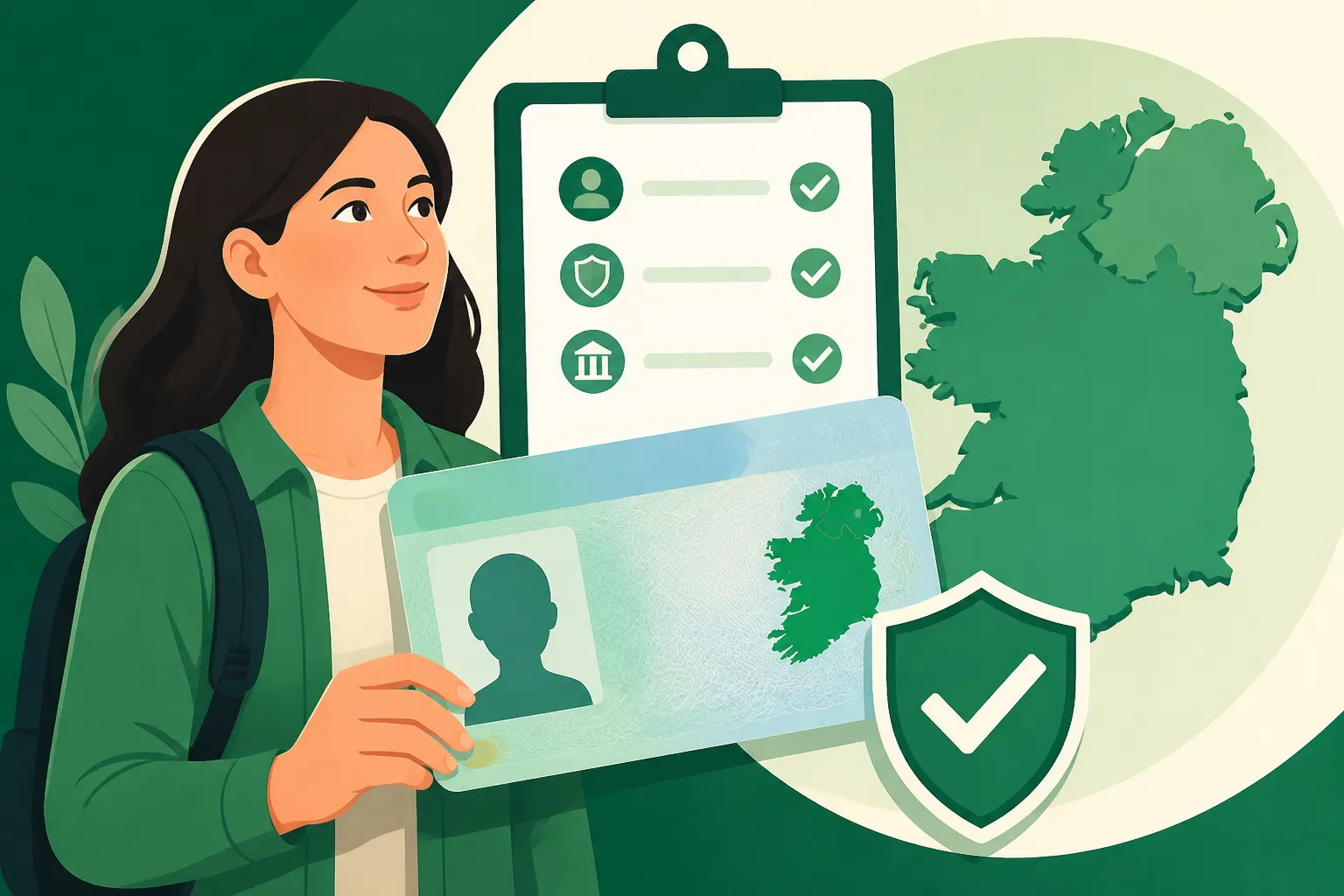
Think of the IRP card as your identity card as a non-EEA resident in Ireland. It's a credit-card sized plastic card containing your personal details, a unique registration number, your photograph, and, crucially, your immigration 'stamp'. This stamp dictates the specific terms of your permission to reside in Ireland – what you can and cannot do, like whether you can work, study, or operate a business. It's issued by the Immigration Service Delivery (ISD), a division of the Department of Justice, and acts as a central record of your immigration status. Without it, even with a valid visa, you're essentially lacking the primary evidence of your legal residence here.
Who Needs an IRP Card?
This is where many people get a bit mixed up. If you are a citizen of a country outside the EEA (which includes the EU countries plus Iceland, Liechtenstein, and Norway), and you plan to stay in Ireland for more than 90 days, you absolutely need to register with immigration and get an IRP card. This applies to you whether you're here on an employment permit, a student visa, for family reunification, or any other long-term permission.
Conversely, if you're an EU/EEA citizen, or a Swiss citizen, you don't need an IRP card to reside in Ireland. Your passport or national identity card is sufficient proof of your right to live and work here. However, even for EEA citizens, if you’re planning on staying for an extended period, it's a good idea to understand your rights, which you can read more about in our guide on How EU/EEA and Non-EEA Citizens Move to Ireland: The Full Guide (2026). For everyone else, the IRP card is non-negotiable for long-term stays.
Why is the IRP Card So Important?
The IRP card isn't just a fancy piece of plastic; it's fundamental to your life in Ireland. Firstly, it serves as your primary proof of legal residence. You'll need it to travel in and out of Ireland (though for some nationalities, a re-entry visa might also be required). Imagine trying to board a flight back to Dublin without it – not a pleasant thought!
Beyond travel, it's essential for accessing various public services, proving your identity, and demonstrating your right to work or study. Banks will ask for it when you open an account, landlords might want to see it as part of your rental application, and even some employers will want to verify your stamp before offering you a job. It integrates you into the Irish system and without it, many everyday tasks become incredibly difficult, if not impossible. It confirms that you are not just a visitor, but a recognised resident with specific permissions.
The Initial Registration Process for Non-EEA Citizens
So, you've landed, cleared immigration at the airport, and are now officially in Ireland. Congratulations! The real work of settling in, however, starts with formalising your stay. For non-EEA citizens, this means registering with immigration to get your first IRP card.
First Steps: Entry Visa and Landing in Ireland
Before you even think about the IRP card, your journey starts with securing the correct entry visa for Ireland, if your nationality requires one. Many non-EEA citizens need a pre-approved long-stay (D) visa to enter Ireland for purposes like work or study. Upon arrival at Dublin Airport or any other port of entry, an immigration officer will examine your visa and passport, and if satisfied, will grant you an initial short period of permission to enter the country – usually 30 or 90 days. This permission is typically stamped in your passport. This initial stamp grants you temporary permission to be in Ireland, during which time you must complete your registration. For a deeper dive into the initial entry requirements, you should check out The Complete Visa and Immigration Guide for Relocating to Ireland (2027).
Booking Your Immigration Appointment
This step can be, and often is, the bane of many expats' existence. Getting an appointment to register or renew your IRP can be incredibly challenging, especially in popular areas like Dublin.
- Dublin (Burgh Quay): If you're residing in Dublin City or County, you must register at the Burgh Quay Registration Office. Appointments are released online and disappear incredibly quickly. My best advice here is to be relentless. Check the booking portal multiple times a day, early in the morning, late at night, and during working hours. Cancellations happen, and new slots are added sporadically. Persistence is key. Don't be surprised if it takes you weeks to secure a slot.
- Outside Dublin (Regional Garda Stations): If you live outside Dublin, you'll register at your local Garda National Immigration Bureau (GNIB) registration office, usually located within a main Garda station. The process varies slightly; some regions have online booking, while others might require you to call, email, or even show up in person at specific times to book an appointment. It's crucial to check the specific requirements for your local area on the ISD website, as it can differ significantly from county to county.
Booking these appointments can be incredibly frustrating. I remember spending hours refreshing the page, feeling like I was competing in some digital Hunger Games. Just know that you're not alone in that struggle, and keep at it!
Documents Required for First-Time Registration
This is where the meticulous planning comes in. The immigration officers at your appointment will be thorough, and if you're missing even one document, they will likely turn you away. Having everything in order is paramount.
Here’s a general list, but always double-check the ISD website for the most current and specific requirements based on your immigration stamp:
- Valid Passport: Original, and make sure it has sufficient validity remaining.
- Entry Visa: If applicable, the physical visa in your passport.
- Letter of Offer/Employment Permit: If you're working, this is crucial. For those on a Critical Skills Employment Permit in Ireland, your official permit letter is key. If you're on a General Employment Permit, you'll need that documentation.
- Letter from Employer: A recent letter (within the last month or so) on company letterhead confirming your employment, job title, salary, and start date.
- Proof of Address in Ireland: This is vital. Acceptable documents include a utility bill (electricity, gas, internet) in your name, a bank statement, or a tenancy agreement. If you're staying with someone, you might need a letter from the homeowner/tenant confirming your residence, along with their proof of address. Don't underestimate this one; it's a common stumbling block.
- Proof of Funds: You might need to demonstrate you can financially support yourself. This often means recent bank statements from an Irish bank account.
- Private Health Insurance: While the public healthcare system is available, many employment permits and student visas require proof of private health insurance. Companies like Cigna Global offer plans tailored for expats, which can cover you from day one. This is a non-negotiable for some permits, so make sure you have it sorted. For a detailed look at how health insurance works, see our guide on The Complete Guide to Healthcare in Ireland for Expats (2027).
- Student Letter: If you're a student, a letter from your recognised educational institution confirming your enrolment, course details, and duration.
- Marriage/Birth Certificates: If registering as a spouse or dependant, you’ll need original marriage or birth certificates, usually apostilled.
- IRP Card Fee: The current fee is €300, payable by debit/credit card. They usually do not accept cash.
Gathering all these documents can feel like a scavenger hunt, but it's essential for a smooth process. Make multiple copies of everything, just in case!
Navigating the Immigration Office Appointment
You've secured an appointment, collected your documents – now comes the actual registration. This isn't just a formality; it's where your official permission to reside in Ireland is assessed and granted.
What to Expect at Your Appointment
The experience can vary slightly depending on whether you're at the bustling Burgh Quay in Dublin or a regional Garda station.
- Dublin (Burgh Quay): Upon arrival, you'll typically join a queue. Once inside, you'll go through a series of checkpoints. First, a staff member will verify your appointment and check your initial documents. Then, you'll likely be given a ticket number and directed to a waiting area. When your number is called, you'll meet an immigration officer. This is where the real assessment happens. They will review all your documents meticulously, ask questions about your purpose for being in Ireland, your employment or study, and your accommodation. This isn't usually an interrogation, but they need to ensure everything is legitimate. You'll then have your fingerprints taken and a digital photograph captured for your IRP card.
- Regional Garda Stations: Outside Dublin, the process often feels a bit more personal, though equally formal. You might have a dedicated appointment time and less queuing. The Garda (police) officer handling immigration will conduct a similar document review and interview. They will also take your biometrics. The atmosphere can sometimes feel less overwhelming than Burgh Quay, but the same high standard of documentation is expected.
Regardless of location, patience is key. The officers are dealing with a huge volume of applications, and sometimes there are delays. Stay polite, have all your documents ready, and answer truthfully.
Paying the IRP Card Fee
Once the officer is satisfied with your application and documents, they will usually direct you to a payment point. As of my last check, the fee for an IRP card is €300. This fee is non-refundable, even if your application is ultimately denied.
- Accepted Payment Methods: The general rule is debit or credit card. They are usually very strict about this and often do not accept cash or cheques. Ensure your card is valid and has sufficient funds. Some people prefer to use a credit card for this as a backup, just in case their debit card has issues. This is one of those times you don't want any surprises!
Receiving Your IRP Card
After a successful appointment and payment, you won't walk out with your IRP card in hand. The card is produced centrally and then mailed to your registered address in Ireland.
- Timeline: The official timeframe often quoted is 5-10 working days, but in reality, it can take longer, especially during peak immigration periods. It’s not uncommon for it to take 2-3 weeks, or even slightly more.
- Delivery: Your IRP card will be sent via registered post (An Post). It’s crucial that the address you provided at your appointment is accurate and that your name is clearly visible on your letterbox to ensure successful delivery. If it's a shared house or apartment, inform your housemates to keep an eye out for registered post addressed to you.
- What to do if it doesn't arrive: If your card hasn't arrived within the expected timeframe, don't panic immediately. First, track the registered post if you were given a tracking number. If there's no progress or it's returned, you'll need to contact the Garda National Immigration Bureau (GNIB) or the ISD directly. There's usually a specific email address or phone line for card delivery queries. They will investigate and advise on next steps, which might involve reissuing the card or arranging collection.
Receiving that little envelope with your IRP card inside is a genuine moment of relief and validation. It means you've officially made it through a significant hurdle in your expat journey!
Types of Immigration Stamps and What They Mean for Your IRP Card
The IRP card itself is the physical proof, but the most important detail on it is the 'stamp'. This isn't a rubber stamp; it's a code (e.g., Stamp 1, Stamp 2) printed on the card that defines your immigration permission, outlining what you can and cannot do in Ireland. Understanding these stamps is absolutely critical.
Decoding the Stamps: 1, 1G, 2, 2A, 3, 4, 5, 6
Each stamp has a specific purpose and set of rights and restrictions. Here’s a breakdown of the most common ones:
- Stamp 1: Employment Permit Holder / Business Person: This is for those who have permission to work in Ireland, usually under an employment permit (like a Critical Skills or General Employment Permit) or for self-employment. It grants you permission to work and reside in Ireland, subject to specific conditions related to your permit. It explicitly allows you to take up employment as specified on your permit. Our guide, How to Get an Employment Permit to Work in Ireland (2027), covers this in detail.
- Stamp 1G: Graduate / Intra-Company Transfer / De Facto Partner: This stamp has a few applications. For graduates, it's given to non-EEA students who have completed a degree in Ireland and wish to seek employment under the Third Level Graduate Scheme. It allows you to work full-time for a specified period (12-24 months depending on qualification) and seek a more permanent employment permit like a Stamp 1. It's also issued to spouses/partners of Critical Skills permit holders (who can work without a separate permit) and for certain intra-company transfers.
- Stamp 2: Student: This stamp is for non-EEA students pursuing a course on the official Interim List of Eligible Programmes (ILEP). It permits you to study in Ireland. Students on Stamp 2 are typically allowed to work part-time (20 hours per week during term time and 40 hours during holiday periods).
- Stamp 2A: Student (No Work Rights): Less common now, this stamp is for students whose courses are not on the ILEP, or who are under 18. It does not permit any work.
- Stamp 3: Volunteer / Minister of Religion / Retired Person of Independent Means / Dependants: This stamp generally means you can reside in Ireland but cannot work or engage in any business activity. It's common for volunteers, ministers of religion, or dependants (e.g., parents of Irish citizens who don't qualify for other categories).
- Stamp 4: Long-Term Residence / Irish Citizen Spouse/Partner / Refugee / EU Treaty Rights: This is a highly sought-after stamp as it grants broad permission to live and work in Ireland without the need for an employment permit. It's usually granted after several years of lawful residence on other stamps (e.g., after two years on a Critical Skills permit), to the spouse/civil partner of an Irish citizen, or to those with refugee status. It offers significant freedom compared to other stamps. For more on this, consult Understanding the Irish Immigration Stamp System (Stamp 1, 2, 4) (2026).
- Stamp 5: Indefinite Leave to Remain: This is granted to individuals who have completed at least 8 years of legal residence in Ireland. It allows you to reside in Ireland without any time limit, but it's not Irish citizenship.
- Stamp 6: Irish Citizenship: This is simply an endorsement in a foreign passport for those who have acquired Irish citizenship through naturalisation or descent but still hold their original passport.
Common Stamps for Expats: Stamp 1, 1G, and 4
For most non-EEA expats moving to Ireland for work, you'll primarily encounter Stamp 1, Stamp 1G, and eventually, Stamp 4.
- Stamp 1 is your entry point if you're coming to work on an employment permit. It ties your permission directly to your specific job and employer, as outlined in your permit. If your job or employer changes, your permission might need to be reviewed or a new permit sought.
- Stamp 1G is crucial for international graduates hoping to transition from study to work, giving them a vital window to find employment. It’s also incredibly helpful for spouses of Critical Skills holders, offering them the flexibility to work in Ireland.
- Stamp 4 represents a significant step towards long-term stability in Ireland. It untethers your right to work from a specific employer, giving you much more flexibility in the job market and peace of mind about your long-term future here. Many expats aspire to reach Stamp 4, as it signifies a more permanent and secure footing in the country.
Impact on Work and Study Rights
Your immigration stamp directly impacts your ability to work and study.
| Immigration Stamp | Main Purpose | Work Rights | Study Rights |
|---|---|---|---|
| Stamp 1 | Employment Permit Holder / Business | Full-time, as per employment permit conditions. | Permitted, but primary purpose is work. |
| Stamp 1G | Graduate / Dependant of CSEP Holder | Full-time. Graduates for job seeking; dependants without specific permit. | Permitted, often a transitional period after study. |
| Stamp 2 | Student (ILEP Course) | Part-time (20 hrs/week term, 40 hrs/week holidays). | Full-time on an approved course. |
| Stamp 2A | Student (Non-ILEP Course / U18) | No work rights. | Full-time on an approved course (usually non-degree or under 18). |
| Stamp 3 | Volunteer / Retired / Dependant (no work) | No work rights. | Permitted (often short, recreational courses), but not primary purpose. |
| Stamp 4 | Long-Term Resident / EU Treaty Rights / Spouse | Full-time, no employment permit needed. | Full-time. |
| Stamp 5 | Indefinite Leave to Remain | Full-time, no employment permit needed. | Full-time. |
| Stamp 6 | Irish Citizen | Full rights of an Irish citizen. | Full rights of an Irish citizen. |
As you can see, misinterpreting your stamp or trying to work when your stamp doesn't permit it can lead to serious immigration issues, including deportation. Always respect the conditions of your stamp. If your circumstances change (e.g., you switch from studying to working), you'll need to apply for a change of immigration permission and a new IRP card reflecting the correct stamp.
Renewing Your IRP Card and Immigration Permission
Your IRP card isn't a "one-and-done" deal for many. Most initial permissions are for one year, meaning you'll need to renew your IRP card and immigration permission annually until you qualify for a long-term status like Stamp 4 or citizenship.
When and How to Renew
The golden rule here is: start early! Don't wait until your IRP card is about to expire. The Immigration Service Delivery (ISD) generally advises applying for renewal 4-6 weeks before your current permission expires. Given how notoriously difficult it can be to get appointments, I'd personally recommend starting even earlier if possible, especially in Dublin.
-
Online vs. In-Person:
- Dublin (Burgh Quay): Most renewals for residents in Dublin are now processed online through the ISD's eVetting portal. You'll upload all your documents digitally and submit your application. Only in certain complex cases or if specifically requested will you have an in-person appointment.
- Outside Dublin: Renewals outside Dublin still generally require an in-person appointment at your local Garda station. You'll need to book this directly with them (via phone, email, or their specific online system).
-
Required Documents: Similar to your initial registration, you'll need a comprehensive set of documents for renewal. These will depend heavily on your current stamp and what you're renewing it for.
- Passport: Always.
- Current IRP Card: The expiring one.
- Proof of Continued Employment/Study: A new letter from your employer or educational institution, dated recently, confirming your continued status.
- Updated Employment Permit: If applicable, an updated permit or a letter confirming your existing permit is still valid.
- Proof of Address: Recent utility bill or bank statement.
- Proof of Funds: Bank statements to show you can support yourself.
- Private Health Insurance: Proof of renewed policy, such as from Cigna Global, if required for your stamp.
- Payslips/P60: For employment-based stamps, recent payslips or a P60 might be requested.
- Marriage/Birth Certificates: If renewing as a dependant.
- IRP Card Fee: Another €300, payable online or at the point of renewal.
Again, check the ISD website meticulously for your specific renewal requirements. They often update these lists, and what was needed last year might not be exactly what’s needed this year. Our guide, How to Renew Your IRP and Immigration Permission in Ireland, offers further details.
Transitioning Between Stamps
Renewing isn't always about getting the same stamp again. Many expats will transition between stamps as their circumstances change or as they meet the criteria for a more permanent status.
- Stamp 1G to Stamp 1: After finishing your studies on a Stamp 1G, if you secure a job that qualifies for an employment permit, you'll apply to transition to a Stamp 1. This involves getting the employment permit first, then renewing your immigration permission.
- Stamp 1 to Stamp 4: This is a common path for those on employment permits. After two years of continuous residence and holding a Critical Skills Employment Permit (CSEP), or five years on a General Employment Permit, you may be eligible to apply for Stamp 4. This is a significant milestone, granting you much more freedom in your work and life. The process for this specific transition often involves submitting a dedicated application to the ISD with extensive documentation proving your continuous residence and adherence to your permit conditions. It's a formal application that usually takes several months to process.
- Other Transitions: Students might transition to Stamp 1G, or family dependants might move from Stamp 3 to Stamp 1G or Stamp 4 depending on the primary permit holder's status. Each transition has its own specific set of eligibility criteria and documents.
Common Challenges and Pitfalls in Renewal
The renewal process can be tricky, and many expats face similar hurdles:
- Processing Times: Even with online applications, processing times can be longer than anticipated. This can cause anxiety, especially if you need to travel. Always have proof of your application (e.g., application confirmation, payment receipt) if your card expires while waiting for the new one.
- Missing Documents: This is the most common reason for delays or refusals. Be absolutely sure you have every single document requested, and that they are current and valid.
- Changes in Circumstances: If you've changed jobs, moved house, or had any significant life changes since your last registration, ensure all these details are updated and reflected in your renewal application. Not disclosing changes can lead to issues.
- Appointment Availability: As mentioned, booking appointments (for in-person renewals) remains a major frustration. Perseverance is key.
- Maintaining Ordinary Residence: For certain stamps, like Stamp 4, you must prove you have maintained your "ordinary residence" in Ireland. This means spending the majority of your time physically in the country. Extended periods abroad can sometimes complicate renewals.
It’s easy to feel disheartened when facing these challenges, but remember that countless others have navigated these waters successfully. Keep your cool, be organised, and if you get stuck, the Citizens Information centres can offer valuable advice.
Lost, Stolen, or Damaged IRP Cards
Losing your IRP card is undoubtedly a moment of sheer panic. It's not just a minor inconvenience; it can severely impact your ability to travel, prove your identity, and access services. But don't worry, there's a clear process to follow.
Reporting the Incident
The very first thing you need to do, if your IRP card is lost or stolen, is to report it immediately.
- Garda Report: Head to your nearest Garda station and report the loss or theft. You must obtain a Garda Report (sometimes called a lost property report or a crime report if stolen). This report is absolutely essential for applying for a replacement card and also serves as temporary proof that you've reported the incident, which can be useful if you encounter any official checks before getting a replacement.
- ISD Notification: Once you have your Garda report, you need to notify the Immigration Service Delivery (ISD) as soon as possible. There's typically a dedicated online form or email address for reporting lost/stolen IRP cards. They will record the loss and advise you on the next steps. This is important to ensure your old card is deactivated and cannot be misused.
Applying for a Replacement IRP Card
With your Garda report in hand and having notified the ISD, you can now apply for a replacement.
- Process: The application process is very similar to a renewal. You will typically need to book an appointment (either online for Dublin or in-person for regional areas) and submit a new application.
- Documents: You will need:
- Your valid passport.
- The Garda Report.
- Proof of address.
- A recent letter from your employer/school confirming your continued status (similar to renewal documents).
- Any other documents required for your specific stamp, as if you were doing a regular renewal.
- Fees: There is generally a fee for a replacement IRP card, which is the standard €300. This is to cover the administrative cost and production of a new card.
It's a frustrating process, I know. I once heard a story from a friend whose IRP card was stolen, and the sheer amount of running around between the Garda station and the immigration office was immense. Keeping digital copies of your IRP card (front and back) and your passport's main page can be a lifesaver in these situations, as it speeds up identification.
Traveling Without Your IRP Card
This is a tricky situation and best avoided if possible. The IRP card is the primary proof of your permission to reside in Ireland.
- Risks: If you try to travel internationally without your IRP card, you might face difficulties at the airline check-in counter (as they are responsible for ensuring you have valid travel documents for your destination) or at Irish immigration upon re-entry. Even if you have a valid re-entry visa, the IRP card is generally expected.
- Temporary Permits: In very urgent cases, if you need to travel internationally before your replacement IRP card arrives, you might be able to apply for a temporary travel letter or "permission to re-enter" from the ISD. However, these are typically only issued in genuine emergencies and are not guaranteed. They often require an in-person appointment and can take time to process. It is always, always safer to wait for your replacement IRP card before making travel plans.
My strong advice is to keep your IRP card as safe as your passport. Don't carry it around unnecessarily unless you specifically need it for identification.
Maintaining Your Immigration Status and Understanding Your Obligations
Getting your IRP card is a huge achievement, but the journey doesn't end there. As a non-EEA resident in Ireland, you have ongoing obligations to maintain your immigration status correctly. Ignoring these can lead to serious problems down the line.
Notifying Immigration of Changes
The Immigration Service Delivery (ISD) needs to be kept in the loop about significant changes in your life, especially those that impact the conditions of your stamp.
- Change of Address: This is a crucial one. If you move house within Ireland, you are generally required to notify the ISD (or your local Garda immigration office if outside Dublin). This ensures they have your correct address for sending important documents, including your new IRP card upon renewal. Some areas have online forms for this, while others might require an email or visit.
- Change of Employment: If you're on a Stamp 1 tied to a specific employment permit, a change of employer or even a significant change in job role can impact your permit. You may need to apply for a new employment permit or get an amendment to your existing one. It's vital to clarify with the Department of Enterprise, Trade and Employment (DETE) and the ISD what the implications are before making a move. For example, if you are working under a Critical Skills Employment Permit, certain changes require notification or even a new permit. Our guide, The Complete Guide to Working in Ireland as a Foreigner (2027), elaborates on these obligations.
- Change in Marital Status / Dependants: If you get married or have a child, and this impacts your or your dependants' immigration status (e.g., you're applying for family reunification), you must inform immigration and update your records.
Failure to notify immigration of significant changes could be seen as a breach of your immigration conditions and may complicate future renewals or applications for long-term residency.
Travel Outside Ireland and Re-entry
Your IRP card is not a standalone "get out of jail free" card for international travel. While it proves your residency in Ireland, your nationality still dictates your visa requirements for other countries and even for re-entering Ireland.
- Re-entry Visa: Depending on your nationality, you might need a separate re-entry visa to return to Ireland, even if you have a valid IRP card. This applies to citizens of countries that require an entry visa for Ireland. Always check the ISD website for the most up-to-date list of visa-required nationalities. Apply for your re-entry visa well in advance of any travel plans, as processing times can be lengthy.
- Passport Validity: Ensure your passport has sufficient validity (at least 6 months beyond your planned return date) for all international travel.
- Carrying Your IRP Card: Always carry your IRP card and passport when travelling internationally. At the Irish border, immigration officers will expect to see both.
A colleague of mine once flew to Spain for a weekend trip, forgetting to check if his nationality required a re-entry visa. He almost wasn't allowed back into Ireland! It was a stressful ordeal at Dublin Airport, highlighting the importance of checking these details before you travel.
Understanding the Path to Long-Term Residency and Citizenship
For many expats, the IRP card is just a stepping stone towards more permanent status in Ireland. Understanding this long-term pathway is crucial for strategic planning.
- Long-Term Residency (Stamp 4): As discussed, after a certain period of continuous, lawful residence on specific stamps (typically 2 years on Critical Skills or 5 years on General Employment Permits), you can apply for Stamp 4. This is a huge milestone, giving you much greater freedom and stability in Ireland, removing the need for annual employment permit renewals.
- Irish Citizenship by Naturalisation: After accumulating a certain number of years of reckonable residence (typically 5 years, with specific rules for spouses of Irish citizens), you may become eligible to apply for Irish citizenship by naturalisation. This involves a formal application process, interviews, and taking an oath of fidelity. Our guide on Irish Citizenship: Naturalisation and Citizenship by Descent Explained (2027) delves into this in depth.
- Citizenship by Descent: If you have Irish grandparents or, in some cases, Irish parents born outside Ireland, you might be eligible for citizenship by descent through the Foreign Births Register, a pathway that bypasses the residence requirements.
It’s important to keep meticulous records of your IRP cards, immigration stamps, and travel dates, as these will be vital when you apply for long-term residency or citizenship. Every year you successfully renew your IRP card contributes to this long-term goal.
Essential Tips and Resources for a Smooth Process
Navigating immigration anywhere can be a daunting process, and Ireland is no exception. While I’ve laid out the steps, a little bit of foresight and knowing where to turn can make a world of difference.
Practical Advice from an Expat
Having lived through this, I can share a few nuggets of wisdom that often go unsaid in official manuals:
- Keep Copies of EVERYTHING: Every application form, every letter from immigration, every IRP card (front and back), every passport stamp. Scan them, photograph them, save them to cloud storage. If a document ever goes missing or there’s a dispute, having a copy is invaluable.
- Start Early, Be Patient, and Be Persistent: This isn't a quick process. Booking appointments, waiting for documents, and processing times can test your patience. Embrace the slowness, plan accordingly, and keep trying if things don't go smoothly the first time (especially with booking slots!).
- Read the Official Sources: While guides like this one are great for an overview, always, always refer to the official Immigration Service Delivery (ISD) website for the most current and accurate information. Requirements can change.
- Seek Advice When Needed: Don't guess. If you're unsure about a specific requirement, a form, or your eligibility, ask.
- Keep Your Name on the Letterbox: For card delivery, this might seem minor, but if your name isn't visible, An Post might not deliver your registered letter.
- Health Insurance is a Must: As an expat, especially if you're on a Stamp 1 or certain student visas, having private health insurance like Cigna Global is not just a requirement, it's a sensible safety net. The public system has its strengths, but private cover can offer peace of mind and quicker access to certain services. If you're looking for health insurance as a newcomer, our guide on How to Buy Private Health Insurance as a Newcomer in Ireland will be a big help.
Key Websites and Helplines
Having the right resources at your fingertips can save you a lot of grief.
- Immigration Service Delivery (ISD): This is the official source for all immigration-related information. Their website (www.irishimmigration.ie) is comprehensive, though sometimes a bit challenging to navigate. It contains details on visas, IRP cards, stamps, citizenship, and contact information.
- Citizens Information: (www.citizensinformation.ie) This is an invaluable resource for expats in Ireland. It provides clear, plain-English explanations of all aspects of public services, including immigration, social welfare, employment rights, and housing. They also have physical centres across the country where you can get free, confidential advice.
- Garda National Immigration Bureau (GNIB): While ISD now handles most central immigration matters, the GNIB section of An Garda Síochána's website (www.garda.ie) still provides information related to regional registration offices and general immigration enforcement.
- Department of Enterprise, Trade and Employment (DETE): (www.enterprise.gov.ie) If your immigration status is tied to an employment permit, this is the department that issues and manages those permits. Their website is essential for understanding permit requirements and application processes.
Making Your Move Easier
The IRP card is just one part of the big picture of moving to a new country. There are so many moving parts, from shipping your belongings to setting up your new home.
When it comes to the logistics of moving, platforms like Sirelo can be incredibly useful. They help you compare moving companies for international relocation, ensuring you find reliable services to get your possessions to Ireland safely and efficiently. Planning your move carefully can alleviate a lot of stress, allowing you to focus on the immigration aspects.
Settling in Ireland is a fantastic experience, filled with new opportunities and a welcoming culture. While the immigration process can be frustrating at times, with careful planning, persistence, and the right information, you'll navigate it successfully and be well on your way to calling this beautiful island home.
Disclaimer
The information provided in this guide is for general informational purposes only and does not constitute legal or immigration advice. Immigration laws, policies, and procedures in Ireland are subject to change. While every effort has been made to ensure accuracy, readers are strongly advised to consult the official websites of the Irish Immigration Service Delivery (ISD) and other relevant government departments for the most up-to-date information and to seek professional legal or immigration advice for their specific circumstances.