How to Find and Register with a Local GP Practice in Ireland
Moving to a new country is a whirlwind of PPS numbers, house hunting, and figuring out which bin goes out on which Tuesday, but nothing hits harder than a sudden midnight fever or a prescription running dry when you realize you don't actually have a doctor yet. Finding a General Practitioner (GP) in Ireland has become one of the most significant administrative hurdles for expats, often characterized by "closed books" and long waiting lists. This guide provides the realistic, step-by-step roadmap you need to navigate the Irish primary care system, overcome the shortage of family doctors, and successfully register yourself and your family with a local practice.
Understanding the GP System in Ireland and the Gatekeeper Model
When you first arrive, you might be tempted to look for a specialist immediately if you have a specific condition, but the Irish system doesn't work that way. The GP is the absolute gatekeeper of the entire medical infrastructure. Whether you need a blood test, a mental health referral, or a script for basic asthma medication, everything starts at the local surgery. Without a registered GP, accessing secondary care—like seeing a dermatologist or a cardiologist—becomes nearly impossible unless you go through the Emergency Department, which is something you definitely want to avoid for non-emergencies.
Public vs Private GP Access
In Ireland, the distinction between "public" and "private" at the GP level isn't about the building you walk into; it is about how you pay. Most GPs see both public and private patients in the same waiting room. Public patients are those who hold a Medical Card or a GP Visit Card, meaning the government pays the doctor for their care. Private patients pay out-of-pocket for every consultation. As an expat, unless you fall under specific income thresholds or have a young child (under 8s currently get a free GP card), you will likely start as a private patient.
It is a common misconception that being a private patient makes it easier to find a doctor. While it used to be the case that "cash was king," the current shortage means that many practices have "closed their books" to everyone, regardless of their payment status. You should read about How Ireland's Health System Works: The HSE vs Private Explained (2027) to get a better grip on these nuances before you start making phone calls.
The Role of the GP in Referrals
If you have a chronic condition, your GP is the person who will manage your "Long Term Illness" scheme paperwork and your referrals to consultants. In Ireland, a consultant will rarely see a patient without a formal letter from a GP. This letter is essentially a golden ticket. Even if you have the best private health insurance in the world, the consultant’s secretary will ask, "Who is your referring GP?" on the very first call.
For newcomers, this can be frustrating. You might have been seeing a specialist in your home country for years, but the Irish system usually requires a fresh evaluation from an Irish GP before they will pass you up the chain. This is why registering early is vital—you don't want to be starting this bureaucratic dance when you are actually in pain or out of medication. For a deeper dive into this, check out How Specialist and Consultant Referrals Work in Ireland.
How to Find a GP Practice Near You
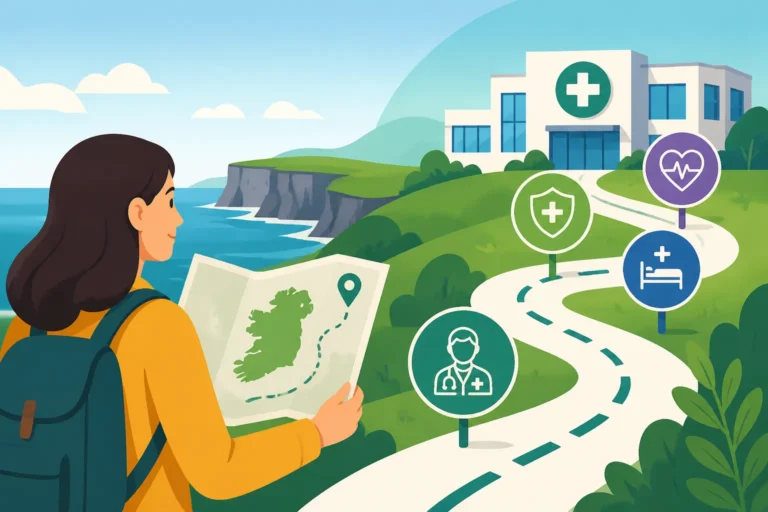
The search for a GP can feel a bit like a treasure hunt where the map is slightly outdated. You cannot simply walk into any clinic and expect to be seen that day. Most GPs operate on a strict registration basis, and their patient lists are often full to the brim. You need to be strategic and persistent in your search.
Using the HSE Find a GP Tool
The Health Service Executive (HSE) maintains an online directory of all GPs in the country. You can search by county and town to get a list of names, addresses, and phone numbers. While this is a great starting point, the tool does not tell you if the practice is currently accepting new patients. You might find a list of ten doctors in your area, only to find that all ten have a recorded message saying their books are closed.
When using the HSE tool, don't just look at the clinics in your immediate neighborhood. If you live in a high-density area like Rathmines in Dublin or the city center of Galway, the local doctors are likely overwhelmed. Expanding your search to the next suburb over or looking for practices near your workplace can often yield better results. You might also want to look at Where Can I Find an English-Speaking Doctor in Dublin? if you are specifically looking for practitioners in the capital.
Word of Mouth and Local Community Groups
In Ireland, the "unofficial" channels are often more effective than the official ones. Joining local expat Facebook groups or neighborhood "residents' association" pages can be a lifesaver. Often, a neighbor might mention that a new doctor has just joined a local practice, or that a specific clinic is opening its list for one week only.
Don't be afraid to ask colleagues at work where they go. Some larger multinational companies in Dublin or Cork actually have "corporate" arrangements or can recommend clinics that are more accustomed to dealing with international employees. If you are a digital nomad or still in your first few weeks of moving, using a service like SafetyWing can provide a safety net for unexpected illnesses while you are still playing the "phone call game" with local surgeries. SafetyWing is particularly useful because it offers global coverage that can fill the gap before you are fully "ordinary resident" in the eyes of the HSE.
Comparison of GP Search Methods
| Method | Pros | Cons |
|---|---|---|
| HSE Map | Comprehensive list of all licensed GPs. | Outdated information on "closed books." |
| Google Maps | Shows recent reviews and opening hours. | Reviews are often skewed by one-off bad experiences. |
| Community Groups | Real-time updates on who is accepting patients. | Can be anecdotal and subjective. |
| Walking In | Harder for them to say "no" to your face. | Time-consuming and potentially frustrating. |
The Registration Process Step-by-Step
Once you find a practice that says "yes," you need to move quickly. Registration isn't just a verbal agreement; it involves a fair bit of paperwork to ensure your records are properly managed and that you are legally "on the books."
Contacting the Surgery and Inquiring About The Books
Your first point of contact will almost always be the practice receptionist. In the Irish healthcare system, the receptionist is a powerful figure—they are the ones who manage the doctor’s schedule and the intake of new patients. Be polite, be patient, and be clear about your status. State whether you are a private patient or applying with a Medical Card.
If they say their books are closed, ask if they have a waiting list. Some practices will take your name and contact you in three to six months when a spot opens up (usually because someone else has moved away). If you have a family, emphasize that you want to register everyone together. Practices are often more willing to take a whole family than a single individual, especially if there are young children involved. During this waiting period, having a backup like SafetyWing ensures that if something urgent happens, you aren't completely stranded without any form of medical assistance or insurance coverage.
Required Documentation for Registration
To register, you will usually need to provide several pieces of information. Unlike some countries where you just show an ID, the Irish GP will want to establish your residency and your medical history. Common requirements include:
- Proof of Address: A utility bill or a rental agreement in your name. This proves you live within the "catchment area" of the practice.
- PPS Number: This is your Personal Public Service number, essential for all interactions with the Irish state. If you haven't secured this yet, see How to Register for Tax and Get a PPS Number in Ireland.
- Previous Medical Records: If you have chronic conditions, you should have a summary of your history from your previous doctor.
- Identity Documents: Your passport or IRP card.
Under every registration, there is also the "New Patient Assessment." Many practices require you to book a longer-than-usual first appointment where the nurse or doctor goes over your history, takes your blood pressure, and records your vaccinations. This is a "paid" visit (usually around €60-€80) and is mandatory to finalize your registration.
Overcoming the Closed Books Crisis
It is a sobering reality that many expats spend months trying to find a GP. If you are in a "doctor desert," you might feel like you are hitting a brick wall. However, there are systemic protections in place if you truly cannot find a provider.
What to Do if Every GP Says No
If you have called every doctor within a reasonable distance and all of them have refused you, you are facing a "closed books" crisis. This is common in rapidly growing areas like North County Dublin or parts of Cork and Limerick. In this scenario, you must keep a log of everyone you called and the date they refused you.
For private patients, there is unfortunately no legal "right" to be taken on by a specific private business (which most GP practices are). You may have to look further afield. However, for those with a Medical Card or GP Visit Card, the rules are different. If you have been refused by at least three GPs, the HSE has a duty to assign you one. You can read more about this in The Expat Guide to the Medical Card and GP Visit Card in Ireland (2027).
The HSE Assignment Protocol
The HSE "assigned" doctor is a last-resort measure. You must fill out an application form and provide the names of the three doctors who turned you down. The HSE will then investigate and eventually mandate a local doctor to take you onto their list.
While this sounds like a perfect solution, be aware that it can take several weeks or even months to process. During this gap, you are still responsible for your own health. This is where services like SafetyWing come into play for expats. If you are in that limbo period where the HSE is "assigning" you but you get a chest infection tomorrow, having international health insurance allows you to use private "urgent care" clinics (like VHI SwiftCare or Affidea) without worrying about the €150+ bill that usually comes with those walk-in services.
Costs, Cards, and Insurance Considerations
Understanding the financial side of Irish GP visits is vital to avoid "bill shock" at the reception desk. Unlike the UK's NHS, where GP visits are free for all, the Irish system is a "two-tier" model at the point of entry.
Paying Out-of-Pocket vs GP Visit Cards
If you are a private patient, a standard 15-minute GP consultation will cost you between €60 and €85, depending on the location (Dublin is consistently at the higher end). This does not include extras like blood tests (€20-€30 extra), ECGs, or cryotherapy for warts.
If your income is below a certain level, you might qualify for a GP Visit Card. This card allows you to see the doctor for free, but you still have to pay for your medications at the pharmacy. It is a middle ground between being a full private patient and a Medical Card holder. You can check your eligibility here: Understanding the Medical Card Means Test in Ireland.
Leveraging Health Insurance for GP Visits
Many expats arrive with private health insurance provided by their employer (VHI, Laya, or Irish Life). It is a common mistake to think these plans make the GP visit "free." In reality, you usually pay the GP upfront and then "claim back" a portion of the cost from your insurer later.
For example, if your visit costs €70, your insurance plan might allow you to claim back €25 or €30 per visit. There is often a limit on how many visits you can claim per year. Always check your table of benefits. If you are still in the process of choosing a plan, Health Insurance in Ireland: VHI, Laya, Irish Life and Options Explained provides an excellent breakdown of how to maximize your coverage.
For those who are not yet covered by a local Irish plan, SafetyWing offers a flexible alternative that is often more budget-friendly for the "transitional" period. It covers unexpected medical needs and can be a life-saver if you need to use an out-of-hours GP service, which can cost upwards of €100 for a single visit.
Practical Tips for Your First Appointment
Once you have finally secured that elusive spot, you want to make sure you make the most of it. The first appointment is your chance to establish a relationship and ensure your medical needs are understood within the context of the Irish system.
Transferring Medical Records
Your Irish GP will not automatically get your records from your home country. You are the "mule" for your own data. Ask your previous doctor for a "Patient Summary" or a "Transfer of Care" document. This should include:
- A list of current medications (including dosage and frequency).
- Any chronic diagnoses (Diabetes, Hypertension, etc.).
- Recent lab results (within the last 6 months).
- Your vaccination record (essential if you have children).
If your records are not in English, you should have the summary translated. Your Irish GP needs to be able to read your history to prescribe the equivalent Irish medication. Note that brand names often differ; for example, what is called "Tylenol" in the US is "Paracetamol" or "Panadol" in Ireland. To understand more about getting your meds, see Prescription Medications and Pharmacies in Ireland: The Complete Guide.
Understanding Out-of-Hours Services
Your regular GP surgery will likely be open from 9:00 AM to 5:00 PM, Monday to Friday. If you get sick at 8:00 PM on a Saturday, do not go to the GP's office. You will need to call the "Out-of-Hours" GP service (often called "D-Doc" in Dublin, "SouthDoc" in Cork, or "WestDoc" in Galway).
These services are staffed by local GPs on a rotational basis. You call a central number, speak to a triage nurse, and they will give you an appointment at a local center. These visits are generally more expensive for private patients (often €80-€100). If you have a Medical Card, these visits are free. It is a good idea to find out the name of your local out-of-hours service and save the number in your phone the day you register with your GP. For more on handling these stressful situations, read Emergency Medical Care in Ireland: What Every Expat Needs to Know.
Summary of Costs for Private Patients (Estimates for 2026)
| Service | Estimated Cost |
|---|---|
| Standard GP Consultation | €60 – €85 |
| Review / Follow-up Visit | €40 – €50 |
| Blood Tests (Phlebotomy) | €20 – €35 |
| Out-of-Hours GP Visit | €80 – €120 |
| Repeat Prescription (no visit) | €20 – €30 |
| Driving Licence Medical | €60 – €80 |
Finding a GP in Ireland requires a mix of persistence, local knowledge, and sometimes a bit of luck. Don't wait until you are sick to start the process. Start calling practices the week you arrive, keep your SafetyWing coverage active until you are fully settled, and eventually, you will find a doctor who can guide you through the rest of the Irish healthcare system.
Disclaimer Regarding Medical and Legal Advice
This guide is provided for informational purposes only and does not constitute medical, legal, or professional advice. Healthcare regulations, GP availability, and HSE policies in Ireland are subject to frequent changes. While every effort has been made to ensure the accuracy of the information provided, readers should always verify details with the Health Service Executive (HSE) or a qualified legal professional. The mention of specific brands or services does not imply an endorsement, and individuals should conduct their own research before purchasing insurance or registering with a medical practice.