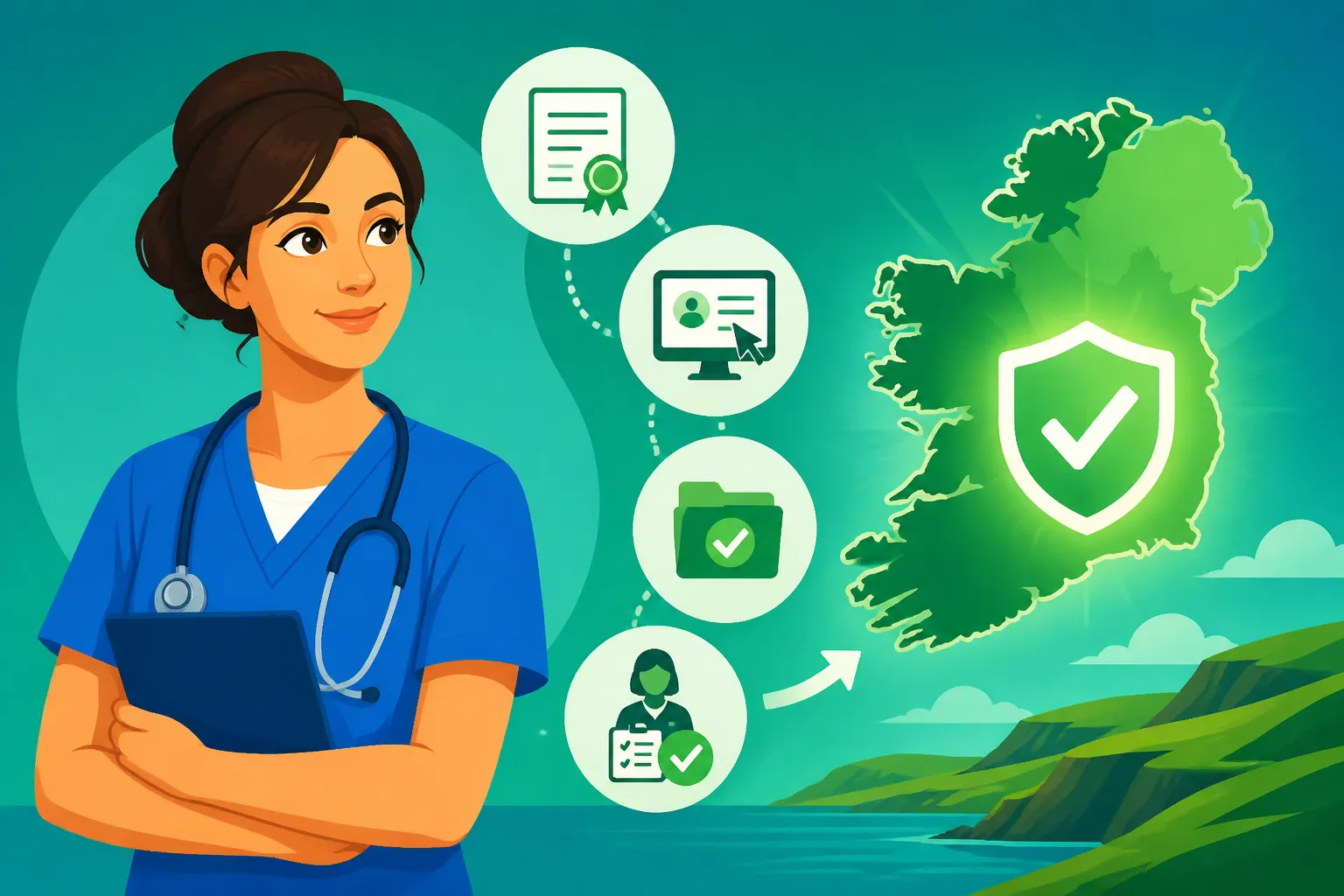
How Do I Register My Nursing Qualification in Ireland?
Arriving in Ireland with a foreign nursing qualification can feel like you've just climbed Mount Everest, only to discover there's another, equally daunting mountain of paperwork waiting for you. The process of getting your hard-earned credentials recognised by the Nursing and Midwifery Board of Ireland (NMBI) is notoriously complex and often frustrating. But don't despair! This comprehensive guide will walk you through every step, helping you navigate the sometimes-opaque system so you can finally put on those scrubs and make a real difference in the Irish healthcare system.
Navigating the Irish Nursing & Midwifery Board (NMBI) Registration Process
So, you've decided to bring your nursing skills to the Emerald Isle – maith thú, fair play to ya! But before you can even think about finding a job, you need to get properly registered with the Nursing and Midwifery Board of Ireland (NMBI). This isn't just a formality; it's a legal requirement to practise as a nurse or midwife here. Trust me, many an expat has felt overwhelmed by the sheer volume of information and the precise nature of the requirements. It’s a marathon, not a sprint, but it's absolutely achievable with patience and persistence.
Initial Steps and Understanding Eligibility
Before you even start digging out old university transcripts, the very first thing you need to do is determine your eligibility and understand which "division" of the register you're applying for. Are you a General Nurse? A Mental Health Nurse? An Intellectual Disability Nurse? Or perhaps a Midwife? The NMBI has different registers for each, and your qualification will need to align with one of them.
The NMBI website is your first port of call. They have a "Self-Assessment Questionnaire" which, while not a definitive answer, can give you a preliminary idea of what pathway you might be on. This is crucial because the application process differs significantly depending on whether your qualification is from the EU/EEA or from outside it – referred to as a "General System Applicant." EU/EEA citizens benefit from a streamlined process thanks to the EU Directive on the Recognition of Professional Qualifications, but for everyone else, it’s a more detailed assessment.
A common pitfall I've seen among fellow expats is underestimating the importance of those initial checks. Don't rush into gathering documents until you've confirmed your likely pathway. Make sure your qualification is genuinely comparable to an Irish qualification. For instance, if you're a paediatric nurse with a specific qualification, the NMBI will assess it against their standards for a children's nurse, not just a general nurse. This stage is about setting realistic expectations and understanding the journey ahead. Many foreigners find The Complete Guide to Healthcare in Ireland for Expats (2027) a useful resource at this stage to get an overall picture.
Gathering Your Documents: The Paperwork Mountain
Ah, the paperwork mountain! This is where many of us expats feel like we're being buried alive. The NMBI requires a comprehensive suite of documents, and they need them to be just so. Any missing detail or incorrect certification can lead to significant delays, sometimes sending you back to square one.
You'll need certified copies of almost everything. This means taking your original documents – birth certificate, passport, marriage certificate (if applicable), academic transcripts, professional references, and nursing licence verification – to a solicitor, notary public, or a commissioner for oaths. They will compare the copy to the original and stamp/sign it to confirm it's a true copy. Don't, I repeat, don't send original documents unless specifically requested, and even then, make copies for your own records.
Here's a breakdown of the typical documents you'll need:
| Document Category | Specific Items | Certification Requirement | Notes for Expats |
|---|---|---|---|
| Personal Identity | Valid Passport, Birth Certificate, Marriage Cert (if name change) | Certified Copy | Ensure names match across all documents. |
| Academic Qualifications | Nursing Degree/Diploma, Academic Transcript (listing modules, clinical hours) | Certified Copy & Official Translation (if not English) | Detailed breakdown of theory & clinical hours is vital. |
| Professional Experience | Employment References (on official letterhead, specific details) | Original & Certified Translation (if not English) | Must detail dates, hours, duties performed, area of practice. |
| Professional Standing | Certificate of Current Professional Status / Letter of Good Standing from all regulatory bodies where you've ever registered | Original, issued directly from regulatory body | Must be sent directly to NMBI, not via applicant. Valid for 3 months. |
| English Language | IELTS Academic or OET scores | Original Score Report | Must meet NMBI's minimum scores (see below). |
| Other | Proof of Name Change (if applicable), Detailed CV | Certified Copy (if official document) | Your CV should highlight relevant nursing experience. |
Regarding academic transcripts, the NMBI is very particular about knowing your exact theoretical and clinical hours. If your university doesn't provide this level of detail on their standard transcripts, you might need to request a special letter from your faculty, outlining these hours broken down by subject and clinical placement. This often means a few emails back and forth with your alma mater, which can be a slow process if they're not used to such requests. Many past applicants have found themselves stuck here, so be proactive!
Application Submission and What Happens Next
Once your paperwork mountain is meticulously organised and certified, it's time to submit your application to the NMBI. This is primarily done online through their dedicated portal. You'll create an account, fill in all your personal and professional details, and upload the scanned certified copies of your documents. Crucially, some documents, like your Certificate of Current Professional Status (CCPS) from other regulatory bodies, must be sent directly from those bodies to the NMBI, not by you. This is a common point of confusion and delay for many applicants.
After submission, the waiting game truly begins. The NMBI states that it aims to process applications within certain timeframes, but in reality, these can often be extended, especially for General System Applicants. For EU/EEA applications, the statutory processing period is three months from the date of submission of a complete application. For General System applications, it can be much longer, often stretching to 6-12 months, and sometimes more if queries arise.
During this assessment phase, the NMBI will review your qualifications against Irish standards. They're looking for equivalence in terms of education, training, and professional experience. Don't be surprised if they come back with queries or requests for additional information. This is standard procedure, but it can be frustrating if you thought you had everything covered. My best advice here is to respond promptly and precisely to any queries. Keep copies of everything you send, and note down dates and names of anyone you speak to at the NMBI. It's not uncommon for expats to lament the communication speed, but remember, every query answered clearly moves your application forward.
The Various Pathways to Registration in Ireland
The NMBI recognises that nurses and midwives come from diverse educational and professional backgrounds. Therefore, the registration process isn't a one-size-fits-all approach. Understanding which pathway applies to you is fundamental to a smooth application.
General System Applicants: Non-EU/EEA Qualifications
If your nursing or midwifery qualification comes from outside the EU/EEA (e.g., from the US, Canada, Australia, India, Philippines, UK post-Brexit, etc.), you'll be assessed as a General System Applicant. This is typically the most rigorous pathway, involving a detailed comparison of your education and clinical experience against Ireland's standards.
The NMBI’s assessment for General System Applicants covers several key areas:
- Educational Programme Content: They'll scrutinise your curriculum, looking for modules in areas like general nursing principles, anatomy, physiology, pharmacology, ethics, and specific specialities if applicable. They want to ensure your theoretical knowledge is comprehensive.
- Clinical Practice Experience: This is huge. You need to demonstrate a minimum number of supervised clinical practice hours across various fields (medical, surgical, maternal and child health, mental health, care of the older person). Your transcript should clearly delineate these hours.
- Duration of Training: The NMBI typically expects a minimum of three years of full-time professional training, leading to a degree or diploma.
- Professional Competence: They'll look at your professional references and your Certificate of Current Professional Status to ascertain your fitness to practice.
It's common for applicants in this category to face queries about their clinical hours or specific module content. For instance, if your programme had less emphasis on adult nursing in a general hospital setting, or if certain paediatric hours were not explicitly detailed, the NMBI might raise it. Having detailed course syllabi or a letter from your university clarifying these points can be invaluable. This is often where the application slows down, as chasing information from an institution thousands of miles away can be a challenge.
EU/EEA Qualified Nurses: Recognition of Professional Qualifications
For those who qualified as a nurse or midwife in an EU/EEA member state (or Switzerland), the process is generally more straightforward due to the EU Directive 2005/36/EC. This directive facilitates the mutual recognition of professional qualifications among member states.
The primary document here is the Certificate of Conformity, issued by the competent authority in your home EU/EEA country. This certificate confirms that your qualification meets the standards laid out in the EU Directive. If your qualification predates the implementation of the Directive, you might need additional documentation to prove that you meet the "acquired rights" clause, demonstrating that your training meets the minimum requirements of the Directive.
While this pathway is quicker, it’s not entirely devoid of challenges. You still need to provide proof of identity, English language proficiency (if your qualification wasn't taught and assessed in English), and certificates of good standing. However, the in-depth assessment of your curriculum is usually not required as the Certificate of Conformity acts as the proof of equivalence. It is important for these applicants to understand How Ireland's Health System Works: The HSE vs Private Explained (2026), as they will be directly entering the system.
What If Your Qualification Doesn't Match? Adapting to Irish Standards
Sometimes, despite your best efforts, the NMBI might determine that your qualification isn't substantially equivalent to an Irish qualification. This isn't necessarily the end of the road, but it means you'll need to undertake further education or training to bridge the gaps. This can be one of the most disheartening moments for an expat, but it's a common experience, and there are pathways to resolution.
The NMBI might offer one of two options:
- Adaptation Period/Clinical Placement: This involves undertaking a supervised clinical placement in an approved Irish healthcare setting. It's essentially a practical training period designed to familiarise you with Irish nursing practices, healthcare policies, and the specific clinical environment. This period can range from a few weeks to several months, depending on the identified gaps. You'll be assessed throughout this period.
- Aptitude Test: This is a theoretical and/or practical examination designed to assess your knowledge and skills against Irish standards. It might cover specific areas where your qualification was deemed deficient.
These adaptation programmes or aptitude tests are offered by various institutions, often universities or hospitals, in conjunction with the NMBI. They come with their own costs and timelines, which adds another layer to your journey. While this might feel like a setback, view it as an opportunity to solidify your understanding of Irish healthcare and ensure you are fully prepared to practice here. Many nurses who have gone through this process report feeling more confident and integrated into the system afterwards. This might impact your initial employment prospects, so understanding The Expat Guide to Finding a Job in Ireland (2027) could be helpful.
Overcoming Common Hurdles and Finding Support
Let's be real: registering your qualification in a new country is rarely a walk in the park. There are specific hurdles unique to Ireland that many expats encounter. Being prepared for them can save you a lot of stress and potential delays.
English Language Requirements: The IELTS/OET Gauntlet
Even if you're a native English speaker, or your degree was taught entirely in English, the NMBI usually requires you to demonstrate your English language proficiency through an approved test. Currently, these are the International English Language Testing System (IELTS Academic) or the Occupational English Test (OET).
The minimum scores are strict:
- IELTS Academic: A minimum overall score of 7.0, with no less than 6.5 in any of the four components (listening, reading, writing, and speaking).
- OET: A minimum overall score of B, with no less than C+ in any of the four components.
There are very limited exemptions to this requirement. For example, if your nursing qualification was entirely taught and assessed in English in a specific list of countries (e.g., Ireland, UK, Australia, New Zealand, USA, Canada), you might be exempt. However, even if you graduated from an English-speaking university in a non-listed country, you'll still likely need to take the test. This can be a major source of frustration and expense for many.
My advice? Don't underestimate these tests. They are specifically designed for academic and professional contexts and require dedicated preparation. Many online resources and courses are available. For example, some expats use platforms like iTalki to practice speaking with tutors, which can be invaluable for the conversational aspects of the OET or the speaking component of IELTS. Getting this done early in your application process is crucial, as the results are only valid for a limited period (usually two years).
The Waiting Game and Navigating NMBI Communication
I won't sugarcoat it: the NMBI application process can test your patience. The waiting periods can be long, and communication can sometimes feel infrequent or generic. This is a common complaint among expat nurses, and it's completely valid to feel frustrated when your career is on hold.
My top tips for surviving the waiting game:
- Be Proactive, Not Impatient: After submitting your application, give them reasonable time. If you haven't heard anything after a few weeks beyond their stated timelines, a polite email or phone call to check on the status is fine. However, constant badgering won't speed things up and might actually slow down their process.
- Keep Meticulous Records: Every email, every phone call, every document sent or received should be logged. Include dates, times, and the name of the NMBI staff member you spoke with. This can be invaluable if you need to follow up on a discrepancy.
- Join Expat Forums/Groups: There are many online communities for expat nurses in Ireland (e.g., Facebook groups). These can be a fantastic source of shared experience, practical advice, and emotional support. You'll realise you're not alone in your frustrations.
- Prepare for Queries: Assume they will have questions. The more organised and thorough your initial submission, the less likely you'll face major issues, but be ready to provide clarification or additional documents.
Understanding the specific role of the Immigration Service Delivery (ISD) and how their processes intertwine with NMBI can help you keep track. Renewing Your IRP and Immigration Permission in Ireland will be a key step after registration.
Financial Considerations and Where to Find Help
Let's talk about the money, because getting registered and moving to Ireland isn't cheap.
- NMBI Application Fees: There's an initial application fee, typically non-refundable, and then an annual retention fee once you're registered. Be sure to check the most current fees on the NMBI website.
- Document Certification and Translation Costs: Solicitors, notaries, and professional translators charge fees. These can add up quickly, especially if you have numerous documents requiring translation.
- English Language Test Fees: IELTS and OET are not cheap tests, and if you need to retake them, the costs multiply.
- Adaptation Programme/Aptitude Test Fees: If you're required to undertake further training, these programmes can be significant investments.
- Visa/Permit Application Fees: Don't forget the costs associated with your visa or employment permit if you're a non-EU/EEA national. Understanding How to Register for Tax and Get a PPS Number in Ireland is also crucial for your financial life here.
While there isn't typically direct financial aid for the registration process itself, once you're on the pathway to working in Ireland, some employers might offer relocation packages that could offset some of these initial costs. It's always worth enquiring about this when you're looking for jobs. Additionally, some government schemes or charities might exist for specific circumstances, but these are rare for the initial qualification recognition. Don't forget about managing your money once you're here; The Complete Guide to Taxes in Ireland for Expats (2026) provides excellent advice.
Life After Registration: Your Nursing Career in Ireland
Congratulations! You've navigated the NMBI process, climbed the paperwork mountain, and your name is officially on the Irish Register of Nurses and Midwives. Take a moment to celebrate this huge achievement! But the journey doesn't end there. Now, it's time to build your career and settle into life in Ireland.
Finding Your First Nursing Job and Essential Next Steps
With your NMBI registration in hand, you're officially eligible to practice nursing or midwifery in Ireland. The demand for healthcare professionals, especially nurses, is consistently high across the country, so you're entering a strong job market. However, securing that first role still requires effort.
- HSE vs. Private Hospitals: Ireland's healthcare system is a mix of public (HSE – Health Service Executive) and private institutions. The HSE is the main provider, operating public hospitals, community health services, and more. Private hospitals like Mater Private, Beacon Hospital, or Blackrock Clinic also offer significant employment opportunities. Each has its own application process, culture, and benefits. You might find it useful to read Public vs Private Healthcare in Ireland: Which Should Expats Choose? to understand the nuances.
- Where to Look: Major job boards like IrishJobs.ie, Indeed.ie, and the HSE's official recruitment website (HSE.ie/eng/staff/jobs) are excellent starting points. Many private hospitals also advertise directly on their own websites. Networking with other expat nurses or through professional nursing organisations can also open doors.
- Crafting Your CV and Cover Letter: Tailor your CV and cover letter to the Irish context. Irish employers appreciate clear, concise documents that highlight relevant experience and skills. Ensure your qualifications and NMBI registration number are prominently displayed.
- Interview Preparation: Be ready to discuss your clinical experience, understanding of Irish healthcare policies (e.g., patient safety, infection control), and your reasons for wanting to work in Ireland. Confidence in discussing how your foreign experience translates to the Irish setting is key.
Once you have a job offer, you'll need to sort out your PPS (Personal Public Service) number, which is essential for employment, tax, and social welfare benefits. Understanding How the Irish Tax System (Revenue) Works: PAYE, PRSI and USC Explained (2027) is vital. You’ll also need to get your bank account set up. Don't forget that if you are a non-EU/EEA national, your employer will likely need to support your application for an employment permit. Understanding the Irish Immigration Stamp System (Stamp 1, 2, 4) (2026) and which stamp you will hold is also critically important.
Continuing Professional Development (CPD) and Maintaining Your Registration
Your journey with the NMBI doesn't end with initial registration. Like all registered healthcare professionals in Ireland, nurses and midwives are required to engage in Continuing Professional Development (CPD) to maintain their registration. This is about ensuring your skills and knowledge remain current and you continue to provide safe and effective care.
- CPD Requirements: The NMBI mandates that you engage in regular learning activities. This could include formal courses, workshops, conferences, in-service training, self-directed learning, or participation in professional groups. You'll need to keep a record of your CPD activities in a portfolio.
- Annual Retention: Every year, you'll need to pay an annual retention fee to the NMBI to keep your registration active. They will also ask for declarations regarding your fitness to practice and your CPD engagement. Failure to pay the fee or meet other requirements can lead to your removal from the register, which would mean you can no longer legally practice.
- Specialisation and Further Education: Ireland offers numerous opportunities for nurses and midwives to specialise and advance their careers. Many universities offer postgraduate diplomas and master's programmes in various nursing specialities. The HSE also supports ongoing education for its staff. This is a great way to deepen your expertise and increase your earning potential.
Embracing CPD is not just a regulatory requirement; it’s an opportunity to grow professionally and connect with colleagues. The Irish nursing community is vibrant, and continuous learning is highly valued. Whether it’s improving your clinical skills, understanding new technologies, or even taking on leadership roles, the opportunities are abundant. Being a nurse in Ireland is a challenging but incredibly rewarding career, and your registration is the crucial first step to a fulfilling life here.
Disclaimer
Please note that while every effort has been made to provide accurate and up-to-date information, the processes and requirements of the Nursing and Midwifery Board of Ireland (NMBI) and Irish immigration authorities can change. This guide is intended for informational purposes only and does not constitute professional legal or immigration advice. Always consult the official NMBI website, the Irish Immigration Service Delivery (ISD) website, or a qualified immigration solicitor for the most current and specific guidance related to your individual circumstances.