How Do I Open a Savings or Deposit Account in Ireland?
Oh, the joy of setting up your financial life in a new country! If you've just landed in Ireland, you're likely already familiar with the unique blend of charm and bureaucratic hurdles that greet every expat. One of the classic headaches is trying to figure out the banking system, especially when it comes to safely tucking away your hard-earned cash. This guide is going to walk you through the ins and outs of opening a savings or deposit account in Ireland, helping you navigate the requirements and get your money working for you, rather than just sitting idly in a current account.
Understanding Savings and Deposit Accounts in Ireland
When you're first getting settled, opening a basic current account is usually the top priority. But once that's done, and you start seeing the deductions from your salary – PAYE, PRSI, USC – you'll want to think about how to manage what's left. It's not just about spending; it's about building a financial cushion or saving for a specific goal. This is where dedicated savings and deposit accounts come in, and understanding the different types available here in Ireland is your first step.
What's the Difference Between Savings and Deposit Accounts?
In Ireland, the terms "savings account" and "deposit account" are often used interchangeably, but there can be subtle distinctions depending on the bank and the product. Generally, a savings account is designed for regular, flexible saving. You can typically deposit and withdraw money with relative ease, though some might have a notice period or limit on withdrawals to earn a slightly higher interest rate. These are perfect for your emergency fund or short-to-medium term goals.
On the other hand, a deposit account usually refers to accounts where you commit to leaving a sum of money untouched for a fixed period, like six months, one year, or even longer. These are often called "fixed-term deposits" or "term deposit accounts." The trade-off for locking your money away is that you generally get a higher interest rate than a standard flexible savings account. However, accessing your funds before the term ends usually incurs penalties or means you forfeit some or all of the interest. You need to weigh your liquidity needs against the potential for higher returns.
Why Open a Separate Savings Account?
You might think, "Why bother? My current account has some money in it, that's my savings, right?" Well, not really, especially not in Ireland. First off, most current accounts offer next to no interest, so your money is effectively losing value to inflation. A dedicated savings account, even with modest interest, starts to work for you. Secondly, separating your spending money from your savings is a cornerstone of good financial hygiene. It makes it much harder to accidentally dip into your long-term goals for impulse purchases.
Beyond the practical benefits, there's a psychological one. Seeing your savings grow in a separate account can be incredibly motivating. It creates a clear distinction between your everyday expenses and your future aspirations, whether that's a down payment for a house, a new car, or that dream holiday you've been eyeing. Moreover, from a tax perspective, while interest earned on savings is subject to Deposit Interest Retention Tax (DIRT), keeping your savings distinct helps you monitor these figures and understand your overall financial picture more clearly.
Eligibility and Key Requirements for Expats
Alright, let's get down to brass tacks: what do you actually need to open one of these accounts? This is where many expats hit their first real wall. Irish banks, bless their hearts, are notorious for their stringent requirements, often making you feel like you're trying to prove you're not a shadowy international criminal just to open a basic account. Don't worry, we've all been there, swearing under our breath at the seemingly endless list of documents.
The Dreaded Proof of Address
This is, hands down, the biggest hurdle for newcomers. You've just moved to Ireland, probably staying in temporary accommodation, or perhaps you've finally found a rental but haven't received any official mail yet. Banks need proof that you live where you say you live, and it needs to be an official document, usually dated within the last 3-6 months. Think utility bills, government letters, or official bank statements.
The real kicker? You often can't get these documents without a bank account or a fixed address, creating a maddening Catch-22. My advice? Start collecting any official post you get immediately. A letter from the Revenue Commissioners about your PPS number, an official employment contract, or a utility bill in your name can work. If you're renting, try to get your landlord to provide a letter, along with a copy of your tenancy agreement, and hope for the best. Some banks are more flexible than others, so don't be afraid to try a few different branches or institutions like AIB or Bank of Ireland, explaining your situation clearly. For more insights on setting up your new life, you might find our guide on The Complete Guide to Moving to Ireland: Your First 90 Days (2027) incredibly helpful.
Identification Documents You'll Need
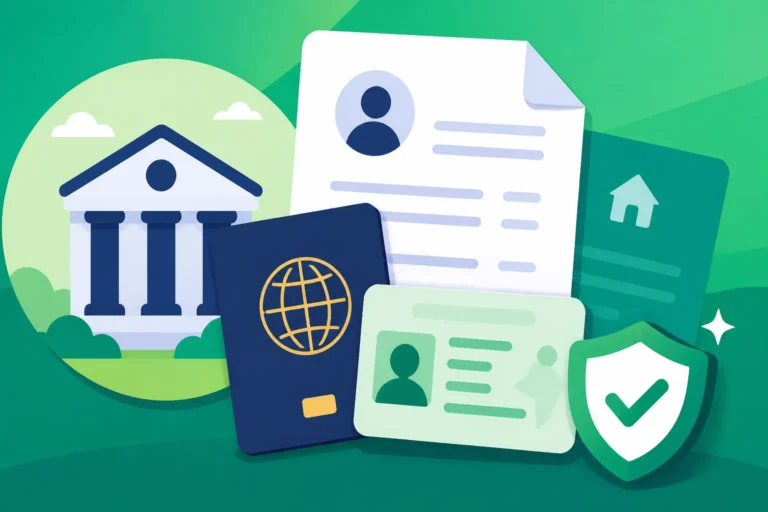
This part is usually more straightforward, but still critical. You'll need at least one form of photographic ID and sometimes a second form of ID to verify your signature or date of birth. Typically, this means your valid passport is your primary go-to. If you're a non-EEA citizen, your Irish Residence Permit (IRP card) is absolutely essential. This card not only proves your identity but also your legal right to reside in Ireland, which banks need to see.
Ensure your ID documents are current and not expired. The bank will likely take copies and perform identity verification checks. It's always a good idea to have both the original and a photocopy, just in case, though they will usually scan the originals themselves. Remember, they are doing their due diligence to comply with anti-money laundering regulations, so patience and a friendly attitude (even when you're tearing your hair out) go a long way.
PPS Number and Tax Residency
Your Personal Public Service (PPS) Number is your unique identifier for all social welfare and public services in Ireland, and it's absolutely vital for banking. Banks need it to report any interest earned on your savings accounts to the Revenue Commissioners and to correctly apply DIRT (Deposit Interest Retention Tax). If you don't have one, getting this sorted is a non-negotiable step before opening any account that will earn interest.
Beyond the PPSN, understanding your tax residency status is also important. As an expat, your tax situation can be complex, especially if you have income or assets in other countries. The interest you earn on your Irish savings will be taxed here, but your overall global tax liability might differ. For intricate details on this, especially how it might affect your Taxes for Expats, it's often wise to consult a tax professional. Knowing your status helps the bank correctly classify your account for tax purposes, preventing future headaches down the line. To delve deeper into the tax landscape, check out our guide on The Complete Guide to Taxes in Ireland for Expats (2027).
Step-by-Step Guide to Opening Your Account
So, you've gathered your documents, taken a deep breath, and mentally prepared for the Irish banking adventure. Now, let's walk through the practical steps to actually get that savings or deposit account open. It's not always a linear path, and flexibility is key.
Researching Your Options: Banks and Digital Alternatives
Ireland has a few main retail banks that offer a range of savings and deposit accounts: AIB, Bank of Ireland, and Permanent TSB (PTSB). You also have Ulster Bank, although they are winding down operations, so it's not a viable option for new accounts. EBS, a building society, is also a popular choice, particularly for savings products, often offering slightly different rates or account structures. Each of these will have various types of savings accounts – instant access, notice accounts, fixed-term deposits – so it’s worth browsing their websites to see which best fits your saving goals and desired flexibility.
While traditional banks are the primary players for robust savings accounts, many expats also use digital banks like Revolut or N26 for their everyday current account needs. These platforms are fantastic for quick transfers, budgeting, and international payments. However, it's crucial to understand that their "savings" features are often more akin to sub-accounts for budgeting rather than true, interest-bearing savings or deposit accounts offered by traditional banks. They might offer some interest on balances, but often through third-party partners or with specific conditions. For moving money into or out of Ireland, a service like Wise can be incredibly useful, allowing you to hold balances in multiple currencies and make international transfers efficiently. While a digital bank can be a great companion to your traditional Irish current account, for long-term savings with competitive interest rates, a dedicated account with an Irish retail bank is usually the way to go.
Making the Appointment (or Going Online)
Once you've eyed a few promising options, your next move depends on the bank. For traditional banks like AIB, Bank of Ireland, or Permanent TSB, it’s often best to make an appointment at a branch. While some services can be initiated online, especially if you're already an existing customer with a current account, opening a new savings account as an expat, particularly if you need to establish new proofs of address, usually requires an in-person visit. Call ahead or use their online appointment booking systems. Explain you're a new customer and an expat, as they might allocate more time or a specialist.
Some institutions, particularly if you're already banking with them, might allow you to open a basic savings account through your existing online banking portal or mobile app, once your identity and address are already verified. However, for a brand-new relationship or for more complex deposit accounts, face-to-face is generally preferred to iron out any expat-specific quirks in your documentation.
What to Expect at the Bank
Prepare for a bit of a grilling, albeit a polite one. The bank official will review all your documents meticulously. This is where your diligent gathering of proof of address, passport, IRP card, and PPS number will pay off. They'll ask questions about your source of funds, your employment, and your general financial situation. This isn't personal; it's part of their regulatory compliance. Be patient, clear, and ready to provide additional information if requested.
You'll fill out application forms, sign declarations, and likely receive a mountain of terms and conditions to review. Don't rush this part. Ask questions about fees, interest calculation, access to funds, and, crucially, how DIRT will be applied. Once everything is approved, they'll set up your account. You might get account details on the spot or receive them by post within a few days. Then, you can usually link it to your current account for easy transfers online. Getting your general banking set up is covered comprehensively in The Expat Guide to Opening a Bank Account in Ireland.
Navigating the Nuances of Irish Savings
Once you've got your savings account open, your journey isn't over. There are a few key aspects unique to the Irish financial landscape that you'll need to understand to manage your money effectively. It's not just about depositing funds; it's about understanding how those funds grow and are taxed.
Understanding DIRT (Deposit Interest Retention Tax)
Ah, DIRT. It sounds unpleasant, and for your savings, it means a portion of your hard-earned interest goes straight to the taxman. Deposit Interest Retention Tax (DIRT) is a tax on the interest earned on money held in deposits in Irish financial institutions. The standard rate of DIRT in Ireland is currently 33% (as of early 2024, but always check the most up-to-date Revenue figures). This means if you earn €100 in interest, €33 will be deducted by your bank and paid directly to Revenue, leaving you with €67.
DIRT is automatically deducted by the financial institution before you receive your interest payment, so you generally don't need to do anything proactively to pay it. However, if you are not ordinarily resident in Ireland for tax purposes, you might be exempt from DIRT. This can be a complex area, and it's where understanding your tax residency becomes crucial. If you believe you qualify for an exemption, you'll need to complete a non-residency declaration form (such as Form 15B for individuals) with your bank. This declaration usually needs to be renewed periodically. Remember, mistakenly claiming an exemption when you're not entitled to it can lead to penalties from Revenue. For a deeper dive into how your money is taxed, our article on Understanding DIRT and Tax on Savings and Deposits in Ireland is a must-read.
Interest Rates: A Realistic Expectation
Let's be realistic: Irish savings account interest rates aren't going to make you rich overnight, especially compared to some historical highs or rates you might be used to in other countries. In recent years, and particularly during periods of low interest rates globally, many standard instant-access savings accounts in Ireland have offered very little, sometimes even close to zero interest. While rates have seen some upward movement more recently, they still tend to be modest.
Fixed-term deposit accounts typically offer better rates, but at the cost of liquidity. The longer you lock your money away, the higher the rate usually is. Always compare the Annual Equivalent Rate (AER) when looking at different products, as this takes into account the effect of compounding interest over a year. Don't be swayed by headline rates that don't reflect the true annual return. It pays to shop around between AIB, Bank of Ireland, Permanent TSB, and EBS, as their offerings can vary. While the returns might not be spectacular, a savings account is still a safer place for your emergency fund than under the mattress, and it helps protect your money from the daily temptations of your current account.
Important Considerations: Fees and Account Management
While savings accounts generally have fewer direct fees than current accounts, it's still vital to read the fine print. Some accounts might charge fees for excessive withdrawals, transferring funds out to a non-linked account, or even for holding a balance below a certain threshold. While this is less common for standard savings, some specialized deposit accounts might have specific conditions.
Think about how you'll manage the account. Most Irish banks offer excellent online and mobile banking platforms, allowing you to transfer money between your current and savings accounts with ease. Ensure the bank's digital services meet your needs for convenience. Also, consider their customer service – will you be able to easily reach someone if you have a query, or if something goes wrong? While you might not interact with your savings account as frequently as your current account, knowing you have reliable support is important. For a complete overview of banking options, our guide on Banking in Ireland: A Complete Guide for Foreigners (2027) is an excellent resource.
Alternative Savings Options for Expats
While traditional bank savings accounts are a cornerstone for most, there are other avenues for expats looking to grow their money or manage international funds. Understanding these alternatives can help you build a more diversified financial strategy.
National Savings and Investment (NS&I) Products
In Ireland, An Post, the national post office service, also offers a range of National Savings and Investment (NS&I) products. These are distinct from bank accounts as they are backed by the Irish government, offering a very high level of security. Products include savings bonds, savings certificates, and prize bonds. Prize bonds, for example, don't pay interest but enter you into a weekly draw for tax-free cash prizes. Savings bonds and certificates offer fixed interest rates over a set term.
These products can be attractive for those who prioritise security and predictable returns, especially if you're looking to put away a lump sum for a few years. They can be particularly suitable for long-term savings goals where you don't need instant access to your funds. The application process is generally straightforward through An Post branches or online, but you will still need your PPS number and proof of ID.
Digital Banking for Short-Term Savings
As mentioned earlier, digital banks like Revolut and N26 have revolutionised how many expats manage their day-to-day finances. While their primary utility often lies in current account features, spending analytics, and international money transfers, they do offer some features that can function as short-term savings solutions. For instance, Revolut has "Vaults" which allow you to set aside money for specific goals, and some premium plans offer interest on balances. N26 also has "Spaces" for sub-accounts.
These are fantastic for setting aside money for a holiday or a new gadget, or simply for better budgeting. However, they are typically not designed for significant long-term wealth accumulation through interest. The interest rates offered might be lower than traditional fixed-term deposits, and their regulatory protection might differ depending on where your funds are held. They are, however, incredibly convenient for managing different pots of money within your spending ecosystem. For transferring funds to or from Ireland, a service like Wise is highly competitive, especially if you need to convert currencies frequently, offering better exchange rates and lower fees than many traditional banks. It's often an excellent complement to your Irish banking setup, allowing you to seamlessly manage your international finances alongside your local savings.
Summary of Irish Savings Account Types
To help you get a quick overview of what's generally on offer, here's a table comparing common types of savings and deposit accounts you'll encounter in Ireland:
| Account Type | Description | Typical Interest Rate (AER) | Access to Funds | Best For | Key Consideration |
|---|---|---|---|---|---|
| Instant Access Savings | Flexible account allowing frequent deposits and withdrawals without penalty. | Low (e.g., 0.01% – 1.00%) | Immediate | Emergency funds, short-term goals, highly liquid cash. | Very low returns. |
| Notice Deposit Account | Requires a specified notice period (e.g., 30, 60, 90 days) before withdrawal. | Moderate (e.g., 1.00% – 2.50%) | After notice period | Savings you don't need instantly but might need within a few months, slightly better returns than instant. | Planning withdrawals. |
| Fixed-Term Deposit | Money locked for a set period (e.g., 6 months, 1-5 years) for a fixed rate. | Higher (e.g., 2.00% – 4.00%+) | At end of term (with penalty if early) | Long-term goals where you're confident you won't need the money, maximising interest on a lump sum. | Lack of liquidity. |
| National Savings (An Post) | Government-backed products like Savings Bonds, Certificates, Prize Bonds. | Varies by product (fixed interest or prize draws) | Varies by product (term or immediate for Prize Bonds) | Highly secure, predictable returns (bonds), tax-free prizes (bonds). | Might require lump sum, specific terms. |
| Digital Bank "Savings" | Sub-accounts or "Vaults" within apps like Revolut/N26, sometimes with interest. | Low (or varies by premium plan) | Immediate | Budgeting, setting aside small amounts for specific short-term purchases, ease of management. | Not true high-yield savings, varying protection. |
Note: Interest rates are illustrative and subject to significant change based on market conditions and central bank policy. Always check current rates with individual providers.
Remember, choosing the right account depends entirely on your personal financial goals, your risk tolerance, and how quickly you might need access to your money. It's about finding that sweet spot between earning a little something and keeping your funds accessible enough for your peace of mind.
Disclaimer
The information provided in this guide is for general informational purposes only and does not constitute financial, legal, or tax advice. While every effort has been made to ensure accuracy, regulations and financial products can change rapidly. Expats should always seek independent professional advice tailored to their specific circumstances from qualified financial advisors, tax consultants, or legal professionals in Ireland. We do not endorse any specific financial product or service.