Do EU Citizens Need a Work Permit for Ireland?
Moving to a new country always comes with a mountain of questions, and figuring out work permits is usually right at the top, stirring up quite a bit of anxiety for newcomers. For my fellow EU citizens eyeing Ireland, there's often a unique sense of relief mixed with lingering confusion about the administrative hoops. This guide is here to cut through the noise, confirming unequivocally that you won't need a work permit, and detailing the straightforward steps to start your working life on the Emerald Isle.
The Freedom of Movement: A Cornerstone for EU Citizens in Ireland
When you're an EU citizen, the mere thought of needing a "work permit" to live and work in another EU country can feel utterly baffling. And you're right to feel that way! The entire premise of the European Union is built on principles that simplify life for its citizens across member states, and freedom of movement is arguably the most significant of these. It means that, unlike many non-EU nationals, you're not shackled by complex visa applications or the constant worry of your permission to work expiring.
Understanding EU/EEA and Swiss Rights
Let's clarify who exactly benefits from this beautiful freedom. If you're a citizen of any of the 27 European Union member states, or Iceland, Liechtenstein, Norway (the European Economic Area – EEA), or Switzerland, then the rules we're discussing absolutely apply to you. You have the fundamental right to live, work, study, or retire in Ireland without needing any special immigration permission. This isn't just a courtesy; it's a deeply embedded legal right enshrined in EU treaties.
What does this truly mean for your daily life? It means that when you arrive in Ireland, you're not viewed as a "foreigner" in the sense that you need a gate pass to earn a living. You have the same right to seek and take up employment as an Irish citizen. This significantly streamlines your move, allowing you to focus on the practicalities of settling in rather than battling bureaucracy to gain basic working rights. It's a massive relief, especially when you hear the stories from friends who've moved to non-EU countries and spent months, even years, navigating convoluted permit systems.
Why No Work Permit is Needed
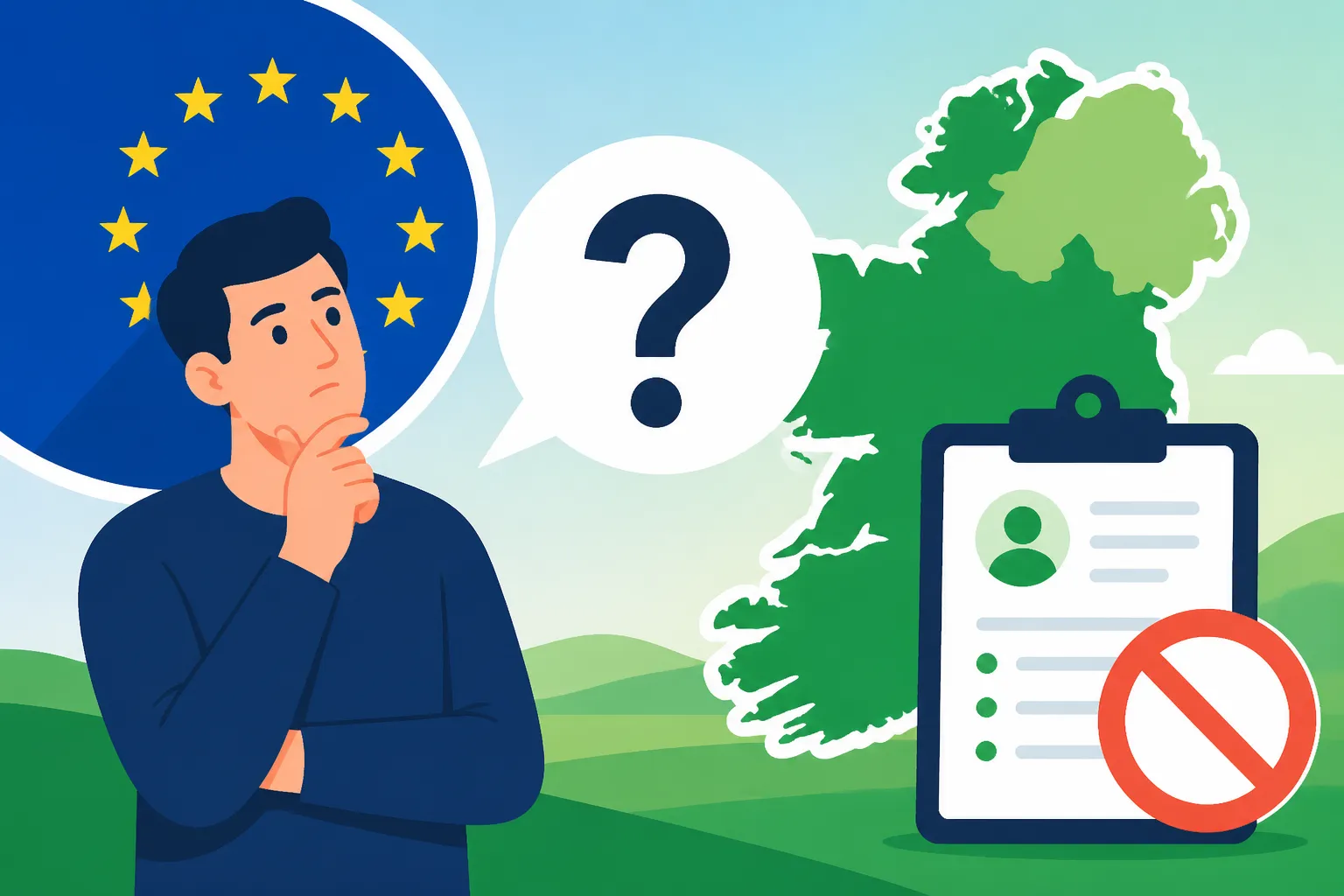
So, to answer the burning question directly: No, as an EU/EEA/Swiss citizen, you absolutely do not need a work permit for Ireland. This isn't a loophole or a temporary measure; it's a permanent fixture of your rights within the Union. The concept of a "work permit" exists primarily to regulate the entry and employment of non-EU/EEA/Swiss nationals into a member state's labour market, ensuring that local or existing EU labour is prioritised. You are part of that prioritised labour pool.
The legal bedrock for this is laid out in various EU directives and regulations, particularly those concerning the free movement of workers. These provisions ensure that there are no discriminatory barriers to employment based on nationality for EU citizens. For you, this means you don't have to wait for an employer to "sponsor" you or prove that no Irish or other EU citizen could do your job. You can simply apply for jobs, get hired, and start working. It's a stark contrast to the often long, expensive, and stressful process that non-EU individuals face when trying to secure an employment permit to work in Ireland. Understanding who needs an employment permit to work in Ireland highlights just how privileged the EU citizen's position is.
Essential Steps After Arriving in Ireland as an EU Citizen
Even without a work permit, you can't just arrive and immediately start getting paid without some key administrative steps. Ireland, like any organised country, needs to know who's living and working within its borders, mainly for tax and social security purposes. These steps are straightforward, but they are absolutely non-negotiable for a smooth transition into Irish life.
Your PPS Number: The First Key to Everything
The Personal Public Service (PPS) Number is perhaps the single most important piece of identification you'll need in Ireland. Think of it as your unique national identifier, similar to a social security number or national insurance number in other countries. Without it, you won't be able to:
- Start employment (your employer needs it for payroll).
- Access social welfare benefits.
- Apply for a Medical Card or GP Visit Card.
- Interact with many government services.
- Even open a bank account in some cases.
Applying for a PPS Number is usually one of the very first things you should do upon arrival. You'll need to attend a PPS Number registration centre, typically part of a local Intreo Centre or Department of Social Protection office. You'll need to bring your valid passport or national identity card from your EU/EEA/Swiss country, proof of your address in Ireland (like a utility bill in your name, a tenancy agreement, or a letter from your landlord), and proof of why you need the PPSN. For most expats, the "reason" is employment, so a letter from your employer or even just showing recent job applications can suffice. I remember queuing for ages in Dublin city centre for mine – it's a bit of a rite of passage, but utterly essential. For a more detailed walkthrough, check out how to register for tax and get a PPS number in Ireland.
Registering for Tax and Social Welfare
Once you have your PPS Number, the next critical step is to get registered with Revenue, Ireland's tax authority. If you're employed, your employer will likely handle some of this, but it’s ultimately your responsibility to ensure you're correctly registered to avoid being emergency taxed, which can be a real shock to the system! Under the Pay As You Earn (PAYE) system, tax, Pay Related Social Insurance (PRSI), and Universal Social Charge (USC) are deducted directly from your wages. These deductions fund public services and social welfare.
Understanding PAYE, PRSI and USC deductions for employees in Ireland can feel like learning a new language. PRSI contributions are particularly important as they build up your entitlements to various social welfare benefits, including the State Pension, Jobseeker's Benefit, and Maternity Benefit, should you ever need them. It's worth remembering that these contributions are essentially your investment in Ireland's social safety net. If you happen to be self-employed, the process is slightly different; you’ll need to register as a sole trader with Revenue and file annual tax returns. Even for EU citizens, the Irish tax system can have its nuances, especially if you have income or assets in other countries. Many expats find resources like Taxes for Expats incredibly helpful for navigating the complexities of cross-border tax declarations, ensuring they're compliant and maximising any available reliefs.
Opening a Bank Account
Having a local bank account is absolutely indispensable for living and working in Ireland. Your employer will need somewhere to pay your wages, and you'll need to pay bills, rent, and manage your daily finances. While digital banks like Revolut and N26 have become popular and can be set up relatively quickly, a traditional Irish bank account with one of the main players like AIB or Bank of Ireland often provides more comprehensive services and is generally preferred by landlords and some employers for direct debits.
The biggest hurdle for many new arrivals, including EU citizens, when trying to open a traditional bank account is often the proof of address requirement. You need a recent utility bill or official letter in your name at your Irish address. This can be a chicken-and-egg situation: you need a bank account for rent, but you need proof of address (like a tenancy agreement) to open one. My advice is always to secure your accommodation first and ensure your name is on the tenancy agreement or a utility bill. Some banks might accept a letter from your employer confirming your address if you're newly arrived. Be prepared to show your PPS Number and passport too. Don't underestimate this step; it can take a few days, so start early! A detailed guide on how to open a bank account at an Irish bank as a foreigner can help you prepare.
Practical Considerations for EU Citizens Working in Ireland
While the lack of a work permit is a massive advantage, successful integration into the Irish workforce still requires understanding the local landscape, culture, and available support systems. It's not just about getting a job; it's about thriving in your new environment.
Job Hunting and the Irish Job Market
The Irish job market, especially in vibrant cities like Dublin, Cork, and Galway, is dynamic and full of opportunities, particularly in sectors like tech, pharma, finance, and healthcare. Many multinational companies have their European headquarters here, creating a diverse and international work environment. However, even as an EU citizen, finding a job requires strategic effort. Online job boards are your best friend here. Popular platforms include IrishJobs, LinkedIn, Jobs.ie, and Indeed. Many companies also list positions directly on their own websites.
When applying, tailor your CV and cover letter to Irish standards. Irish CVs typically don't include a photo, date of birth, or marital status. Focus on quantifiable achievements and relevant experience. Networking is also incredibly powerful in Ireland. Attend industry events, join professional groups on LinkedIn, and connect with people who are already working in your desired field. The employment landscape is competitive, so presenting yourself professionally and persistently will make all the difference. Understanding IrishJobs, LinkedIn and job boards in Ireland will be a vital resource for your job hunt.
Adapting to the Irish Workplace Culture
Irish workplace culture is generally seen as friendly, collaborative, and relatively informal, but with a strong professional undercurrent. You'll likely find open-plan offices and a flat hierarchy compared to some other European countries. Communication tends to be direct yet polite, with a good dose of humour often injected into daily interactions. Punctuality is valued, but relationships and team cohesion are also very important. There's often a strong emphasis on work-life balance, particularly outside of intense project deadlines.
One aspect that might surprise some new arrivals is the social side of work. Colleagues often socialise outside of work, whether it's for a pint after hours or organised team events. Embracing this can be a great way to build connections and integrate. While English is the primary language, understanding local colloquialisms and the nuances of Irish humour can take time. For those keen to fully immerse themselves or perhaps even pick up a cúpla focal (a few words) of Irish, or simply refine their English for professional settings, language learning platforms like iTalki can be a fantastic resource for practicing conversational skills with native speakers. This can not only help in the workplace but also in social situations, breaking down any perceived language barriers beyond just fluency.
Healthcare and Social Security Access
As an EU citizen working and residing in Ireland, you are generally entitled to access the public healthcare system, managed by the Health Service Executive (HSE). This means you can register with a GP (General Practitioner, or family doctor) and access hospital services. While the public system provides comprehensive care, it's often characterised by long waiting lists for specialist appointments and non-emergency procedures. Many expats, even those with full public entitlements, opt for private health insurance to access private hospitals, shorter waiting times, and a wider choice of consultants. Companies like VHI, Laya Healthcare, and Irish Life Health are the main providers.
Your PRSI contributions, as mentioned earlier, are not just for social welfare benefits but also tie into your access to certain healthcare services, like discounted GP visits if you qualify for a GP Visit Card based on your contributions and income. Understanding how Ireland's health system works: the HSE vs Private explained is crucial for making informed decisions about your healthcare coverage. Even without a work permit, your contributions matter, forming part of the social contract you enter into when you become a resident and taxpayer here.
Understanding "Ordinary Residence" and Long-Term Stay
For EU citizens, while immediate work permits aren't an issue, understanding the concept of "ordinary residence" is important for cementing your rights and access to services in the longer term. It’s not just about showing up; it’s about establishing a genuine connection to Ireland.
Proving Your Residence
"Ordinary residence" isn't a single document; it's a legal concept based on factual circumstances that demonstrate your intention to live in Ireland for the foreseeable future. For EU citizens, this typically becomes relevant when accessing certain benefits or services, or for tax residency purposes. While you don't need to formally "register" your residence in the same way non-EU citizens register their immigration permission and receive an IRP card, you will need to prove your ordinary residence for things like healthcare eligibility, university fees, or social welfare.
Evidence of ordinary residence can include:
- Proof of address: Utility bills, tenancy agreements, property deeds.
- Employment history: P60s, employment contracts, payslips.
- Financial records: Bank statements from an Irish account.
- Family connections: If your family lives here.
- Integration: Being registered with a GP, having children in local schools.
The longer you live and work here, the more easily you can demonstrate ordinary residence. It's essentially about showing you've put down roots, not just passing through. Understanding how ordinary residence affects your healthcare entitlement in Ireland is a good starting point for grasping its significance.
Long-Term Implications
For EU citizens, the path from immediate work rights to long-term residency and even potential citizenship is generally much smoother than for non-EU nationals. After a period of continuous residence, usually five years, you can apply for a Stamp 4 EUFam residency document, which confirms your permanent right of residence under EU law. This isn't strictly necessary to live and work, but it can be useful as official proof of your rights and simplifies interactions with various administrative bodies.
Further down the line, if you decide to make Ireland your permanent home, you can eventually apply for Irish citizenship by naturalisation, provided you meet the reckonable residence requirements (typically five years out of the preceding nine years, with one year of continuous residence immediately before the application). For many EU citizens, Ireland offers a clear and welcoming pathway to a new life, free from the pervasive anxiety of visa renewals and permit restrictions. It's a testament to the principles of the EU and a huge benefit for anyone looking to build a future here.
Here's a quick overview contrasting the requirements:
| Feature | EU/EEA/Swiss Citizens | Non-EU/EEA/Swiss Citizens |
|---|---|---|
| Work Permit Required | No | Yes (e.g., Critical Skills, General Employment Permit) |
| Entry Visa Required | No (for most, some exceptions may apply for visitors) | Yes (for many nationalities, depending on bilateral agreements) |
| Residency Registration | Not formally required but 'ordinary residence' important for services | Required to register with immigration and receive an IRP card |
| PPS Number | Essential for tax, social welfare, and employment | Essential for tax, social welfare, and employment |
| Healthcare Access | Generally entitled to public health services | Access depends on visa/permit type, length of stay, and private insurance |
| Job Market Access | Same rights as Irish citizens | Restricted to sectors and roles approved for permits, employer sponsorship often needed |
| Path to Citizenship | Generally more straightforward after qualifying residence | More complex, strict eligibility criteria, often longer timelines |
Disclaimer
The information provided in this article is intended for general guidance only and does not constitute legal, financial, or immigration advice. While every effort has been made to ensure accuracy, regulations and procedures in Ireland can change. It is strongly recommended that you consult official government sources, such as the Department of Justice, the Department of Social Protection, and Revenue, or seek professional advice for your specific circumstances.