Can I Pay My Electricity and Gas Bills by Direct Debit in Ireland?
One of the first big hurdles you'll face when settling into your new life in Ireland is getting all those essential utilities set up. It’s not just about getting the lights on and the heat working; it’s figuring out how to pay for them in a system that might be completely foreign. If you're wondering if you can pay your electricity and gas bills by direct debit here, the short answer is a resounding yes, and this guide is here to walk you through exactly how it works, what to expect, and how to keep things running smoothly.
Direct Debit in Ireland: A Welcome Familiarity (or a New Maze) for Your Utility Bills
For many of us who've moved here, the Irish way of doing things can sometimes feel like trying to solve a Rubik's Cube blindfolded. But when it comes to paying bills, direct debit is a well-established and widely used method, much like in many other parts of the world. It’s designed for convenience, allowing your utility providers to automatically collect payments directly from your bank account on a set date. While it might feel like handing over a bit of control, it’s usually the easiest and often the cheapest way to manage your energy costs in Ireland.
What Exactly is a Direct Debit in the Irish Context?
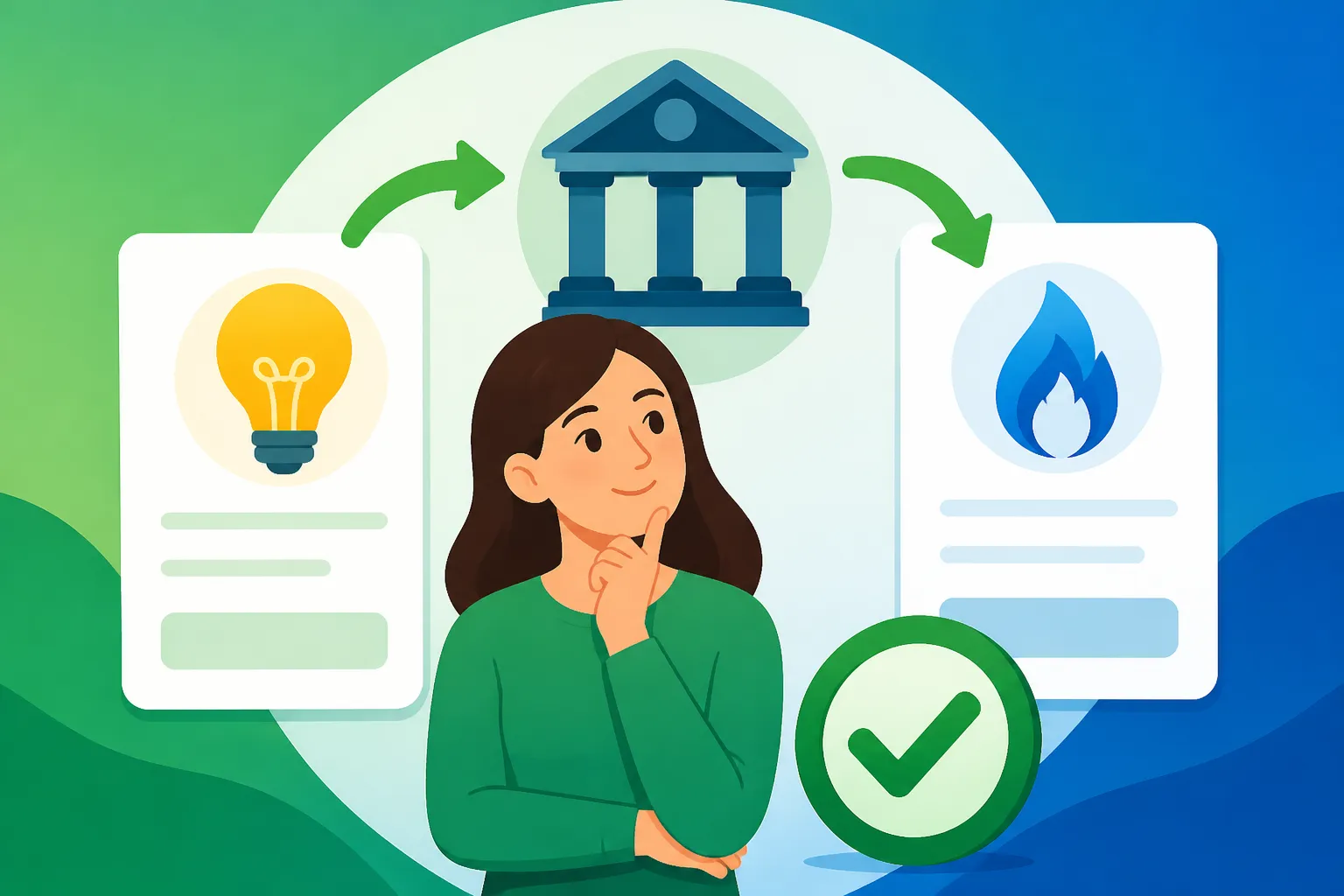
In Ireland, a direct debit is essentially an authorisation you give to a third party – in this case, your electricity or gas supplier – to collect varying amounts of money from your bank account. The "varying amounts" is key here, as your utility usage changes month to month, so your payment will adjust accordingly. This isn't like a standing order, where you set a fixed amount to be paid; with a direct debit, the supplier determines the amount based on your bill.
You'll usually see direct debits come out on a specific day each month or every two months, depending on your billing cycle and supplier. It's widely accepted by all the major utility companies like Electric Ireland, Bord Gáis Energy, Energia, SSE Airtricity, and Flogas. They much prefer direct debit because it guarantees they get paid on time, and they often pass on some of these administrative savings to you in the form of discounts.
Why Direct Debit is the Go-To for Electricity and Gas Providers
From the providers' perspective, direct debits are a dream. They reduce late payments, streamline administrative processes, and help them forecast their cash flow more accurately. For customers, especially us expats who might be juggling multiple new administrative tasks, it's about peace of mind. Once it's set up, you generally don't have to think about it again, beyond checking your bills (which you absolutely should still do!).
Many utility companies will actively encourage you to set up a direct debit. They might offer a small discount on your unit rates or a fixed annual saving if you choose this payment method. This is why you'll often find that the headline prices for electricity and gas plans are advertised based on direct debit payment. Skipping the direct debit option can mean you end up paying a slightly higher rate, so it's definitely worth considering if you're looking to keep your cost of living in Ireland for expats down.
Your Step-by-Step Guide to Setting Up Utility Direct Debits
So, you’ve decided direct debit is the way to go. Excellent choice! Now, let’s get down to the nitty-gritty of setting it up. It’s usually a straightforward process, but like everything new in a new country, knowing what to expect can save you a lot of headaches.
Gathering Your Essential Information
Before you even pick a supplier, you’ll need a few things in order to set up your utility account and, by extension, your direct debit. The most crucial piece of information for any expat is having an Irish bank account. Trying to pay Irish utility bills from an overseas account via direct debit is generally not an option. If you're still navigating the financial landscape here, our guide on banking in Ireland: a complete guide for foreigners (2027) might be a good starting point. You'll need:
- Your Irish Bank Account Details: This includes your Account Number and your Sort Code. These are standard identifiers for your bank account in Ireland. Your bank will provide these to you when you the expat guide to opening a bank account in Ireland.
- Your Personal Details: Full name, current address in Ireland, phone number, and email address.
- Your MPRN and GPRN: These are unique identification numbers for your electricity and gas supply points, respectively. The MPRN (Meter Point Reference Number) is an 11-digit number for your electricity supply, and the GPRN (Gas Point Reference Number) is a 7-digit number for your gas supply. You can usually find these on a previous bill for the property or by contacting the property's landlord or previous occupant. If you're moving into a newly built home, you might need to contact ESB Networks for your MPRN and Gas Networks Ireland for your GPRN.
- Proof of Occupancy: Sometimes, especially if you're a new connection or transferring an account, you might be asked for proof that you're living at the property, such as a copy of your lease agreement.
Choosing Your Supplier and the Sign-Up Process
Once you have your ducks in a row, it's time to choose your energy supplier. Ireland has a competitive energy market, so it’s worth shopping around to find the best deal. Websites like Bonkers.ie or Switcher.ie are fantastic resources for comparing electricity and gas tariffs across different providers like Electric Ireland, Bord Gáis Energy, Energia, SSE Airtricity, and Flogas. They'll show you the various plans, unit rates, standing charges, and importantly, any discounts offered for direct debit payments.
When you've picked your preferred supplier and plan, the sign-up process usually goes something like this:
- Online Application: Most people sign up online. You'll fill out a form on the supplier's website, providing all the personal, property, and bank details you gathered earlier.
- Direct Debit Mandate: As part of the online application, you’ll be asked to set up the direct debit. This involves electronically authorising the payment. Make sure to double-check your bank details here, as any errors can cause delays or payment failures. If you're new to online banking, our guide on how to set up online and mobile banking in Ireland could be helpful.
- Confirmation: You'll receive an email or letter confirming your new account and that the direct debit has been set up. It’s a good idea to keep this for your records.
- Initial Meter Readings: If you're moving into a property, your supplier might ask for initial meter readings to ensure you're only charged from the day you move in. This is crucial for avoiding billing disputes later.
From personal experience, I remember the slight panic of ensuring enough funds were in my account when setting up my first direct debit here. If you're like me and often deal with international transfers, using services like Wise can be incredibly helpful to ensure your Irish account is topped up efficiently and without excessive fees, so those direct debits never bounce. It’s one less thing to worry about when you’re busy navigating a new country!
Navigating the Nuances: The Real Pros and Cons for Expats
While direct debit offers unparalleled convenience, it’s important for expats to understand both the benefits and potential downsides, particularly regarding estimated bills, which can be a common source of frustration.
The Unbeatable Convenience and Potential Savings
Let’s start with the good stuff, because there’s plenty of it:
- Effortless Payments: Once set up, you literally don't have to lift a finger. Your bills are paid automatically, freeing up your mental energy for more exciting things, like exploring the Cliffs of Moher or mastering the art of pouring a perfect pint of Guinness. No more remembering due dates or scrambling to make payments online.
- Direct Debit Discounts: As mentioned earlier, many suppliers offer lower rates or discounts specifically for customers who pay by direct debit. Over a year, these savings can really add up, helping to chip away at your overall the cost of healthcare in Ireland: a complete breakdown for foreigners (2026) and other expenses.
- Budgeting Aid: For some, knowing that a payment will come out on a certain date can help with budgeting. You simply ensure the funds are there. Some suppliers also offer "budget plans" where they estimate your annual usage and spread the cost evenly across 12 months, smoothing out the peaks and troughs of winter heating bills.
- Reduced Stress: Moving to a new country is inherently stressful. Automating as many administrative tasks as possible, especially recurring ones like utility bills, significantly reduces that mental load. It ensures you don't accidentally miss a payment, which can lead to late fees or, in extreme cases, disconnection.
The Pitfalls: Estimated Bills and Maintaining Control
Now, for the parts that can sometimes cause a raised eyebrow or two, particularly around estimated billing:
- Estimated Bills (The Dreaded "Estimate"): This is probably the most common gripe with direct debits, especially for electricity and gas. If you don't submit regular meter readings, your supplier will estimate your usage based on previous consumption at the property or their average data. This can mean you either pay too much (building up credit) or too little (building up debt). If you pay too little, you'll face a larger "catch-up" bill down the line, which can be a nasty surprise. This is especially true if you move into a property where previous occupants had vastly different energy habits.
- Loss of Immediate Control: While convenient, direct debit means you don't manually approve each payment. If there's an error on your bill, the money will still be taken from your account. While you have rights to reclaim incorrect payments through your bank (under the Direct Debit Guarantee), it still requires you to spot the error and take action.
- Insufficient Funds: If a direct debit attempts to collect payment and there aren't sufficient funds in your account, your bank will usually charge you a fee for a failed payment. Your utility supplier might also charge an administrative fee, and repeated failures could lead to a loss of your direct debit discount or even a request for alternative payment methods.
- Forgetting About It: It sounds silly, but because it’s so automatic, it’s easy to stop actively checking your bills. This makes it harder to spot errors, track your usage, or notice when your energy consumption suddenly spikes.
| Feature / Method | Direct Debit | Online Bill Pay (Manual) | Pay As You Go (Prepaid) |
|---|---|---|---|
| Convenience | High (Automatic) | Medium (Requires manual action) | Medium (Requires manual top-up) |
| Discounts Offered | Often (Lower unit rates/fixed savings) | Rarely | No |
| Payment Frequency | Monthly/Bi-monthly (Set by supplier) | Flexible (Before due date) | As needed (Top-up when credit low) |
| Budgeting Control | Some (Budget plans available, but estimates apply) | Full (Pay exact bill amount) | Full (Control spend day-to-day) |
| Risk of Late Fees | Low (If funds available) | Medium (Easy to forget) | Low (No bill, but can disconnect if no credit) |
| Estimated Bills | Yes (If readings not submitted) | No (Pay based on actual or estimated bill) | No (Consumption based on prepaid credit) |
| Expat Suitability | High (Once bank account set up) | Medium (Requires proactive management) | High (Good for strict budgeters, but higher rates) |
As an expat, it's particularly important to stay on top of your finances, from understanding your income tax situation (perhaps with the help of resources like Taxes for Expats) to making sure your utility bills are accurate.
Beyond Setup: Managing and Monitoring Your Direct Debits in the Long Run
Setting up your direct debit is just the first step. To truly benefit from this convenient payment method and avoid any unpleasant surprises, you need to manage and monitor it effectively.
Understanding Your Bills and Usage
This is where many expats fall short, simply because the billing format might be different from what they're used to, or they're just overwhelmed with other new-country admin. You need to actually read your electricity and gas bills! They’re not just pieces of paper; they tell you exactly what you’re paying for.
- Check for Actual vs. Estimated Readings: Every bill will clearly state whether the reading used for your charges was 'Actual' (meaning you or a meter reader provided it) or 'Estimated'. If you see 'Estimated' too often, it’s a red flag.
- Submit Regular Meter Readings: This is your best defence against inaccurate estimated bills. All suppliers allow you to submit your own meter readings online or via a dedicated app. Aim to do this monthly or at least every two months, matching your billing cycle. This ensures you only pay for what you actually use. It’s also important to know how to set up electricity and gas in your Irish home, as part of that is knowing how to read your meter.
- Monitor Your Usage: Your bill will show your consumption in kilowatt-hours (kWh) for electricity and often kWh or cubic metres for gas. Keeping an eye on this can help you understand your energy habits and identify opportunities to save energy, which is good for your wallet and the planet! If you're consistently using much more than you expect, it might be worth investigating if there's an issue with your appliances or insulation.
- Understand Standing Charges and Unit Rates: Familiarise yourself with the fixed daily standing charge and the variable unit rate per kWh. These are the main components of your bill, alongside VAT and other levies.
Making Changes and Cancelling Direct Debits
Life happens, and sometimes you need to make changes. Maybe you’re switching bank accounts, changing suppliers, or even moving out of Ireland.
- Changing Bank Details: If you change your bank account, you’ll need to update your direct debit details with your utility provider. This can usually be done through your online account on their website or by calling their customer service line. Do this promptly to avoid missed payments. If you've just moved to Ireland and need to set up payments for the first time, our article on how to set up direct debits at an Irish bank can offer more practical advice.
- Switching Suppliers: If you decide to switch to a different electricity or gas provider (which is a good idea to do periodically to get the best deals), your old direct debit will automatically be cancelled by your new supplier as part of the switching process. You will then set up a new direct debit with your new provider. This is generally a smooth transition, but always double-check with both your old and new suppliers that everything has been processed correctly.
- Cancelling a Direct Debit: If you're moving out of a property, or you decide to pay your bills by another method (like manually paying online each month – see how to pay your utility bills online in Ireland), you can cancel a direct debit. You can usually do this directly through your online banking portal, by contacting your bank, or by contacting the utility provider. It's always best to inform the utility provider first, especially if you're cancelling because you're moving, to ensure your final bill is issued correctly and any credit balance is refunded. Be aware that cancelling a direct debit might mean losing any direct debit discounts you were receiving.
Ultimately, paying your electricity and gas bills by direct debit in Ireland is generally the most straightforward and often the most cost-effective approach for expats. It simplifies your financial management, freeing you up to enjoy all that Ireland has to offer. Just remember to keep an eye on those bills and meter readings, and you'll be golden!
Disclaimer
The information provided in this guide is for general informational purposes only and does not constitute financial, legal, or professional advice. While we strive to ensure accuracy and relevance, specific circumstances may vary, and regulations can change. It is always recommended to consult with relevant financial advisors, utility providers, or official government resources for personalised advice regarding your individual situation in Ireland.