Can I Drive in Ireland on a Foreign Licence?
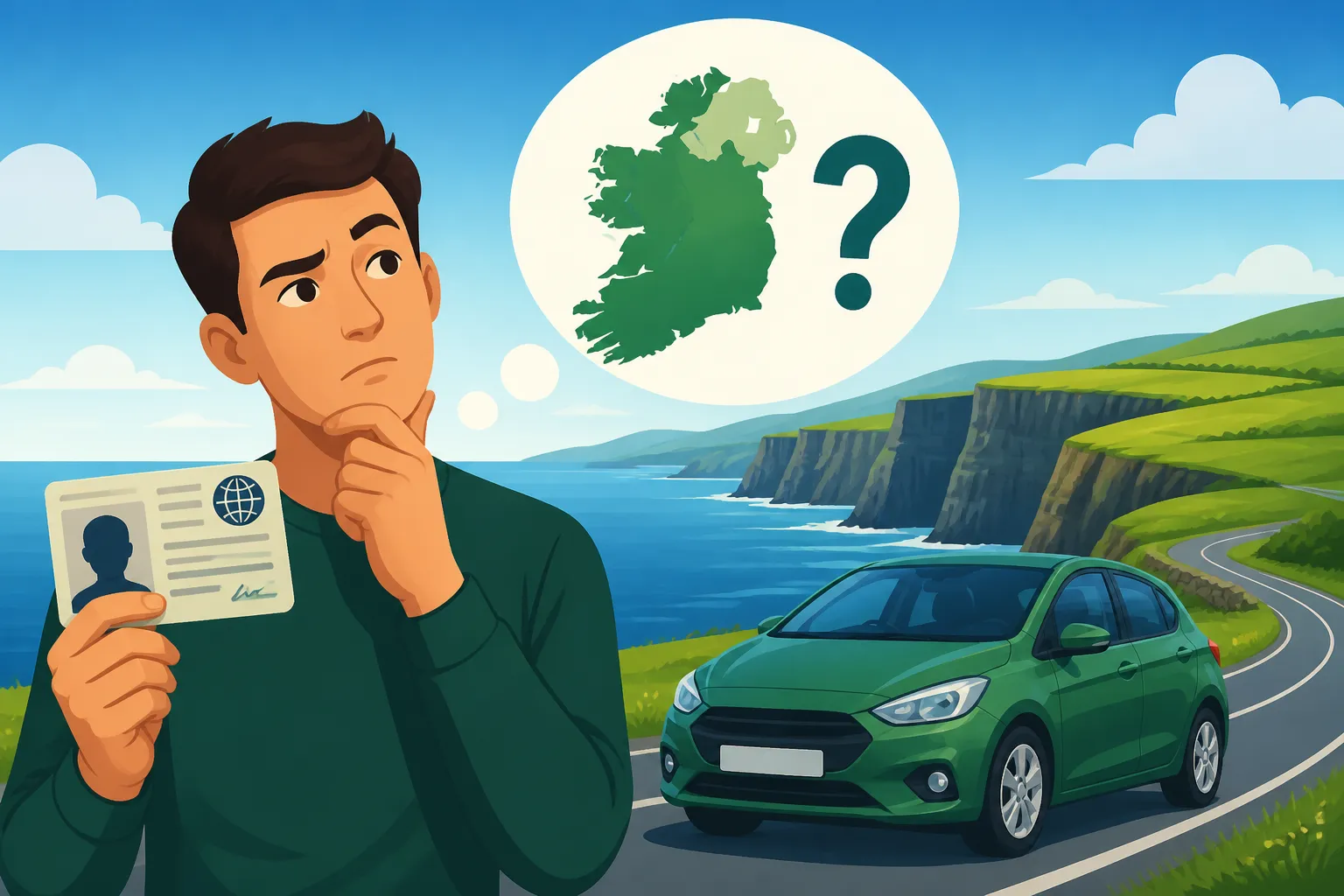
Navigating the roads in a new country can feel like learning a whole new language, and in Ireland, trying to figure out if your foreign driving licence is actually valid often feels like decoding an ancient scroll. Many expats arrive here, excited to explore, only to be met with a labyrinth of rules and a palpable dread of getting pulled over for doing something wrong. This guide aims to demystify the process, from the moment you hit Irish soil to the day you proudly hold your new Irish driving licence, helping you understand exactly what you can and cannot do behind the wheel.
The Initial Grace Period: What You Can Do When You Arrive
Alright, let's cut to the chase about driving in Ireland when you first arrive. The very first thing you need to understand is that not all foreign licences are created equal in the eyes of the Irish authorities. This can be a real point of confusion and frustration for newcomers, but getting it straight from day one will save you a world of hassle.
Understanding the 12-Month Rule for Different Licences (EU/EEA vs. Recognised vs. Non-Recognised)
Ireland operates on a 12-month rule for most foreign licences, but how that rule applies to you depends entirely on where your licence was issued. It’s a bit of a tiered system, and knowing your tier is key.
If you're coming from an EU/EEA country, consider yourself lucky. Your licence is generally recognised and valid here as if it were an Irish one, meaning you can drive on it for an indefinite period. However, if you establish "ordinary residence" in Ireland (meaning you've been here for 185 days or more in a calendar year), you're expected to exchange it for an Irish licence. While you won't be breaking any laws if you don't immediately, it's often easier for things like insurance, and it's simply good practice. The exchange process for EU/EEA licences is usually quite straightforward, often just a paper swap.
Now, for those of you from "recognised" countries – nations with whom Ireland has an exchange agreement. This list includes places like Australia, Canada, Gibraltar, Guernsey, Isle of Man, Japan, Jersey, South Korea, New Zealand, South Africa, Switzerland, Taiwan, United Kingdom, and the United States. If your licence is from one of these places, you can drive on it for up to 12 months from the date you establish your residency in Ireland. This is your grace period. During these 12 months, you should apply to exchange your foreign licence for an Irish one. The good news is that you generally won't have to take a driving test, which is a huge relief for many! Just remember, that 12-month clock starts ticking pretty much the moment you arrive and settle in. It’s not 12 months from your first drive; it’s from your residency date.
Then there are the "non-recognised" countries. If your licence falls into this category, the 12-month rule still applies, but with a significant difference. During those first 12 months, you can drive in Ireland as long as your foreign licence is valid and accompanied by an International Driving Permit (IDP) or a certified translation if your licence isn't in English. However, after that initial year, you absolutely must get an Irish driving licence. And here's the kicker: to get one, you will need to go through the full learner permit and driving test process, just like a brand-new driver. This means theory tests, lessons, and a practical driving test. Yes, it's a huge pain, especially if you've been driving for decades, but it's the law. Many expats find this to be one of the most frustrating aspects of moving here, particularly when you’re already juggling so much in those first few months.
The Importance of Carrying Your Documents (and what happens if you don't)
No matter where your licence is from, there's one golden rule that applies to everyone: always, always carry your relevant driving documents with you when you're behind the wheel. This isn't just about avoiding a fine; it's about being able to prove your legal right to drive if you're ever stopped by An Garda Síochána (the Irish police).
For EU/EEA licence holders, carrying your physical licence is usually sufficient. It's best to have proof of address if you have it, but the licence itself is the main document.
If you're driving on a recognised foreign licence within your 12-month grace period, you need to carry your original foreign driving licence, and ideally, your passport or other proof of your arrival date to demonstrate you're within the 12-month window. Some people even carry a letter from their employer or a utility bill as proof of when they established residency.
For non-recognised licences, you absolutely must carry your original foreign driving licence and your International Driving Permit (IDP) or a certified translation. Without one of these, your foreign licence isn't valid here. An IDP basically translates your licence into several languages and confirms its validity. You can usually obtain one from your home country's motoring association before you travel. For certified translations, ensure it's done by a recognised authority; often the embassy or a notarised translation service in Ireland can help.
What happens if you're stopped and don't have the correct documents? Well, at best, you might get a warning and be asked to produce them at a Garda station within a certain timeframe. At worst, you could face fines, penalty points, or even have your vehicle impounded if you're deemed to be driving without a valid licence or insurance. It's a headache you definitely want to avoid. Imagine the stress of being pulled over, trying to explain yourself with a heavy accent, and not having the right paperwork. It’s a situation no one wants.
The Exchange Process: How to Get an Irish Licence
So, you've settled in, probably driven a few roundabouts the wrong way (don't worry, we've all done it!), and now it's time to make things official and get that Irish driving licence. This is often the most confusing part, as the process varies wildly depending on your country of origin.
EU/EEA Licences: A Straightforward Swap
If your licence is from an EU or EEA country, the good news is that this is usually the simplest exchange process. There's no driving test involved, no theory test, just a straightforward application. You’ll apply to the National Driver Licence Service (NDLS).
You'll need to gather a few documents: your current EU/EEA licence, proof of your Personal Public Service (PPS) Number (essential for all official transactions in Ireland!), proof of address (like a utility bill or bank statement), and a medical report if you have certain health conditions or if you’re applying for certain vehicle categories (e.g., heavy goods vehicles). You'll also need to pay a fee and have your photo taken at the NDLS centre. The NDLS website has a handy document checker tool to ensure you have everything you need. While it's a "straightforward swap," it still involves queuing, filling forms, and making an appointment, which can test anyone's patience.
Recognised Countries: The Exchange without a Test
For those from recognised countries, the process is slightly more involved than an EU/EEA swap but still significantly easier than starting from scratch. Like EU/EEA licence holders, you'll apply to the NDLS. The key here is that you must do this within 12 months of becoming ordinarily resident in Ireland.
The required documents are similar: your original foreign driving licence, proof of your PPS Number, proof of address, and sometimes a medical report depending on your health or licence category. Crucially, they’ll want to see evidence of your entitlement to drive – your current valid foreign licence. Ensure your licence is current and not expired. The NDLS will send your foreign licence back to the issuing authority in your home country, so you won’t get to keep it. This is important to remember if you visit your home country frequently; you'll need your Irish licence to drive there. You'll go to an NDLS centre, present your documents, pay the fee, and have your photo taken. No driving test, no theory test, just paperwork and a wait for your new licence to arrive in the post. Many find this process surprisingly efficient, but gathering all the documents can still feel like a treasure hunt.
Non-Recognised Countries: The Full Irish Driving Test Ordeal
This is where the rubber meets the road, quite literally, for many expats. If your licence is from a non-recognised country, your 12-month grace period on your foreign licence is your only window of 'easy' driving. After that, you effectively become a learner driver in Ireland, regardless of how many years you've been driving back home.
The process involves several steps:
- Theory Test: You'll first need to pass the Driver Theory Test. This is a computer-based multiple-choice test on road safety and rules. You can book this online. There are official study materials and apps available, and it's highly recommended to use them.
- Learner Permit: Once you pass the theory test, you can apply for a first learner permit at the NDLS. With a learner permit, you must be accompanied by a qualified driver (someone who has held a full Irish licence for at least two years) in the front passenger seat, and display L-plates on your car. You cannot drive on motorways. Yes, it's restrictive, and yes, it feels ridiculous if you're an experienced driver, but these are the rules.
- Driving Lessons: You are required to complete a minimum of 12 Essential Driver Training (EDT) lessons with an Approved Driving Instructor (ADI) before you can take your practical driving test. Even if you're an experienced driver, these lessons are mandatory. They cover specific modules designed to teach Irish driving conditions and habits. This is also a good opportunity to understand the local nuances of driving, from navigating narrow country roads to understanding the intricacies of Dublin's bus lanes.
- Practical Driving Test: After completing your EDT lessons and holding your learner permit for at least six months, you can apply for your practical driving test. Waiting times for tests can be quite long, especially in popular areas like Dublin, so it's wise to book this well in advance. Passing this test is the final hurdle.
This entire process can take well over a year, sometimes two, depending on test availability and your personal schedule. It’s an expensive and time-consuming commitment, a major point of contention for many expats who feel their decades of driving experience are disregarded. However, it's the only legal route to obtaining a full Irish driving licence from a non-recognised country.
| Licence Type | Initial 12-Month Rule | Exchange Process | Driving Test Required? | Validity Post-12 Months |
|---|---|---|---|---|
| EU/EEA Licence | Drive indefinitely | Exchange expected once "ordinarily resident" (185 days+ in a calendar year) | No | Indefinite (if exchanged) |
| Recognised Country | Drive for 12 months | Exchange for Irish licence within 12 months | No | Only Irish licence valid |
| Non-Recognised | Drive for 12 months (with IDP/translation) | Full learner permit and driving test process after 12 months | Yes | Only Irish licence valid |
The Practicalities of Applying: Documents, Forms, and Fees
Regardless of your licence type, you'll be dealing with the NDLS. They operate centres across the country, from Cork to Galway to Dublin. You usually need to book an appointment online for efficiency, although walk-ins are sometimes accommodated, especially in quieter locations.
When you go to the NDLS centre, remember to bring all your original documents. Photocopies are generally not accepted. The NDLS website provides a comprehensive list of what you need, and it’s always best to double-check this right before your appointment, as requirements can sometimes change. This is especially true for What Documents Do I Need to See a Doctor in Ireland? or for any official registration. For some, even providing valid proof of address can be tricky, especially if you’ve just moved here.
Fees vary depending on the type of licence and its validity period. A standard 10-year licence currently costs around €55, but always check the most up-to-date fees on the NDLS website. They accept card payments at the centres.
Navigating Insurance and Vehicle Ownership with a Foreign Licence
Even once you have your licence sorted, there's another hurdle that often causes more headaches than the licence itself: car insurance. And then, of course, the joys of actually owning a car in Ireland.
The Insurance Headache for Foreign Drivers
This is a universally shared frustration among expats in Ireland. Insurers here can be incredibly wary of foreign driving experience, and it often feels like they penalise you for having driven safely for years in another country.
Many insurance companies will not recognise your "no claims bonus" (a discount for not making claims) from a foreign country, even if you have a perfect driving record. This means you might be quoted exorbitant prices, effectively starting from scratch as if you're a brand new driver. Some companies might offer a small discount if you can provide a detailed letter from your previous insurer, in English, stating your no-claims history. However, this isn't guaranteed, and the discounts are often minimal compared to what you'd expect.
The typical workaround is to shop around extensively. Don't just go with the first quote. Companies like Liberty Insurance and AIG are often mentioned as being slightly more amenable to foreign driving history, but this can vary wildly. Sometimes, it's even worth getting a broker involved, as they might have access to underwriters who are more flexible. Be prepared for a shock, particularly if you're used to cheaper insurance rates in your home country. How Much Is Car Insurance in Ireland? is a question that stresses out many, and for good reason!
If you're still on your foreign licence during the 12-month grace period, finding insurance can be even harder. Some insurers might outright refuse to cover you, or charge an even higher premium. This is a strong incentive to get your Irish licence exchanged or obtained as quickly as possible. The general advice is to get insurance quotes before you even commit to buying a car, as the costs can be prohibitive.
Registering and Taxing a Vehicle: What You Need to Know
Once you've secured your licence and braved the insurance market, owning a car in Ireland involves registration and motor tax. If you're importing a vehicle from abroad, it's a whole other saga involving Vehicle Registration Tax (VRT), which can be quite hefty. For detailed information on this, check out our guide on How to Register and Tax a Vehicle in Ireland.
If you're buying a car already in Ireland, the process is simpler. When you purchase a used car, the seller should provide you with the Vehicle Registration Certificate (VRC). You'll then fill out the change of ownership details on the certificate and send it off to the Department of Transport, Tourism and Sport in Shannon. A new VRC with your name will be posted to you.
Motor tax is an annual charge based on your vehicle's engine size or CO2 emissions, and you can pay it online, at a post office, or at your local motor tax office. You must have valid insurance and a valid NCT (National Car Test, Ireland's version of an MOT or inspection) certificate to tax your vehicle. Driving an untaxed car is illegal and can result in fines and penalty points. These administrative hurdles might seem daunting, especially when you're still figuring out The Complete Guide to Moving to Ireland: Your First 90 Days (2027), but they are essential parts of integrating into life here.
Thinking about bringing your car over from your home country? This is where the moving logistics come in. Services like Sirelo can be incredibly helpful for understanding the costs and processes involved in shipping your vehicle, along with all your other belongings, to Ireland. They provide quotes from various international moving companies, making it easier to compare options and choose the most cost-effective and reliable way to get your car here. It’s not just about getting it across the water; it's about navigating customs, VRT, and getting it road-legal. Sometimes, the VRT alone can make importing a car financially unviable, so it's crucial to research this before you ship.
Beyond the Licence: Irish Road Rules and Driving Culture
Getting your licence and insurance sorted is a huge step, but actually driving on Irish roads presents its own set of challenges and quirks. Trust me, even with years of driving experience, the first few weeks here can be an eye-opener.
Key Differences: Speed Limits, Roundabouts, and Left-Hand Driving
The most fundamental change for many is driving on the left-hand side of the road. This takes serious getting used to, especially judging distances and lane positioning. It’s not just the side of the road; it’s the entire mental recalibration. Your brain needs to adjust to roundabouts flowing clockwise, turning left into the closest lane, and approaching intersections from a different angle.
Speed Limits: While signs are metric (km/h), it's easy to get caught out.
- Urban areas: Generally 50 km/h (about 30 mph).
- National roads: Usually 100 km/h (about 60 mph).
- Motorways: Typically 120 km/h (about 75 mph).
- Regional and Local roads: Can vary, often 80 km/h, but always watch for signs.
Pay particular attention in villages or areas with schools; the speed limit can drop quickly. Speed cameras are present, and the Gardaí actively monitor speeds.
Roundabouts: Ireland loves its roundabouts! They're everywhere, from small village junctions to massive multi-lane beasts on motorways. The key is to signal correctly and know your exit. For a straight-through approach, signal left as you pass the exit before yours. For a right turn, signal right on approach, then left as you pass the exit before yours. It sounds simple, but a poorly navigated roundabout can lead to honking (and maybe even a bit of Irish commentary!).
Road Conditions: While national roads and motorways are generally good, some regional and local roads, especially in rural areas, can be narrow, winding, and poorly surfaced. You'll encounter potholes, unexpected bends, and sometimes even sheep on the road! Always drive to conditions, and expect the unexpected, particularly outside of urban centres. This is very different from the wide, straight roads you might be used to in some other countries.
Staying Connected on the Go
When you're out and about exploring the beautiful Irish countryside or trying to navigate the bustling streets of Dublin, having reliable internet on your phone for GPS and staying in touch is absolutely crucial. Trying to read a paper map while driving on the left and battling a multi-lane roundabout is a recipe for disaster.
This is where a good mobile data plan or eSIM comes in handy. For tourists and new arrivals, services like Airalo offer eSIMs that provide immediate data access without needing to buy a local physical SIM card. You can download an eSIM before you even land, activate it, and have data as soon as you switch on your phone. This is a game-changer for navigation, checking bus times, or even just keeping up with family back home. Having a solid data connection helps you avoid getting lost, find parking, or quickly search for that charming pub in a tiny village. You can instantly access Google Maps or Apple Maps for directions, which can be a lifesaver when you're still getting the hang of things. Being able to access maps in real-time can make all the difference, especially when you're trying to figure out where the nearest HSE Health Centre in Dublin is during an emergency.
Also, be aware of mobile phone laws: it is strictly illegal to use a handheld mobile phone while driving. Hands-free kits are permitted, but even then, using your phone should be minimised. Distracted driving is taken very seriously.
Roadside Assistance and Emergencies
Breakdowns happen, and knowing who to call is important. Most car insurance policies in Ireland offer roadside assistance as an add-on or as part of their comprehensive package. Make sure you know your policy details. Major motoring organisations like AA Ireland also offer breakdown cover, which can be purchased separately.
For genuine emergencies, always remember the emergency numbers: 112 or 999. These will connect you to Gardaí (police), ambulance, or fire services. Ensure your phone is charged, and if possible, pull over safely to the hard shoulder or a safe spot before making the call. What Is the Emergency Phone Number in Ireland? is a critical piece of information for any expat.
Driving in Ireland can be a joy, allowing you to explore stunning landscapes and charming towns at your own pace. But it requires respect for the rules, a bit of patience with the bureaucracy, and a willingness to adapt. Understanding the journey from your foreign licence to an Irish one is a crucial step in truly settling in and feeling at home on the Emerald Isle's roads. Don't underestimate the challenges, but also don't be deterred; with a bit of preparation, you'll be navigating the motorways and country lanes like a local in no time. For even more detailed information on getting around, be sure to check out our comprehensive guide on Driving in Ireland: Licences, Registration and Rules for Expats (2027).
Disclaimer
The information provided in this guide is for general informational purposes only and does not constitute legal or professional advice. Driving regulations, licence exchange requirements, and insurance policies in Ireland are subject to change. While every effort has been made to ensure accuracy, readers are strongly advised to consult the official websites of the National Driver Licence Service (NDLS), An Garda Síochána, and the Road Safety Authority (RSA) for the most current and specific information. It is also recommended to seek personalised advice from insurance providers and, if necessary, legal professionals regarding your individual circumstances.