How Do I Apply for a Private School Place in Ireland?
Navigating the Irish education system as an expat can feel like deciphering ancient scrolls, especially when you're trying to figure out something as specific as securing a private school place for your child. It's not just about the curriculum; it's about understanding application windows, fees that could make your eyes water, and the cultural nuances of a system that can be quite different from what you're used to back home. This guide is here to walk you through the entire process, sharing my own expat experiences and the insights I've gathered, so you can confidently apply for a private school place in Ireland.
Understanding Ireland's Private School Landscape
When you first land in Ireland, you'll quickly realise that the schooling options, much like the weather, can be quite varied. For many expat parents, the idea of a private school often comes up early in the conversation. It's not always about prestige; sometimes, it's about continuity, specific curricula, or simply finding a learning environment that feels familiar in a new country.
Why Choose a Private School in Ireland?
For many families moving to Ireland, especially those from countries with a strong private education tradition, choosing a private school can offer a sense of stability. These schools often provide smaller class sizes, a wider range of extracurricular activities, and sometimes, a specific pedagogical approach or curriculum that aligns better with international standards, such as the International Baccalaureate (IB). You'll find a mix of day schools, which are the most common, and a few boarding schools, especially at the secondary level, which can be a lifeline for parents with demanding travel schedules or those living in more rural areas.
Furthermore, many private schools here have a strong emphasis on tradition, a particular religious ethos (though many are quite diverse), and impressive facilities that can range from state-of-the-art sports complexes to dedicated arts centres. For instance, in Dublin, you'll find well-regarded institutions like St. Andrew's College or Nord Anglia International School which cater explicitly to an international cohort, offering curricula that might ease the transition for children coming from abroad. The choice often comes down to what you prioritise for your child’s education and how that aligns with your family’s values and future plans. For a broader overview of the system, you might find "Schools and Education in Ireland: A Complete Guide for Expat Families" incredibly helpful.
Key Differences: Private vs. Public Education
The contrast between Ireland's public (or 'state-funded') and private school systems is quite stark, primarily revolving around funding, ethos, and resources. Public schools are largely funded by the state, usually associated with a religious denomination (often Catholic, though increasingly multi-denominational 'Educate Together' schools are popping up), and follow the standard Irish curriculum leading to the Leaving Certificate. They are generally free to attend, though 'voluntary contributions' are common.
Private schools, on the other hand, are funded through student fees, which gives them greater autonomy over their curriculum, facilities, and staff. They often offer a broader range of subjects, extensive extracurricular programmes, and generally boast lower student-to-teacher ratios. While public schools are excellent and provide a strong education, private schools tend to offer a more tailored experience, sometimes with a focus on specific academic streams or international programmes. The decision ultimately rests on your family's circumstances, financial capabilities, and what kind of learning environment you envision for your child. For more details on the structures, consider reading "Understanding the School System (Primary, Secondary, Educate Together)".
Here's a quick comparison to give you a clearer picture:
| Feature | Public (State-funded) Schools | Private Schools |
|---|---|---|
| Funding | Primarily government-funded | Primarily funded by tuition fees |
| Fees | Generally free (voluntary contributions common) | Significant annual tuition fees |
| Curriculum | Follows standard Irish curriculum (Leaving Cert) | Can offer Irish curriculum, IB, A-Levels, or other international curricula |
| Class Size | Often larger, governed by state ratios | Generally smaller, allowing for more individual attention |
| Facilities | Varies, dependent on state funding and school age | Often modern, extensive, and well-maintained (sports, arts, tech) |
| Ethos | Often denominational (Catholic majority), increasingly multi-denominational | Diverse; can be denominational, multi-denominational, or non-denominational, often with a specific philosophy |
| Admissions | Based on catchment area, sibling priority, usually non-selective | Selective, often requiring entrance exams, interviews, and early application |
| Extracurriculars | Good range, but often less extensive than private options | Wide array of sports, arts, academic clubs, and international programmes |
The Application Process: Step-by-Step for Expats
Applying for a private school in Ireland, especially from abroad, can feel like a labyrinth. It’s not just filling out a form; it's about understanding the timing, the expectations, and making sure all your ducks are in a row. As an expat, you’re often dealing with relocation stress alongside school applications, so being organised is key.
Researching and Shortlisting Schools
This is probably the most crucial first step. Ireland has a decent number of private schools, but they’re not evenly distributed. Most are concentrated in larger urban centres like Dublin, Cork, Galway, and Limerick. Start by considering where you'll be living. There’s no point falling in love with a school in Cork if your job is firmly in Dublin. Factors to consider include the specific curriculum offered (e.g., if you want an International Baccalaureate programme, your options will narrow considerably), the school’s ethos (religious or non-denominational), single-sex or co-educational, and of course, the fees. It's often worth looking at areas known for their family-friendly environments, which naturally tend to have good schools. You can explore options like "The Best Places to Live in Ireland for Expats: A Complete Guide" to help with your location decision.
Once you have a few locations in mind, dive into school websites. Pay close attention to their admissions policies, as these can vary significantly. Some schools operate on a strict first-come, first-served basis, particularly for popular junior infant (reception equivalent) places, sometimes requiring applications years in advance. Others have a more structured entrance exam process for secondary school admissions. Don't be afraid to reach out directly to the admissions office with specific questions about expat applications, remote interviews, or applying from outside the EU. Many schools are well-versed in assisting international families.
Essential Documents and Requirements
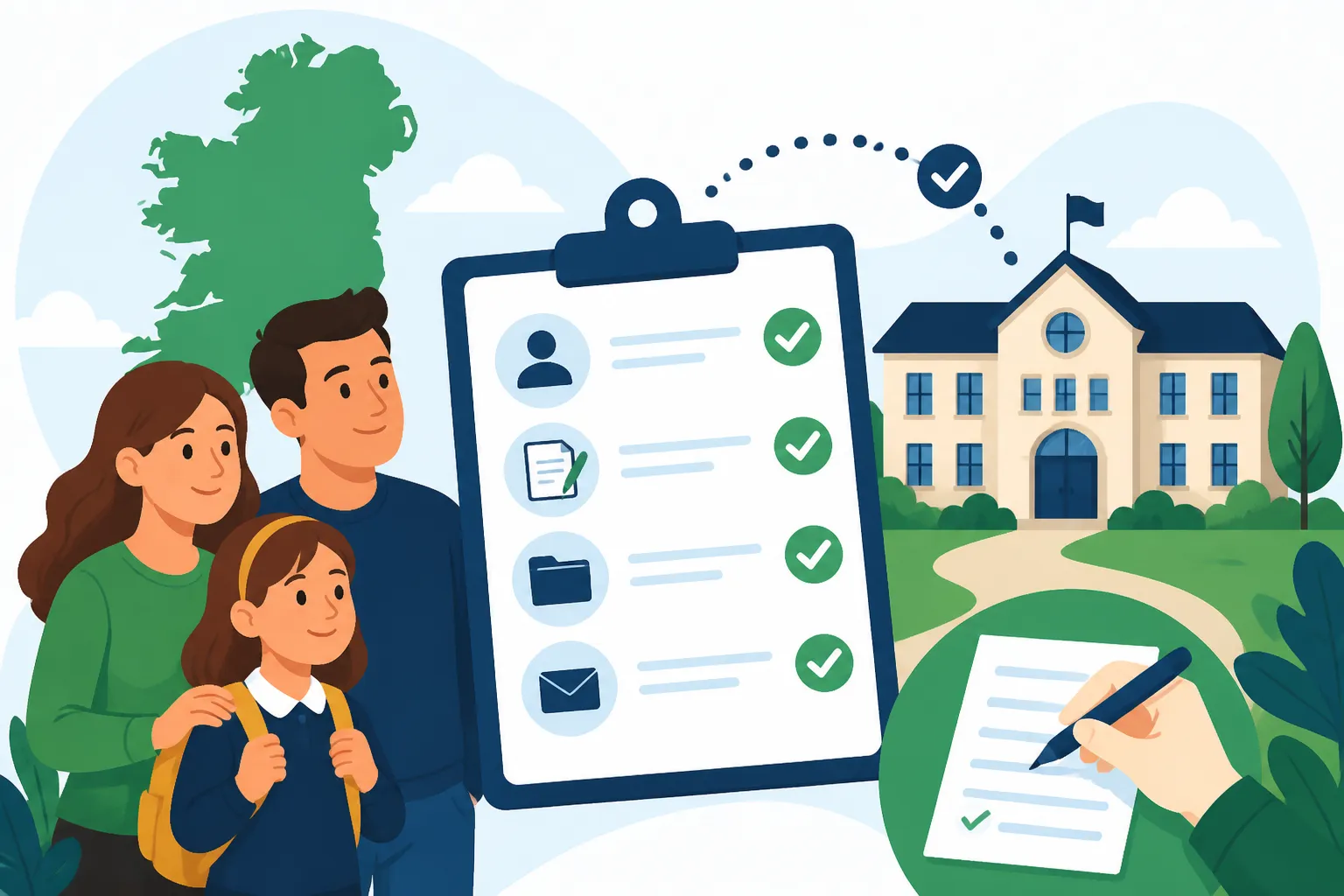
When you finally get to the application stage, be prepared for a substantial document checklist. This isn't just about your child; it's also about proving your residency and sometimes your financial stability. You'll almost certainly need your child’s original birth certificate and copies of their previous school reports, translated into English if necessary. Schools will also typically ask for proof of address in Ireland, which can be tricky if you're still in the process of moving. A utility bill, a tenancy agreement, or even a letter from your employer might suffice.
For older children, an academic transcript from their current school will be crucial. Depending on your nationality, you might also need to provide details of your immigration status, such as your The Complete Guide to Irish Visas and Immigration Permission for Expats (2027) or IRP (Irish Residence Permit) card. And don't forget the PPS Number for your child once they are registered in Ireland; while not always required for the initial application, it will be needed for any government-related school benefits or tracking. If you’re not sure about obtaining this, our guide on "How Do I Get a PPS Number in Ireland?" can walk you through it. Always have digital copies ready, but be prepared to send certified hard copies if requested.
Navigating Admissions and Assessments
The actual admission process for private schools can be quite competitive, especially in highly sought-after schools in areas like South Dublin. For younger children, it might involve an informal interview with the head of the junior school, or simply a review of their application. For entry into secondary school, however, most private institutions will require prospective students to sit entrance examinations. These typically cover English, Maths, and sometimes Verbal Reasoning, designed to assess a child's academic aptitude rather than specific curriculum knowledge.
Deadlines are non-negotiable, and missing one can mean waiting another year. Keep a detailed calendar! Many schools open applications a year or more in advance of the academic year for which you’re applying. Some may offer rolling admissions, but it's rare for the most popular schools. If applying from overseas, some schools might be flexible with online assessments or interviews, but always confirm this well in advance. Following up politely after submitting an application or after an interview is perfectly acceptable and can show your keen interest. During the application phase, staying connected and organised is paramount. While setting up your home, an eSIM from Airalo can ensure you have immediate data access for those crucial school communications and online forms, even before you've sorted out a local SIM card.
Practical Considerations and What to Expect
Moving to a new country and enrolling your child in a new school system is a huge undertaking. Beyond the paperwork, there are significant financial implications and the emotional adjustment for your child to consider. As an expat, you’re not just enrolling a child; you’re integrating your whole family into a new way of life.
Fees, Scholarships, and Financial Aid
Let’s not beat around the bush: private school fees in Ireland are substantial. They can range from €5,000 to €15,000+ per year for day pupils, with boarding fees significantly higher, sometimes exceeding €20,000-€30,000 annually. These fees typically cover tuition, but often not extras like uniforms, textbooks, lunches, or extracurricular trips, which can add hundreds or even thousands more to the annual cost. You can get a more in-depth breakdown in "Understanding the Cost of Private and International Schools in Ireland".
Most schools will offer payment plans, often allowing you to pay in instalments (e.g., termly or monthly). Some may offer a small discount for paying the full year upfront. It's also worth inquiring about sibling discounts if you plan to enrol multiple children. Scholarships and bursaries are available at some institutions, often for academic excellence, sporting achievement, or artistic talent. Financial aid (bursaries) might also be offered based on means testing, though these are typically more limited. It’s always worth asking the admissions office about these options, as they're not always widely advertised. Don't be shy; a polite inquiry can sometimes uncover opportunities you didn't know existed.
Integrating Your Child into the New System
One of the biggest worries for expat parents is how their child will adapt. Irish private schools, especially those with an international student body, are generally very supportive. The curriculum, even if it's the Leaving Certificate, is broad, and schools often have excellent support systems in place. For children whose first language isn’t English, many schools offer additional English as an Additional Language (EAL) support, either in-class or through dedicated sessions.
Encourage your child to get involved in the myriad of extracurricular activities on offer. Whether it's rugby, debating, drama, or chess club, these are fantastic avenues for making friends and feeling part of the school community. Sports, in particular, play a massive role in Irish school life. Keep an open line of communication with their teachers and tutors; they are your best resource for understanding how your child is settling in. Remember, settling in takes time, and there will be ups and downs. Being present and understanding, even if it means missing a few familiar comforts, will make a huge difference.
Managing the Move and School Transition
The logistics of moving countries can be overwhelming, and timing it with school applications adds another layer of complexity. Ideally, you want to have your school applications in motion before you physically arrive in Ireland. This means early research and understanding deadlines. When you're managing the move itself, finding reliable shipping and relocation services is crucial. Companies like Sirelo can be invaluable for comparing different international movers and ensuring your belongings arrive safely and on schedule, alleviating some of the stress so you can focus on the school side of things.
Think about how you'll bridge the gap between schools. Will your child finish their academic year abroad before starting fresh in Ireland, or will there be an overlap? Be prepared for a period of adjustment. Everything from new uniforms to different teaching styles, and even the cadence of the school day, can be new. Maintain a routine at home, encourage them to talk about their experiences, and celebrate small victories. Making new friends and adapting to a new social dynamic is often the biggest hurdle. For more tips on setting up your life, check out "The Complete Guide to Moving to Ireland: Your First 90 Days".
Common Challenges and Expat Tips
Even with the best planning, you're bound to hit a few bumps along the road. The Irish private school system, while excellent, has its quirks, and being an expat adds unique challenges.
Dealing with Waiting Lists and Competition
It’s no secret that Ireland is experiencing a population boom, and with it, increased demand for school places, particularly in urban centres. Many popular private schools, especially at the primary level, have extensive waiting lists. It’s not uncommon for parents to put their child’s name down within weeks or even days of their birth! While this might seem extreme, it illustrates the competition. For secondary school, entry is often more merit-based through exams, but strong interest still means applying early.
If you’re moving with older children, you might find more flexibility, as spaces can open up due to families relocating. However, for entry into popular year groups (e.g., junior infants, first year secondary), always assume there's competition. If your preferred school has a long waiting list, don't put all your eggs in one basket. Apply to several schools that meet your criteria and be open to your second or third choice. Sometimes, a lesser-known school can be an absolute gem, offering a fantastic education and a more personal touch.
Cultural Nuances in Irish Education
While private schools often have a diverse student body, the underlying culture is still distinctly Irish. This can manifest in subtle ways, from school plays centring on Irish history or mythology to the importance of Gaelic games (GAA sports like hurling and Gaelic football) in the sports curriculum. For children coming from abroad, this can be both fascinating and a little isolating initially.
Encourage your child to embrace these aspects. Learning a few words of Irish (Gaeilge), even if it's just for fun, can go a long way. Understanding the passion for Gaelic games, even if they never play, helps them connect with their peers. Parent-teacher interactions might also be slightly different from what you're used to. Irish schools often have a strong sense of community, and getting involved, even in a small way, can help both you and your child feel more connected. Remember, everyone wants your child to succeed and be happy, so don’t hesitate to ask questions or seek clarification if something seems unfamiliar.
Disclaimer
The information provided in this guide is for general informational purposes only and is subject to change. While every effort has been made to ensure accuracy, the Irish education system and associated regulations can evolve. It is always recommended to consult directly with the specific schools and the relevant Irish government bodies (such as the Department of Education or Immigration Service Delivery) for the most up-to-date and personalised advice regarding admissions, fees, and requirements. Reliance on any information in this guide is solely at your own risk.