How Do I Exchange My Foreign Driving Licence in Ireland?
Alright, let's talk about swapping your foreign driving licence for an Irish one. I know, I know, the thought of navigating yet another piece of Irish bureaucracy probably makes you want to curl up in a ball and cry into a pint of Guinness. It’s a common frustration for expats, feeling like every single document requires a pilgrimage and half a tree's worth of paper. But don't worry, my friend, I've been there, and I'm here to walk you through exactly how to exchange your foreign driving licence in Ireland, cutting through the confusion and getting you legally on the road.
Understanding Ireland's Driving Licence Exchange System: Who Can Swap and Who Can't
The first thing to get your head around is that Ireland doesn't treat all foreign licences equally. It's not a case of "one size fits all," which, let's be honest, would be far too simple for any country's administrative processes. The rules depend entirely on where your original licence was issued. This distinction is absolutely crucial, as it determines whether you can simply exchange your licence or if you'll need to go through the entire process of learning to drive and taking a test here.
Category 1: Automatic Exchange Agreements (EU/EEA, Recognized States)
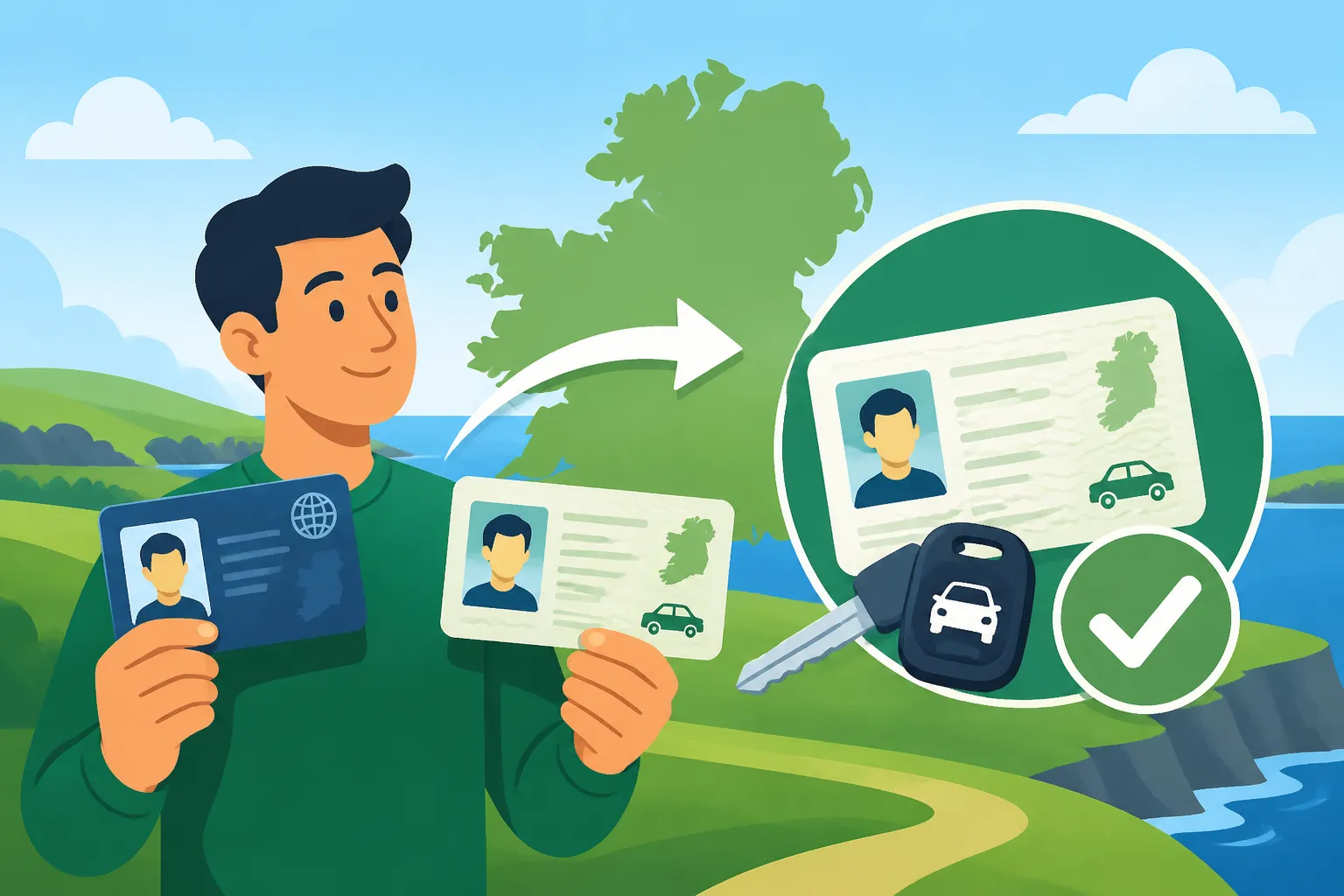
If your driving licence was issued in the EU, EEA, or a country that Ireland has a formal exchange agreement with, you’re in luck! This is the smoothest path. For example, if you're coming from somewhere like the UK, Australia, Canada, New Zealand, South Africa, or even some US states, you generally qualify for a direct exchange. The rationale behind this is that these countries have driving standards and testing procedures that are deemed equivalent to Ireland’s.
For those of us arriving from an EU/EEA member state, it's particularly straightforward. You can drive on your existing licence for as long as it's valid, but if you become 'ordinarily resident' in Ireland (which typically means living here for at least 185 days in a calendar year), you should exchange it for an Irish one. While there isn't a strict legal deadline for EU/EEA licences to be exchanged as long as they are valid, it's highly recommended to do so for practical reasons, like insurance, which often prefers an Irish licence. Think of it as fully embedding yourself into the system, making your life just that little bit easier. For instance, when you're trying to prove your identity for various services, an Irish driving licence is a universally accepted form of ID.
Non-EU/EEA countries with exchange agreements include places like Australia, Canada, Gibraltar, Guernsey, Isle of Man, Japan, Jersey, South Korea, New Zealand, South Africa, Switzerland, Taiwan, United Kingdom (and Northern Ireland), and certain states in the USA (currently Florida, Illinois, Maryland, Massachusetts, Michigan, New Hampshire, and New York, though this list can change, so always double-check the National Driver Licence Service (NDLS) website). If your licence is from one of these places, you can generally swap it without needing to take a theory test or a driving test in Ireland. This is a massive relief, believe me!
Category 2: Needing to Take a Test (Non-Recognized States)
Now, if your licence hails from a country not on that hallowed list of exchange agreements, then I'm afraid the news isn't as cheerful. This is where many expats hit a wall, and it can be incredibly frustrating. If your licence is from a non-recognised state, you cannot simply exchange it. Instead, you'll be treated much like a brand-new driver in Ireland. This means you’ll need to apply for a 'Learner Permit,' pass a Driver Theory Test, undertake mandatory Essential Driver Training (EDT) lessons (usually 12 of them), and then finally, pass the full Irish driving test.
This process is a significant undertaking, both in terms of time and money. Many people arrive in Ireland assuming their years of driving experience abroad will count for something, only to find they're back at square one. The good news is that while you're going through this process, you can still drive on your foreign licence for up to 12 months from the date you become ordinarily resident in Ireland. After those 12 months, however, your foreign licence is no longer valid for driving here, and you must hold an Irish Learner Permit and be accompanied by a fully qualified Irish driver if you wish to continue driving. It's crucial to mark that 12-month deadline in your calendar! Trying to drive on an expired foreign licence after that period can lead to fines, penalty points, and potential insurance issues.
Key Eligibility Requirements Beyond Nationality
Even if your country is on the exchange list, there are still a few universal requirements you need to meet. Your foreign licence must be valid and current – no expired licences, please! It also needs to be issued to you when you were at least 17 years of age. You must prove your identity, your address in Ireland, and your PPS number. And of course, you must be 'ordinarily resident' in Ireland, meaning your primary place of residence is here. This is often evidenced by utility bills, bank statements, or other official correspondence at an Irish address.
The Step-by-Step Process for Exchanging Your Foreign Licence
Once you’ve figured out which category you fall into, you can move on to the actual application process. This involves dealing with the National Driver Licence Service (NDLS), which is the sole body responsible for issuing driving licences in Ireland. Their website is your best friend here, as it contains the most up-to-date information and forms.
Gathering Your Documents: The Essential Checklist
This is where Irish bureaucracy often demands its pound of flesh. You'll need a solid stack of documents, and they need to be exactly right. Don't risk a rejection by missing something or bringing an old version.
Here’s a general checklist, but always confirm on the NDLS website:
- Your current foreign driving licence: This is obvious, but make sure it’s original and valid. If it's not in English, you'll need an official translation or an International Driving Permit (IDP).
- Proof of your identity: This usually means your passport or national identity card. Again, originals only.
- Proof of your PPS Number: This is your Personal Public Service Number, which is essential for almost all official transactions in Ireland. You would have likely sorted this out already as part of your move. If you're still getting settled, make sure to get this done as soon as possible. Sometimes people are still waiting for their PPSN, which can hold up the licence application. For more on getting this done, check out this guide on How to Register for Tax and Get a PPS Number in Ireland.
- Proof of your address: Two separate documents showing your Irish address, dated within the last six months. Think utility bills (gas, electricity, broadband), bank statements, or official letters from government departments. If you've just moved and are still getting your affairs in order, this can be tricky. You might be using a temporary address or relying on friends. If you're coordinating a big move, remember to keep copies of everything, and companies like Sirelo can help with the logistics of getting your belongings here, giving you one less thing to worry about while you focus on these administrative tasks.
- Proof of your 'ordinary residence': This often overlaps with proof of address, but it's about establishing that you genuinely live in Ireland.
- A medical report (in some cases): If you have certain medical conditions or if you’re applying for certain licence categories (e.g., heavy goods vehicles), you might need a medical report from a registered Irish medical practitioner. The NDLS website will clearly state if this applies to you.
- The completed application form: You can usually download this from the NDLS website, or sometimes they have them available at the centres.
- The appropriate fee: Currently, an Irish driving licence costs €55 for a 10-year licence. Payment is typically accepted by credit/debit card.
It’s worth noting that photographs are usually taken at the NDLS centre itself, so you don't need to bring passport photos with you. This saves a small bit of hassle, but please, try to look presentable – this photo will be on your licence for ten years!
Applying Through the NDLS: Online or In-Person
The National Driver Licence Service (NDLS) is your point of contact. You have two main ways to apply:
- Online (if eligible): If you have a Public Services Card (PSC) and an active MyGovID account, you might be able to apply for certain transactions online. This is often the quickest and most convenient method if it’s available for your specific exchange. You’d upload scanned copies of your documents. However, for a first-time exchange of a foreign licence, an in-person visit is often required because they need to verify your original foreign licence and identity in person.
- In-Person at an NDLS Centre: This is the most common route for initial foreign licence exchanges. You’ll need to book an appointment online via the NDLS website. Do not just show up without an appointment; you'll likely be turned away. Appointments can sometimes be booked out a few weeks in advance, especially in busy urban centres like Dublin, so plan ahead.
When you go for your appointment, bring all your original documents with you. The staff will verify them, take your photo, process your application, and take payment. They will also take your foreign licence from you. Yes, you read that right – they keep it! This is because you can only hold one driving licence at a time. It's a bit of a bittersweet moment, handing over the licence you've used for years, but it means you're one step closer to your shiny new Irish one. If you’re like me, you might want to take a picture of your old licence for sentimental reasons before you hand it over.
What Happens After You Submit Your Application?
Once you've submitted your application at the NDLS centre (or online, if applicable), you'll typically receive a receipt. This receipt isn't a driving licence, and it doesn't give you permission to drive if your foreign licence is no longer valid.
The application then goes to the National Driver Licence Service central processing unit. They will review everything, and if all is in order, they will print your new Irish driving licence. This licence is usually posted to your Irish address within 5 to 10 working days. Sometimes it can be quicker, sometimes a little longer, especially during peak periods. The important thing is to ensure the address you provide is absolutely accurate and secure, as you don't want your new licence getting lost in the post.
Common Hurdles and Practical Advice for Expats
Exchanging your licence isn't always a perfectly smooth sail. There are a few common stumbling blocks expats encounter.
Dealing with Licence Categories and Restrictions
Sometimes, the driving categories on your foreign licence don't perfectly align with the Irish system. For example, if your foreign licence allows you to drive both manual and automatic cars, but you only took your test in an automatic, the Irish licence might only grant you an automatic restriction (code 78). This can be a shock for some people who assume full reciprocity. Always review the details on your new Irish licence carefully once it arrives. If there’s an error or a restriction you believe is incorrect, contact the NDLS immediately.
Another common scenario involves motorcycle licences. The categories for motorcycles in Ireland (A, A1, A2) are quite specific based on power output and age. If your foreign motorcycle licence doesn't clearly delineate these, you might find yourself with a more restrictive category than you hoped for, or even needing to take further tests.
The Waiting Game and Driving on Your Foreign Licence
As mentioned, there's that crucial 12-month period. If your licence isn't from an EU/EEA country or one of the recognized exchange countries, you can only drive on your foreign licence for up to 12 months from the date you became ordinarily resident in Ireland. After this, it's no longer valid. During this time, you should be actively pursuing your Learner Permit and preparing for the theory and practical tests if you need to go that route.
For those eligible for a direct exchange, you can generally continue to drive on your valid foreign licence while your application is being processed, provided you haven't exceeded the 12-month grace period if you're from a recognized state. EU/EEA licences don't have this 12-month limit for validity in Ireland, but it's still advisable to exchange them once you're officially living here.
However, once you submit your application and hand over your physical foreign licence, you will no longer have a physical licence in your possession until your Irish one arrives. While the NDLS receipt might be helpful in a pinch to show you've applied, it does not authorise you to drive. It's best to confirm the exact rules with the NDLS regarding driving in this interim period, as interpretations can vary, and you don't want to get caught out. Generally, once your foreign licence is surrendered, you officially do not hold a valid driving licence until your Irish one arrives. Many expats choose to temporarily cease driving during this short waiting period, or if from an EU/EEA country, wait until closer to their licence expiry to exchange to minimise the period without a physical card.
What to Do If Your Licence Isn't Exchangeable
If your licence isn't from an exchange country, it's a bitter pill to swallow, but you'll have to go through the full Irish licensing process. This means:
- Driver Theory Test: This is a computer-based test of your knowledge of Irish road rules and signs. You can book this online. There are plenty of study materials available.
- Learner Permit: Once you pass the theory test, you can apply for your first Learner Permit at an NDLS centre. You must hold this for at least six months before you can take a driving test.
- Essential Driver Training (EDT): If this is your first Learner Permit for a car (category B), you must complete 12 mandatory EDT lessons with an approved driving instructor. These lessons are designed to cover key driving skills.
- Practice: This is crucial. Ireland's roads, especially rural ones, can be challenging, and the driving test is rigorous. Practice as much as you can, always with a fully qualified driver (who has held their full licence for at least two years) in the passenger seat.
- Driving Test: After your EDT lessons and holding your Learner Permit for at least six months, you can apply for your practical driving test. The waiting lists can sometimes be long, especially in certain areas.
It's a marathon, not a sprint, and it requires dedication and financial commitment. However, at the end of it, you'll be a fully licensed Irish driver, which brings a huge sense of independence. You might also find it helpful to look into How to Register and Tax a Vehicle in Ireland once you're ready to get your own car on the road.
Costs, Timelines, and What to Expect
Let's talk brass tacks: what will this set you back, and how long will you be twiddling your thumbs?
Breakdown of Fees and Potential Hidden Costs
- Licence Exchange Fee: As of now, a 10-year Irish driving licence costs €55. If you opt for a 3-year or 5-year licence (for those over a certain age or with certain medical conditions), the fees are lower.
- Medical Report (if needed): A visit to your GP for a medical report can cost anywhere from €45 to €80, or even more, depending on the clinic. This is an additional cost you might not have anticipated.
- Translations/IDP: If your licence isn't in English, an official translation or International Driving Permit will have a cost associated with it. An IDP typically costs around €20-€30, but official translations can be significantly more.
- If you need to take a test:
- Driver Theory Test: The fee for the theory test is currently €45.
- Learner Permit: A 3-year Learner Permit costs €35.
- Essential Driver Training (EDT): Each of the 12 EDT lessons can cost between €35 and €50 (or more), so budget around €420 – €600 for the mandatory lessons.
- Driving Test: The practical driving test costs €85.
- Practice Lessons: Many people take additional lessons beyond the EDT to prepare for the test, adding to the cost.
So, while a direct exchange is a relatively modest €55, if you have to go through the full testing process, you could easily be looking at €700-€1000+ in fees, before you even consider the cost of a car, insurance, and fuel. It's a significant investment, but for many, the freedom of driving is invaluable.
Realistic Processing Times
- NDLS Appointment: Booking an appointment at an NDLS centre can take anywhere from a few days to a few weeks, depending on the location and demand. In major cities, expect longer waits.
- Licence Issuance: Once your application is successfully processed at the NDLS centre, your new Irish driving licence is usually posted to you within 5 to 10 working days. Sometimes it's quicker, sometimes a little slower, so don't fret if it takes a couple of days longer.
- If you're taking tests: This is a much longer process.
- Theory Test Booking: You might get an appointment within a few weeks.
- Learner Permit Application: Once theory test is passed, this is usually quick.
- EDT Lessons: Completing 12 lessons can take several weeks or months, depending on your schedule and instructor availability.
- Driving Test Booking: This is often the biggest bottleneck. Waiting times for practical driving tests can range from a few weeks to several months, or even longer in very busy test centres. It’s not uncommon to hear of people waiting 3-6 months. Keep an eye on the Road Safety Authority (RSA) website for current waiting times.
In short, if you're from an exchange country, you could have your new Irish licence in hand within a month of starting the process. If you need to take tests, prepare for a journey that could last anywhere from 9-18 months, or even longer, depending on how quickly you can get tests and lessons booked. It's a proper test of patience, much like many things when you're settling into life in Ireland. While you're tackling these administrative tasks, make sure you're also getting other essentials sorted. For example, knowing How to Set Up Electricity and Gas in Your Irish Home is another crucial step in truly feeling settled.
| Feature | Direct Exchange (EU/EEA, Recognized States) | Full Irish Test (Non-Recognized States) |
|---|---|---|
| Eligibility | From specific list of countries | All other countries |
| Theory Test Required | No | Yes |
| EDT Lessons Required | No | Yes (12 lessons) |
| Driving Test Required | No | Yes |
| Foreign Licence Validity | Valid (EU/EEA) or 12 months (Recognized) | 12 months |
| Approx. Application Fee | €55 | €35 (Learner) + €85 (Test) + €45 (Theory) |
| Approx. Other Costs | Medical (if needed), Translations | EDT lessons (€420-€600+), medical |
| Timeline (start to finish) | 2-4 weeks | 9-18+ months |
| Foreign Licence Surrender | Yes, at NDLS appointment | No, valid until 12 months/LP issued |
Important Disclaimer
Please remember that I am an expat blogger, not an immigration officer or a legal professional. While I strive to provide the most accurate and up-to-date information based on my personal experience and available resources, rules and regulations in Ireland can change. Always consult the official websites of the National Driver Licence Service (NDLS) and the Road Safety Authority (RSA) or seek professional advice for the most current and legally binding information pertaining to your specific situation.