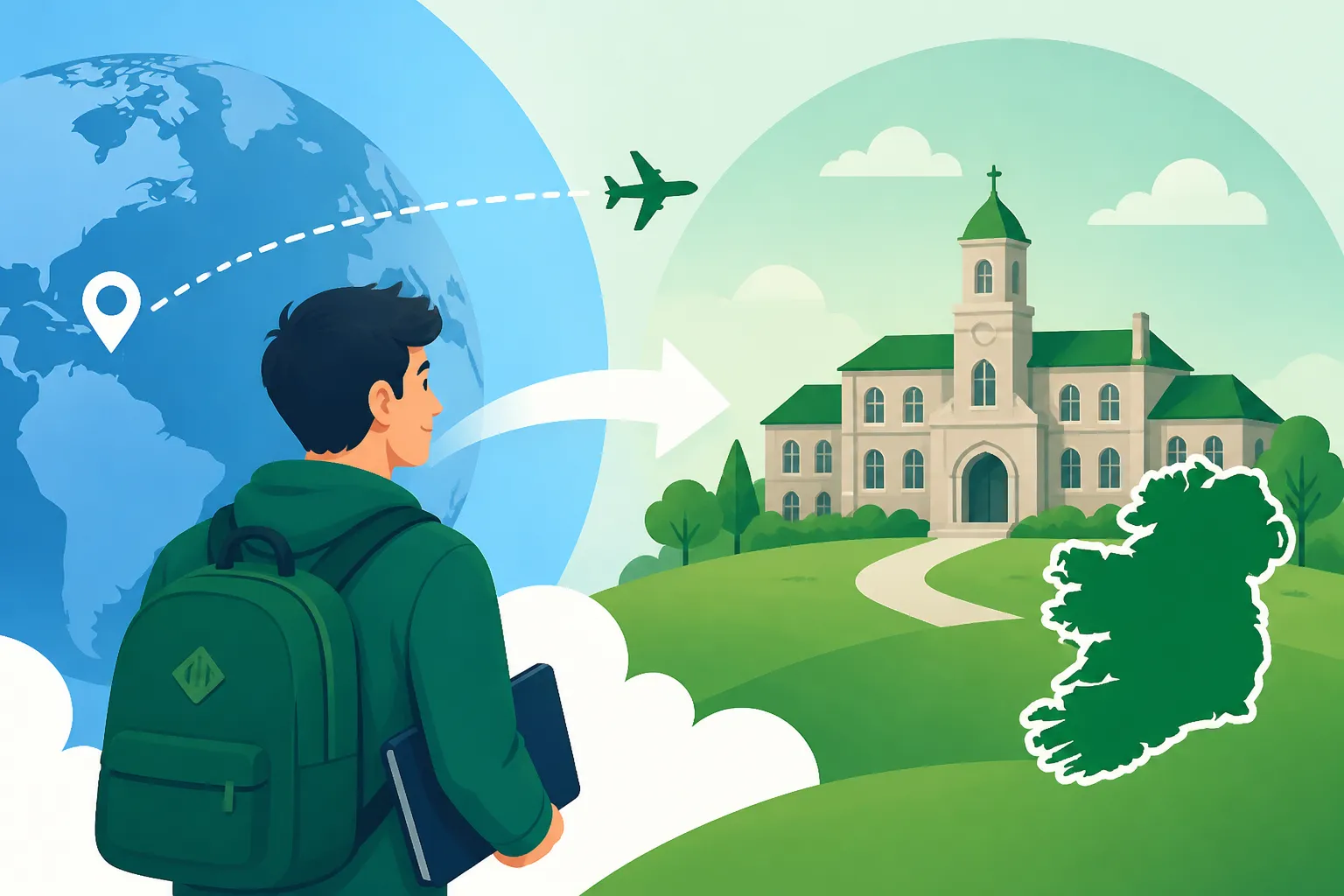
Can I Transfer to a University in Ireland from Abroad?
Moving to Ireland to study is a dream for many, offering world-class education and a vibrant cultural experience. However, if you've already started your degree abroad and are wondering if you can simply pick up where you left off at an Irish university, you're tapping into a common, yet often complex, question. This guide is designed to navigate the intricate process of transferring your academic credits and studies to an Irish higher education institution, providing a realistic roadmap and shedding light on the hurdles you might encounter along the way.
The Reality of University Transfers to Ireland
Let's be honest, the idea of seamlessly transferring your university credits from one country to another, especially across different education systems, sounds wonderful in theory. In practice, it's often more akin to untangling a ball of yarn that's been through a washing machine. While it's certainly possible to transfer, it's rarely a straightforward "plug and play" situation. Irish universities, like most in Europe, have their own specific criteria, and what counts as a credit or a completed module can differ significantly from your home country.
Understanding Credit Recognition and Equivalence
This is usually the biggest hurdle for anyone looking to transfer. Irish universities primarily operate within the European Credit Transfer and Accumulation System (ECTS), particularly for their undergraduate degrees. If your current institution is also on the ECTS system, or a similar, well-recognised framework, you might have an easier time with credit recognition. However, even within ECTS, the specific content and learning outcomes of modules matter immensely. It's not just about the number of credits you have; it's about what those credits actually represent in terms of knowledge and skills.
For example, if you've completed a year of a Liberal Arts degree in the United States, an Irish university might look at your transcript and find that while you have many credits, they don't directly align with the specific, often more specialised, modules taught in the first year of an Irish Bachelor of Arts program. They’ll be scrutinising course descriptions, reading lists, and assessment methods to determine if your previous learning truly matches their curriculum. This often means providing detailed syllabi for every single course you've completed, not just a bare transcript.
Direct Entry vs. Starting Over: What to Expect
Here’s where a dose of realism comes in: direct entry into the second or third year of an Irish undergraduate program for transfer students from outside the EU/EEA is less common than you might hope. Many students who successfully transfer find themselves starting from the first year, or perhaps entering into a slightly earlier stage of their desired program than they initially anticipated. The reason for this isn't to be difficult, but to ensure that all students have a foundational understanding of the Irish academic system and the specific curriculum.
Universities want to be confident that you haven't missed crucial core modules that are prerequisites for later years. It’s also about academic rigour. Sometimes, what might be a full year's worth of study in one system translates to only a semester or two in another, especially if the pedagogical approaches differ significantly. Don't be disheartened by this, but prepare yourself for the possibility that you might need to adjust your expectations about which year you'll enter. Think of it as an opportunity to truly immerse yourself in the Irish academic environment from the ground up, rather than constantly playing catch-up.
Prerequisites and Course Compatibility
Irish university programs, particularly in fields like engineering, science, or medicine, are often highly structured with specific prerequisites that build year upon year. If your previous studies haven't covered these exact prerequisites, even if you have a strong academic record, you might find yourself needing to complete bridging courses or supplementary modules. For instance, if you're aiming for a science degree and your previous institution had a different maths curriculum, the Irish university might require you to demonstrate proficiency in specific mathematical areas before accepting your transfer.
The compatibility isn't just about subject matter either; it extends to the level of study. A foundation year at a university in one country might be considered equivalent to A-levels or the Leaving Certificate (the Irish secondary school examination) rather than a full university year here. This is why thorough research into the exact course content of your desired Irish program is absolutely essential. Don't just look at the degree title; dive into the module descriptions for each year to see how closely they align with what you've already studied.
Navigating the Application Maze for Transferring Students
Applying to an Irish university as a transfer student from abroad is definitely a maze, and it’s important to understand that the process is often different from applying as a first-year undergraduate straight out of secondary school. You won’t usually go through the CAO (Central Applications Office) for advanced entry directly from an international institution. Instead, you'll typically apply directly to the university you're interested in, often through their international admissions office.
Researching Irish Universities and Programs
Before you even think about gathering documents, you need to do your homework. This isn't a "one size fits all" situation. Each Irish university, from the large institutions in Dublin like University College Dublin (UCD) or Trinity College Dublin (TCD) to regional universities like University of Galway or University College Cork (UCC), will have its own specific policies for international transfer students. Some universities might be more open to transfers in certain departments than others, while some programs might have a hard rule against advanced entry for international students due to their unique structure or accreditation requirements.
Start by identifying a few universities and programs that genuinely interest you. Then, delve deep into their individual websites, specifically looking for sections on "advanced entry," "transfer students," or "international admissions for existing undergraduates." Don't hesitate to reach out to the international admissions office or the specific faculty/department directly. A polite, detailed email outlining your current studies and intentions can save you a lot of time and clarify their specific requirements. Be prepared for varied responses; some universities are highly organised in this regard, while others might require a bit more persistence to get clear answers. This proactive approach will also help you understand "How to Apply to an Irish University as an International Student" in general, but with the specific lens of a transfer.
Required Documentation and Transcripts
Get ready for paperwork. Lots of it. To even be considered for a transfer, you’ll need to provide a comprehensive set of documents that prove your academic journey and capabilities.
Here’s a typical list of what you'll need:
- Official Academic Transcripts: These must be sent directly from your previous university to the Irish university's admissions office. They cannot come from you. These transcripts should list all courses attempted, grades received, and credits earned.
- Detailed Course Syllabi: This is critical. For every course you want considered for transfer, you’ll need to provide the official syllabus. This document should detail learning outcomes, topics covered, assigned readings, assessment methods (e.g., essays, exams, presentations), and contact hours. This allows the Irish university to properly assess the content and depth of your prior learning.
- Proof of English Language Proficiency: Even if your previous degree was taught in English, you might still need to provide an IELTS or TOEFL score, unless you meet specific exemptions (e.g., having completed a certain number of years of study in an English-speaking country). Always check the university's exact requirements.
- Personal Statement/Statement of Purpose: This is your chance to explain why you want to transfer, what you hope to achieve, and how your previous studies have prepared you for the Irish academic environment. Be specific and articulate.
- Letters of Recommendation: Typically, two academic references from professors who know your work well are required. These should speak to your academic ability, work ethic, and suitability for university-level study.
- Copy of Passport: For identification and visa purposes.
- Application Fee: Most universities charge a non-refundable application fee.
It's also worth noting that you might need to have your foreign qualifications assessed by a service like NARIC Ireland (National Academic Recognition Information Centre) to understand "How to Get Your Foreign Qualification Recognised in Ireland" in a broader sense, though for direct university applications, the university itself usually undertakes the assessment.
The Visa and Immigration Aspect
Once (and if) you receive an offer for a place, the next big hurdle is the visa and immigration process. As an international student from outside the EU/EEA, you will need to apply for a long-stay (D) student visa for Ireland. Your offer letter from the university will be a crucial document for this application.
When applying for your visa, you'll need to demonstrate sufficient funds to cover your tuition fees and living expenses, typically for at least your first year of study. Be mindful that even if you're transferring, you'll be starting a new period of study, and the immigration authorities will expect you to meet all standard student visa requirements. It’s vital to understand "The Complete Guide to Irish Visas and Immigration Permission for Expats (2026)" and specifically the requirements for a Stamp 2 student permission, which is what you'll be granted for your studies. This permission allows you to stay in Ireland for the duration of your course and typically permits you to work part-time during term and full-time during holidays, which can be a huge help with "The Complete Guide to Cost of Living in Ireland for Expats (2026)".
Practicalities and Preparing for the Irish Academic Experience
Successfully transferring means more than just getting your credits accepted; it’s about preparing for a whole new academic and cultural environment. Ireland offers an incredible experience, but it comes with its own set of practical considerations.
Financial Considerations Beyond Tuition
Beyond the direct costs of tuition, which can vary significantly depending on the university and program – you can get an idea from "How Much Is Tuition for International Students in Ireland?" – you need to budget carefully for living expenses. Dublin, in particular, is an expensive city, though costs can be lower in places like Limerick, Galway, or Cork. Your student visa application will require proof of funds, but you’ll want to ensure you have a robust financial plan for your entire stay.
Consider things like accommodation (often the largest expense), health insurance (mandatory for non-EEA students), textbooks, transport, and day-to-day living. Many international students choose to work part-time to supplement their finances, but remember that your primary purpose in Ireland is study, and work should not interfere with that. As an expat student, understanding your financial commitments extends to future earnings; resources like Taxes for Expats can help demystify the system if you plan to work here during or after your studies.
Language and Cultural Nuances
Even if English is your first language, you'll find that Irish English has its own unique flavour, idioms, and pronunciations. It might take a little getting used to! Academically, you might also find differences in teaching styles. Irish universities often place a strong emphasis on independent study, critical thinking, and participation in tutorials or seminars. The relationship between students and lecturers can be less formal than in some other countries, but respect for academic integrity and deadlines is paramount.
Embracing the local culture goes a long way. Getting involved in student societies, sports clubs, or volunteer work can help you settle in faster and make friends. Don't be afraid to ask questions, whether it's about course material or navigating local customs. Even if you're fluent in English, connecting with local dialects or even picking up a few phrases of Gaeilge can make a huge difference, and platforms like iTalki offer a fantastic way to do that, not just for the language but also for understanding cultural context through conversation partners.
Academic Expectations and Support Systems
Irish universities expect a high level of self-motivation and independent learning from their students. While lectures provide foundational knowledge, a significant portion of your learning will happen through your own research, reading, and engagement with course materials outside of formal classes. Be prepared for a different grading system, which often involves a mix of continuous assessment (assignments, projects, presentations) and end-of-term exams.
Fortunately, Irish universities are generally very supportive of their international student populations. Most institutions have dedicated international student offices that can help with everything from orientation and academic advising to visa renewals and cultural adjustment. There are also student support services available for academic writing, study skills, and even personal counselling, which can be a lifeline for anyone navigating a new country and demanding academic schedule. Don't hesitate to seek out these resources, including those for "How to Access Mental Health Services in Ireland as an Expat", if you ever feel overwhelmed.
Making the Most of Your Transfer Opportunity
Transferring to a university in Ireland is a significant life step. Once you've navigated the application process and settled in, the real adventure begins. Making the most of this opportunity means more than just attending lectures; it's about fully immersing yourself in student life and planning for your future.
Settling In and Student Support
The first few weeks after arriving are crucial for settling in. Irish universities typically have orientation programs specifically for international students, which are invaluable for learning about campus facilities, academic expectations, and local services. Take advantage of these! They're also a great way to meet other new students from around the world who are in the same boat as you.
Beyond orientation, the student union and various clubs and societies are the heart of student life. Whether you're into sports, drama, debating, volunteering, or cultural groups, there's usually something for everyone. Joining these groups is probably the single best way to make friends, integrate into university life, and experience Irish culture beyond the classroom. It helps you build a community and makes your new environment feel like home much faster. Remember, the journey can feel a bit isolating at times, but the support systems are there.
Career Prospects Post-Graduation
Many international students who transfer to Ireland eventually consider their options for staying and working after they graduate. This is a very real possibility, especially for those with a Stamp 2 student permission. Upon graduation, eligible non-EEA students can often apply for the Third Level Graduate Scheme (also known as Stamp 1G), which allows them to remain in Ireland for a period (typically 12 or 24 months, depending on the level of qualification) to seek employment and apply for a Critical Skills Employment Permit or General Employment Permit.
Ireland has a thriving job market, particularly in sectors like tech, pharmaceuticals, and finance, with many multinational companies based here. Starting your degree in Ireland, even as a transfer, gives you a significant advantage in understanding the local job market and networking. You can read more about "The Expat Guide to Finding a Job in Ireland (2027)" to prepare yourself. Planning for your career starts well before you graduate, so use your university's career services, attend job fairs, and build connections during your studies. Understanding employment permits and "Understanding the Irish Immigration Stamp System (Stamp 1, 2, 4) (2026)" will be crucial if you plan to stay long-term.
| Step in Transfer Process | Key Action | Important Considerations |
|---|---|---|
| 1. Initial Research | Identify suitable universities/programs | Check specific "advanced entry" policies; direct contact with international admissions. |
| 2. Document Gathering | Collect transcripts, syllabi, English scores | Ensure official transcripts; detailed syllabi are critical for credit evaluation. |
| 3. Application Submission | Apply directly to the university | Meet deadlines; pay application fees; tailor personal statement to specific program. |
| 4. Credit Evaluation | University assesses your previous studies | Be prepared for partial credit recognition or starting in an earlier year. |
| 5. Offer & Acceptance | Receive and accept offer of a place | Read conditions carefully; understand year of entry. |
| 6. Visa Application | Apply for Irish Long-Stay (D) Student Visa | Demonstrate sufficient funds; provide university offer letter. |
| 7. Arrival & Orientation | Arrive in Ireland and register | Attend international student orientation; explore campus resources. |
| 8. Immigration Registration | Register for your IRP Card (Stamp 2) | Complete within 90 days of arrival; bring all required documents. |
Disclaimer
Please remember that immigration and university policies can change. While I strive to provide the most accurate and up-to-date information, it is always crucial to verify specific requirements with the individual Irish university's admissions office and the official Irish Immigration Service Delivery (ISD) website for the latest regulations regarding visas and permits. This guide is for informational purposes only and does not constitute official legal or immigration advice.