How Do I Get a Long Stay (D) Visa for Ireland?
Moving to Ireland is an exciting prospect, but navigating the visa process can feel like a labyrinth, especially when trying to understand the different categories. Many non-EEA nationals struggle to differentiate between a short visit and a long-term stay, often leading to confusion and delays. This guide is designed to cut through that complexity, providing you with a clear, empathetic, and comprehensive roadmap on how to secure your Long Stay (D) Visa for Ireland, ensuring your move starts on the right foot.
Understanding the Long Stay (D) Visa for Ireland
For those dreaming of a life in the Emerald Isle beyond a mere holiday, the Long Stay (D) visa is your golden ticket. This isn't just about showing up at the airport; it’s a formal application process that demonstrates your clear intention to reside in Ireland for an extended period, typically longer than 90 days. It’s a crucial first step for anyone who isn't an EU/EEA or Swiss citizen and plans to work, study, or reunite with family here. Think of it as your official entry pass that allows you to then register your permission and receive an Irish Residence Permit (IRP) card once you arrive.
The Irish government, through the Immigration Service Delivery (ISD), processes these applications with a keen eye for detail. They want to ensure that those seeking to live here have a legitimate reason and the means to support themselves. It's a system designed to protect both the individual and the state, ensuring a smooth transition into Irish society. Without a valid D visa, you simply won't be allowed to proceed with your long-term plans in Ireland, making this initial application paramount.
Distinguishing Between Short and Long Stay Visas
One of the most common pitfalls for newcomers is misunderstanding the difference between a Short Stay (C) visa and a Long Stay (D) visa. A C visa is strictly for visits: tourism, visiting family, business meetings, or short-term training – anything up to 90 days. It explicitly does not permit you to work, study, or live permanently in Ireland. Many arrive on a C visa hoping to switch to a D visa or an employment permit, only to find out this is generally not possible; you typically must apply for the D visa from outside Ireland.
A D visa, conversely, is for stays exceeding 90 days with a specific long-term purpose. This includes employment, study, family reunification, or even establishing a business. The type of D visa you apply for will depend entirely on your primary reason for coming to Ireland. Getting this distinction right from the outset is critical. Applying for the wrong type of visa can lead to immediate rejection, wasted time, and the frustrating need to restart the entire application process, often from your home country.
For instance, if you've landed a fantastic job offer in Dublin, you'd be looking at a D visa under the employment category, usually tied to an employment permit. Trying to enter on a tourist visa and then apply for a work permit is a non-starter. Understanding "How EU/EEA and Non-EEA Citizens Move to Ireland: The Full Guide (2026)" can further clarify these initial steps.
Key Reasons for a Long Stay Visa
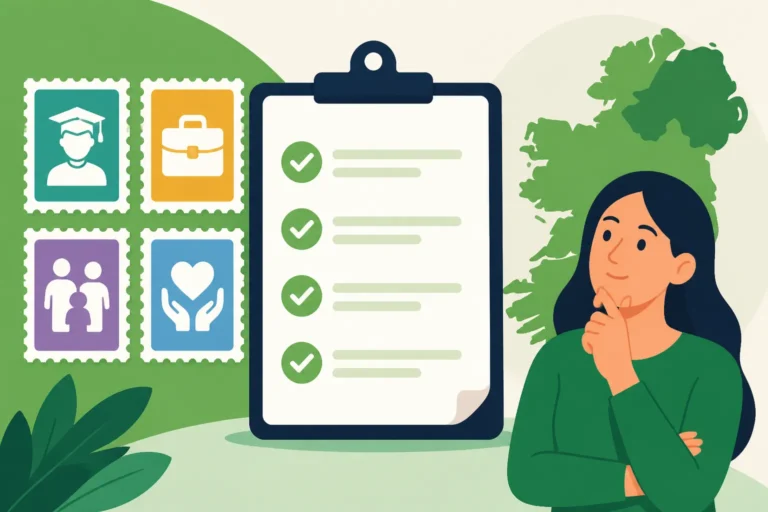
The Long Stay (D) visa encompasses several categories, each tailored to a specific purpose for your extended stay in Ireland. Knowing which category applies to you is the first analytical step in your application journey.
- Employment: This is perhaps the most common reason. If you've secured a job offer from an Irish employer and have been granted an employment permit (such as a Critical Skills Employment Permit or a General Employment Permit), you will need a D visa under the 'Employment' category. The visa is effectively a stamp in your passport that acknowledges your permission to enter Ireland based on your employment permit. Without it, even with a valid permit, entry can be denied. You'll want to dive deep into "How to Get an Employment Permit to Work in Ireland (2026)" to fully grasp the requirements here.
- Study: Ireland boasts world-class educational institutions. If you've been accepted into a long-term course at a recognised Irish university, college, or language school, you'll need a D visa for 'Study'. This typically requires proof of acceptance, payment of fees, and sufficient funds to support yourself during your studies. This visa also usually comes with specific conditions regarding part-time work during term time and full-time work during holidays, which differ from employment visas.
- Family Reunification: Many expats wish to bring their loved ones to Ireland. If you are joining a family member who is an Irish citizen, an EU/EEA citizen exercising treaty rights in Ireland, or a non-EEA national already lawfully resident (e.g., on a Stamp 4 or a Critical Skills Employment Permit holder bringing dependants), you would apply for a D visa under 'Family Reunification'. This can include spouses, de facto partners, or dependent children. The process for "Family Reunification in Ireland: Bringing Your Spouse and Children (2026)" often involves demonstrating genuine relationship and financial self-sufficiency.
- Other Categories: Beyond these primary reasons, there are D visas for other specific purposes, such as joining an Irish citizen partner ("How to Apply for a De Facto Partner or Spouse Visa in Ireland"), volunteer work, religious ministries, or even investment (though the Immigrant Investor Programme has seen changes). Each category has its own distinct set of requirements and supporting documentation, making it vital to correctly identify your specific path before gathering any paperwork.
Eligibility and General Requirements for Your D Visa Application
Applying for a Long Stay (D) visa isn't just about filling out a form; it's about demonstrating your eligibility and genuine intent to the Irish authorities. This means meticulously preparing a strong case that addresses all the criteria. The requirements are stringent, designed to ensure that every applicant has a legitimate reason for their stay and the means to support themselves without becoming a burden on the state. It's a test of your organisational skills and patience, often requiring documents you might not immediately think of.
Remember, the visa officer reviewing your application has the final say, and their decision is based solely on the information and evidence you provide. Ambiguity or missing documents can lead to delays or outright refusal, which can be incredibly disheartening after all the effort. Taking the time to understand and gather every piece of required documentation is crucial.
Proof of Purpose and Financial Stability
The cornerstone of any Long Stay (D) visa application is proving your genuine purpose for coming to Ireland and your ability to support yourself financially. The Irish authorities want to see a clear and coherent plan for your time here.
If you're coming for employment, this means submitting your original employment permit, a letter from your Irish employer outlining your role, salary, and contract duration, and possibly your CV and academic qualifications. They need to be convinced that you have a real job lined up and aren't just seeking entry under false pretences. For those pursuing education, an official letter of acceptance from your chosen Irish educational institution, proof of payment for course fees, and a detailed outline of your course of study are paramount. Furthermore, you'll need to demonstrate you have sufficient funds to cover your living expenses for your stay, without relying on public funds. This often involves showing bank statements for several months, proving consistent savings or a steady income flow. The exact amount required can vary, but generally, you'll need to show access to at least €7,000 for your first year if you're a student, in addition to your tuition fees.
For family reunification, you'll need to prove your relationship to the Irish resident you are joining (e.g., marriage certificate, birth certificates) and that the sponsor in Ireland has sufficient income and accommodation to support you without state aid. This often requires a minimum income threshold, which can be a stumbling block for some. They will look for consistency across all documents, so ensure every piece of information aligns perfectly. Consider consulting "Understanding the Cost and Timeline of the Immigration Process in Ireland" to get a realistic picture of the financial commitment involved.
Essential Documentation Checklist
Preparing your documentation can be daunting, but a systematic approach makes it manageable. Here’s a general checklist of documents commonly required for most Long Stay (D) visa applications. Always refer to the specific guidelines on the Immigration Service Delivery (ISD) website for your visa category, as requirements can and do change.
| Document Type | Description |
|---|---|
| Passport | Valid passport with at least 6 months validity beyond your intended stay, and at least two blank pages. Include copies of all previous visas and stamps. |
| Passport-sized Photos | Two recent colour passport-sized photographs meeting Irish visa specifications (usually 35x45mm, plain white background, no head coverings unless for religious reasons). |
| Signed Summary Application Form | The form generated after completing your online application. |
| Letter of Application | A personal letter explaining your reason for wanting to come to Ireland, detailing your plans, who you will be staying with (if applicable), and your commitment to abiding by visa conditions. |
| Proof of Funds | Original bank statements for the last six months, showing sufficient funds to support yourself during your stay without recourse to public funds. Include a letter from your bank confirming the authenticity of the statements. |
| Medical/Travel Insurance | Comprehensive private medical insurance covering your entire stay in Ireland. Policies from providers like Cigna Global are often recommended for expats due to their international coverage. This isn't just a suggestion; it's a mandatory requirement to ensure you're covered for any unforeseen health issues while you're here. |
| Accommodation Details | Proof of accommodation in Ireland, such as a rental agreement, letter from a landlord, or an invitation letter if staying with family/friends. |
| Previous Visa Refusals | Details of any previous visa refusals for any country, even if unrelated to Ireland. Full disclosure is vital. |
| Specific Supporting Documents | For Employment: Original employment permit, letter from employer. For Study: Letter of acceptance from educational institution, proof of fees paid. For Family Reunification: Marriage/birth certificates, sponsor's financial details and accommodation proof. |
| Police Clearance Certificate | A recent police or Garda Vetting certificate from your country of origin and any country you have resided in for more than 6 months in the past 5 years, demonstrating good character. |
All documents not in English must be accompanied by a certified translation. Always keep copies of everything you submit. Failing to provide accurate and complete documentation is one of the quickest ways to receive a refusal, sending you back to square one. Detailed guidance can also be found in "The Complete Guide to Irish Visas and Immigration Permission for Expats (2026)".
The Step-by-Step Application Process
Once you've identified your visa category and gathered your essential documents, it's time to embark on the actual application process. This typically involves an online submission, followed by a visit to a designated visa application centre. It's a methodical process that demands attention to detail at every turn, so don't rush it.
Online Application and Appointment Booking
The first port of call is the official Immigration Service Delivery (ISD) online portal. This is where you'll initiate your application. You'll create an account and fill out a comprehensive online form, answering questions about your personal details, travel history, finances, and reasons for coming to Ireland. Be thorough and honest; any discrepancies with your supporting documents could raise red flags. Once the online form is completed, you'll receive a summary application form that you'll need to print and sign.
Following the online submission, you'll generally be directed to book an appointment at the relevant Irish Visa Application Centre (VAC) in your country of residence. In some regions, this might be handled by an external service provider like VFS Global. This appointment is crucial for submitting your physical documents, original passport, and often, providing your biometric data (fingerprints and photograph). Ensure you book your appointment well in advance, as slots can fill up quickly, especially during peak seasons. Arrive early for your appointment with all your original documents and their copies neatly organised, usually in the order specified by the VAC. This meticulous preparation can genuinely save you stress and time on the day.
Attending Your Visa Interview and Biometrics
For many Long Stay (D) visa applicants, attending an interview is a standard part of the process, though not always required for every category or nationality. This interview is your opportunity to verbally clarify any aspect of your application and to demonstrate your genuine intent to the visa officer. They may ask about your reasons for wanting to live in Ireland, your financial situation, your ties to your home country, and your plans upon arrival. Be prepared to answer questions confidently and truthfully. Consistency with the information you provided in your written application is key.
During this appointment, or sometimes at a separate appointment, you will also typically provide your biometrics. This involves having your fingerprints scanned and a digital photograph taken. This data is collected to verify your identity and is a standard security measure for most long-term visa applications globally. It’s a straightforward process, but again, ensure you follow all instructions given by the staff. After submitting your documents and biometrics, you'll receive a receipt. This is usually the point where you'll hand over your passport, which will be retained by the visa office while your application is being processed. The waiting period can vary significantly, so patience is a virtue here.
After Your Visa Approval: What Comes Next?
Congratulations! Receiving your Long Stay (D) visa is a significant milestone. It means the Irish authorities have approved your reason for coming to Ireland for an extended period. However, getting the visa stamped in your passport isn't the absolute end of your immigration journey. There are still a couple of vital steps to take once you arrive in Ireland to formalise your residency.
Travel to Ireland and Immigration Control
With your D visa safely in your passport, you can now book your travel to Ireland. When you arrive at an Irish port of entry (typically Dublin Airport, but it could be Cork, Shannon, or another point), you will go through immigration control. Even with a valid visa, the immigration officer has the authority to grant or deny you entry. They will ask you about your purpose of visit, where you plan to stay, and may ask to see some of your supporting documents again. Be polite, clear, and have your passport, visa, and key supporting documents (like your employment permit or university acceptance letter) readily available.
The immigration officer will then stamp your passport, indicating the date of your entry and the initial period of permission you have to remain in Ireland. This stamp is crucial as it marks the beginning of your official residency. It's usually a temporary permission, often for a month or two, during which you must complete the next crucial step: registering with immigration. If you're wondering about the logistics of moving your belongings, especially larger items, a reputable international moving company like Sirelo can be incredibly helpful in getting your possessions safely to your new Irish home, making this transition smoother.
Registering Your Permission with Immigration
Within a specific timeframe (usually 90 days from arrival, but often indicated on your entry stamp), you must register your permission with the Immigration Service Delivery (ISD). This is arguably the most important step after receiving your visa and arriving in Ireland. This registration process is where you obtain your Irish Residence Permit (IRP) card, which is a credit-card-sized document proving your lawful residency in Ireland.
If you are residing in Dublin, Kildare, Meath, or Wicklow, you will typically register at the Burgh Quay Registration Office. For those living outside these counties, you'll register at your local Garda National Immigration Bureau (GNIB) office. You’ll need to book an appointment online – and these can be notoriously difficult to get, so start trying as soon as you have a confirmed address in Ireland. At your appointment, you’ll present your passport, visa, entry stamp, employment permit/university letter, proof of Irish address, and pay a registration fee (currently €300).
Once successfully registered, you will be granted a specific "Stamp" in your passport (e.g., Stamp 1 for employment, Stamp 2 for study, Stamp 4 for family reunification or long-term residency). This stamp officially outlines the conditions of your stay in Ireland. Your IRP card, which shows your photo, personal details, and immigration stamp type, will then be posted to your Irish address. This card is your proof of legal residency and must be carried with you at all times. Understanding "The Complete Guide to the IRP Card and Registering with Immigration (2026)" will be vital for this final step, as will grasping the intricacies of "Understanding the Irish Immigration Stamp System (Stamp 1, 2, 4) (2026)". Missing this registration deadline or failing to complete it can have severe consequences for your immigration status in Ireland, so mark it on your calendar and prioritise it!
Disclaimer
The information provided in this guide is intended for general informational purposes only and does not constitute legal or immigration advice. While every effort has been made to ensure accuracy, immigration laws and procedures in Ireland are subject to change. It is highly recommended that you consult the official Immigration Service Delivery (ISD) website, or seek advice from a qualified immigration solicitor or advisor, for the most current and specific guidance pertaining to your individual circumstances. The author and publisher are not liable for any actions taken or not taken based on the information provided herein.