How Long Until I Can Apply for Irish Citizenship?
Oh, the dream of becoming an Irish citizen! It’s a wonderful aspiration, but for many of us expats, the path to naturalisation can feel like navigating a maze blindfolded. The biggest question I hear, time and again, is "How long do I really have to wait?" It’s not just about ticking off years on a calendar; there are nuances, specific rules, and plenty of paperwork. This guide is here to demystify the timeline for Irish citizenship, walking you through the critical residence requirements and other criteria you need to meet.
Understanding Reckonable Residence: The Core of Your Citizenship Timeline
When you start thinking about becoming an Irish citizen, the very first thing you need to wrap your head around is "reckonable residence." This isn't just a fancy term; it's the bedrock upon which your entire application rests. Essentially, it means the period of legal residency in Ireland that counts towards your citizenship application. It’s not every single day you've spent on the Emerald Isle, but specific, legally documented periods.
The general rule of thumb, and the most common path for expats, is that you must have accrued a total of five years of reckonable residence in the State during the nine-year period immediately preceding the date of your application. Within those five years, there’s an even more specific requirement: you must have one continuous year of actual residence in Ireland immediately before you apply. This means no long trips home or extended holidays abroad right before you send in your forms. Think of it as a significant chunk of your life demonstrating a clear commitment to living here.
For example, if you arrived in Ireland in January 2018, you could potentially apply for citizenship in January 2023, assuming you’ve been here continuously and legally. However, if you went back to your home country for six months in 2022, that six-month period would not count towards your continuous year immediately preceding the application. It's crucial to understand that even if you've been here for years, a break in your continuous residence right before applying can push your eligibility date back. The Immigration Service Delivery (ISD) is quite strict on this, so keep meticulous records of your entry and exit dates, as well as your valid immigration stamps. Speaking of which, if you're still figuring out the basics of getting settled, you might find our guide on The Complete Guide to Moving to Ireland: Your First 90 Days (2027) helpful for those initial steps.
The nine-year look-back period is also important. This means that if you had a period of residence, left Ireland for a few years, and then returned, only the residence within that most recent nine-year window counts. It's not cumulative over your entire lifetime if there are significant gaps. It's about demonstrating a sustained connection to Ireland over a recent, defined period. Many people, especially those who used a relocation service like Sirelo to bring over their entire lives, often find that this deep commitment is what makes them truly consider citizenship. It's a testament to putting down roots, not just passing through.
Specific Scenarios: How Your Situation Impacts the Citizenship Timeline
While the "five years out of nine, plus one continuous year" rule is standard, certain circumstances can alter your timeline or requirements. It’s not a one-size-fits-all approach, and knowing where you stand can make a huge difference in your planning.
Spouses and Civil Partners of Irish Citizens
This is a common pathway that offers a slightly expedited route, recognising the established family connection to the country. If you are married to, or in a civil partnership with, an Irish citizen, the residence requirement drops significantly. You only need to have three years of reckonable residence in Ireland during the five-year period immediately preceding your application. And yes, that crucial one year of continuous residence immediately before applying still applies.
It’s important to note that your marriage or civil partnership must be valid and subsisting. The Minister for Justice will want to see proof of your relationship, not just a certificate. This usually means providing joint bank statements, utility bills addressed to both of you at the same address, and other evidence of your shared life in Ireland. While it's a quicker path, the application itself is no less rigorous in terms of documentation. For those navigating the complexities of bringing family over, our resource on Family Reunification in Ireland: Bringing Your Spouse and Children (2027) could offer some valuable insights.
Children Born in Ireland and Other Special Cases
For children born in Ireland, the situation is different. If you were born in Ireland before 1 January 2005, you are automatically an Irish citizen, regardless of your parents' citizenship. However, if you were born on or after 1 January 2005, your citizenship depends on your parents' status. You are an Irish citizen if at the time of your birth, at least one of your parents was:
- An Irish citizen.
- A British citizen.
- A person entitled to reside in Northern Ireland without any restriction on their period of residence.
- A person who has been resident in Ireland for at least three of the four years immediately preceding your birth. This includes time spent with a valid immigration stamp, excluding student stamps (Stamp 2/2A) or asylum seeker permissions.
For adults who were born in Ireland after 2005, but whose parents did not meet the residency criteria at the time, there might still be a path to citizenship through naturalisation, following the general residence rules once they come of age. Additionally, for stateless persons or refugees, specific provisions exist under the Irish Nationality and Citizenship Act, which may adjust the residence period required for naturalisation, typically reflecting their unique circumstances and international obligations. These are less common scenarios for most expats, but it's important to acknowledge that the system does have provisions for various life situations.
Beyond the Years: Other Key Eligibility Criteria for Naturalisation
While reckonable residence is paramount, simply living here for the required number of years isn’t enough. The Minister for Justice, who ultimately grants citizenship, needs to be satisfied that you meet several other significant criteria. These are designed to ensure that new citizens are genuinely integrated and committed to Irish society.
Good Character and Intent to Reside
One of the most subjective, yet critical, requirements is proving you are "of good character." This essentially means you must not have any serious criminal record or be involved in activities that would make you unsuitable for citizenship. When you apply, you'll need to provide police certificates from every country you’ve lived in for six months or more since the age of 18. This demonstrates that you have a clean slate and have abided by the law. Any minor infractions might be overlooked, but serious crimes or multiple offences could certainly jeopardise your application. It’s about showing you are a responsible and law-abiding individual, someone who will contribute positively to your new home.
Furthermore, you must declare a genuine "intention to reside in the State" after naturalisation. This isn’t just a tick-box exercise; it's a fundamental aspect of becoming a citizen. It implies that you view Ireland as your permanent home and intend to continue living here indefinitely. While life circumstances can change, the initial declaration is taken seriously. If, for instance, you apply for citizenship, get it, and then immediately move abroad permanently without compelling reasons, it could raise questions about the sincerity of your original declaration. The government wants to be sure that they are granting citizenship to people who genuinely want to make Ireland their long-term home, contributing to its society and economy.
Declaration of Fidelity and Loyalty
Upon successful application, you'll be invited to a citizenship ceremony. This is a truly special day, often held in Dublin Castle, where you will make a formal Declaration of Fidelity to the Nation and Loyalty to the State. This is more than just a formality; it’s a solemn pledge. You commit to being faithful to Ireland and its laws, and to respecting its democratic values and institutions.
This declaration is an acknowledgement of your commitment to your new country and its way of life. It’s the symbolic culmination of your journey, marking your official entry into the Irish family. Many expats describe this ceremony as one of the most moving experiences of their lives, truly solidifying their sense of belonging after years of living here. After all the careful planning that goes into making a move – from logistics with companies like Sirelo to setting up new routines and understanding local nuances – this ceremony represents the ultimate integration.
Navigating the Application Process: What to Expect After You've Waited
Once you believe you meet all the eligibility criteria, the next stage is the actual application process. This part can feel daunting, given the amount of documentation required and the anticipation of waiting times.
Gathering Documents and Submitting Your Application
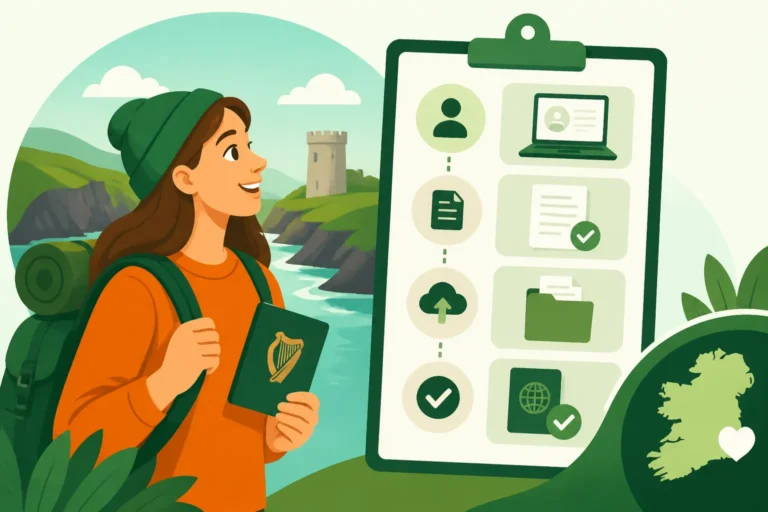
The application itself is known as Form 8. It's a comprehensive document that asks for a detailed history of your residence in Ireland, your personal background, employment history, and much more. You'll need to provide an extensive array of supporting documents, including:
- Your passport(s) – past and present.
- Your Irish Residence Permit (IRP) cards (if applicable). Understanding The Complete Guide to the IRP Card and Registering with Immigration (2027) is essential here.
- Original birth certificate.
- Marriage or civil partnership certificate (if applicable).
- Proof of address (utility bills, bank statements, tenancy agreements).
- Evidence of your PPSN and tax compliance (e.g., P60s, tax returns). If you're still navigating How the Irish Tax System (Revenue) Works: PAYE, PRSI and USC Explained (2027), make sure your ducks are in a row.
- An affidavit of your reckonable residence, signed by a solicitor or commissioner for oaths.
- Specific details of all absences from the State during your reckonable residence period.
It’s an exacting process, and the Immigration Service Delivery (ISD) expects everything to be in perfect order. Any missing documents or inconsistencies can lead to delays or even rejection. Many applicants find it helpful to create a checklist and gather documents over several months. You'll also need to pay an application fee, which as of early 2024 is typically €175 for the application itself, and a further €950 naturalisation certificate fee if your application is successful (reduced fees apply for minors and certain other categories). Always check the most up-to-date fees on the official ISD website.
Processing Times and What Happens Next
This is the question that keeps many expats up at night: "How long will it actually take?" The processing times for naturalisation applications can vary significantly, ranging from 12 to 24 months, or even longer in some complex cases. The ISD has made efforts to streamline the process, but the sheer volume of applications means it's still a considerable wait. During this time, the ISD will correspond with you if they need further information, so it’s crucial to keep your contact details updated and respond promptly.
Once a decision is made, you will be notified. If successful, you’ll receive an invitation to attend a citizenship ceremony, usually held a few times a year. This is the moment you've been waiting for! At the ceremony, you’ll make your declaration, receive your Certificate of Naturalisation, and officially become an Irish citizen. It’s a moment of immense pride and often, a huge relief after years of planning and waiting. For many, this also means solidifying plans for long-term health and well-being, perhaps with a comprehensive plan like those offered by Cigna Global, ensuring peace of mind for their new Irish life.
Understanding the Reckonable Residence Requirement for Citizenship in Ireland
| Applicant Category | General Residence Requirement | Continuous Residence Pre-Application | Cost (Application + Certificate) (Approx. 2024) |
|---|---|---|---|
| Standard (Most Expats) | 5 years out of the last 9 years | 1 year immediately before application | €175 + €950 = €1125 |
| Spouse/Civil Partner of Irish Citizen | 3 years out of the last 5 years | 1 year immediately before application | €175 + €950 = €1125 |
| Minors (under 18) | Varies, often dependent on parents' status | N/A | €175 + €200 = €375 |
| Refugees/Stateless Persons | Varies, generally 3 years (different rules apply) | N/A | €175 + €0 = €175 |
Note: All fees are subject to change by the Department of Justice. Always check the official Immigration Service Delivery website for the most current information.
Disclaimer
The information provided in this guide is intended for general informational purposes only and does not constitute legal advice. While we strive to ensure the information is accurate and up-to-date, immigration laws and procedures in Ireland can change. It is always recommended to consult with the official Immigration Service Delivery (ISD) website, or seek independent legal advice from a qualified immigration solicitor, for specific guidance on your individual circumstances.